+
Draft Electricity Amendment Bill 2025 To Cut Network Duplication
ECONOMY & POLICY

Draft Electricity Amendment Bill 2025 To Cut Network Duplication

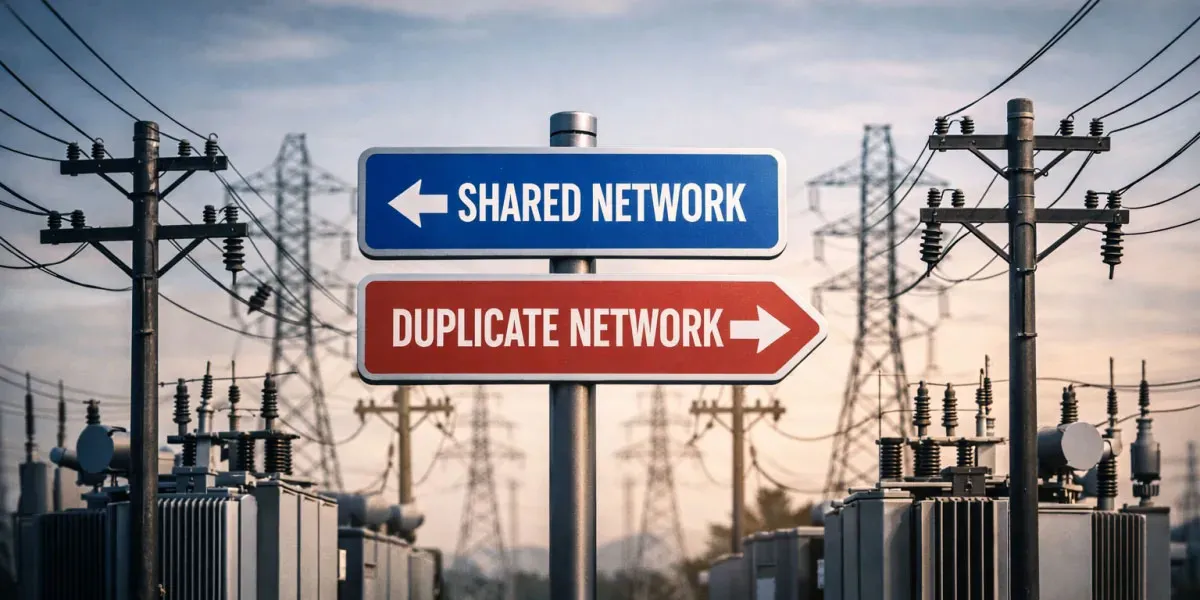
The draft Electricity (Amendment) Bill, 2025 proposes to reduce duplication in distribution infrastructure by permitting distribution licensees to use another licensee's network on payment of charges set by the State Electricity Regulatory Commission.

The Electricity Act, 2003 already permits multiple distribution licensees in the same area and requires non-discriminatory open access to networks, but new entrants have typically constructed separate poles, wires and substations. The amendment aims to lower overall costs and make power more affordable by removing the need for redundant physical infrastructure.

Under the Act the area of supply for each distribution licensee is defined and must be approved by the regulatory commission at the time of granting a licence. Subordinate legislation sets a minimum geographical area for a licence, which may cover an entire municipal corporation or at least three adjoining revenue districts, while smaller areas require specific notification by the appropriate government. The draft bill retains these territorial parameters while enabling shared use of network assets.

Every distribution licensee, whether public or private, will continue to have a universal service obligation to supply electricity to all consumers in its area of supply without discrimination, although large consumers may be exempted by the commission as provided in the draft. The amendment would require State Electricity Regulatory Commissions to establish a clear framework for introducing multiple licensees within the same supply area, with measures to ensure transparency and fairness. The intention is to maintain service obligations while facilitating competition and operational efficiency.

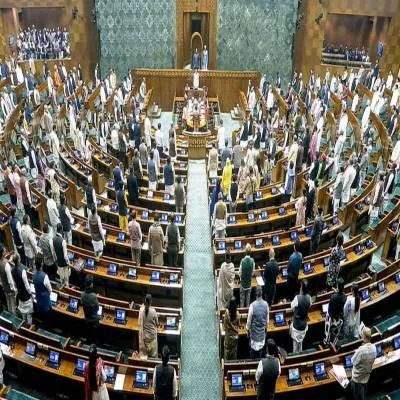
The government envisages no adverse impact on agricultural or domestic consumers and expects competition to improve quality of service, while subsidies for specified consumer categories may continue to be provided by the state government under Section 65 of the Act. The information was provided by the Minister of State in the Ministry of Power, Shri Shripad Naik, in a written reply in the Rajya Sabha. The draft seeks to balance universal service obligations with more efficient use of existing distribution networks.

The draft Electricity (Amendment) Bill, 2025 proposes to reduce duplication in distribution infrastructure by permitting distribution licensees to use another licensee's network on payment of charges set by the State Electricity Regulatory Commission. The Electricity Act, 2003 already permits multiple distribution licensees in the same area and requires non-discriminatory open access to networks, but new entrants have typically constructed separate poles, wires and substations. The amendment aims to lower overall costs and make power more affordable by removing the need for redundant physical infrastructure. Under the Act the area of supply for each distribution licensee is defined and must be approved by the regulatory commission at the time of granting a licence. Subordinate legislation sets a minimum geographical area for a licence, which may cover an entire municipal corporation or at least three adjoining revenue districts, while smaller areas require specific notification by the appropriate government. The draft bill retains these territorial parameters while enabling shared use of network assets. Every distribution licensee, whether public or private, will continue to have a universal service obligation to supply electricity to all consumers in its area of supply without discrimination, although large consumers may be exempted by the commission as provided in the draft. The amendment would require State Electricity Regulatory Commissions to establish a clear framework for introducing multiple licensees within the same supply area, with measures to ensure transparency and fairness. The intention is to maintain service obligations while facilitating competition and operational efficiency. The government envisages no adverse impact on agricultural or domestic consumers and expects competition to improve quality of service, while subsidies for specified consumer categories may continue to be provided by the state government under Section 65 of the Act. The information was provided by the Minister of State in the Ministry of Power, Shri Shripad Naik, in a written reply in the Rajya Sabha. The draft seeks to balance universal service obligations with more efficient use of existing distribution networks.

Next Story
Resources

Hisense Opens First India Manufacturing Plant at Sri City

Hisense has inaugurated its first manufacturing facility in India at Sri City, Andhra Pradesh, through a joint venture with Epack Manufacturing Technologies Private Limited, a wholly owned subsidiary of Epack Durable Limited.The 10-acre facility, developed with an investment exceeding USD 30 million, is located within Epack Durable’s industrial park at Sri City and will commence commercial production from February 2026. Once fully operational, the plant will manufacture Room Air Conditioners (RACs) exclusively for Hisense India, accounting for 100 per cent of the brand’s domestic RAC outpu..

Next Story
Real Estate

Superb Realty Launches Altura, Focuses on IAQ-Led Office Design

Superb Realty has launched Superb Altura, a mixed-use Grade A commercial development at Amar Mahal junction in the Chembur–Ghatkopar corridor, positioning indoor air quality and intelligent building systems at the centre of its design strategy amid rising pollution levels in Mumbai.The development reflects a shift in office real estate priorities, where occupiers increasingly evaluate how buildings manage health, energy efficiency and operational resilience in high-pollution urban environments. Altura integrates advanced systems that continuously monitor and optimise indoor environments, cov..

Next Story
Infrastructure Transport

CPCL Tops NHAI’s First DPR Consultant Ranking

Chaitanya Projects Consultancy (CPCL) has secured the top position in the National Highways Authority of India’s first-ever provisional DPR consultants rating, achieving a score of 80.75 out of 100. The ranking places CPCL ahead of 55 peer firms, including Pentacle Consultants (78), L&T Infrastructure Engineering (76), MSV International Technology (74), and Transys Consulting (72).The rankings, released in the fourth week of January 2026, mark NHAI’s first structured and transparent evaluation of DPR consultants to improve quality standards under Bharatmala and other national highway p..

Advertisement

Subscribe to Our Newsletter

Get daily newsletters around different themes from Construction world.

STAY CONNECTED

Advertisement

Advertisement

Advertisement

Open In App