ECoR Plans To Double Train Capacity At Three Cities By 2030
ECONOMY & POLICY

ECoR Plans To Double Train Capacity At Three Cities By 2030

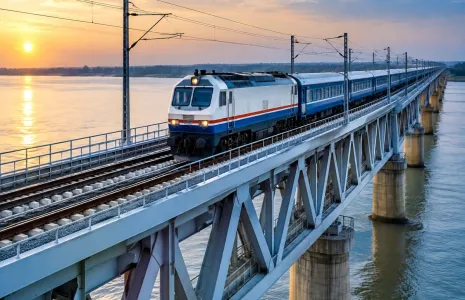
Amid strong growth in passenger travel demand, Indian Railways has drawn up an ambitious infrastructure upgradation plan to double originating train capacity at Bhubaneswar, Puri and Visakhapatnam under the East Coast Railway (ECoR) by 2030.

Under the comprehensive plan, railway infrastructure in the three cities will be significantly augmented over the next five years to cater to rising passenger volumes, decongest existing terminals and improve operational efficiency. The strategy includes terminal expansion, development of new satellite stations, creation of large-scale maintenance facilities and strengthening of sectional capacity through modern signalling systems and multi-tracking works.

ECoR sources said the focus is on augmenting existing terminals with additional passenger platforms, stabling lines, pit lines and improved shunting facilities, while also developing new terminals in and around urban centres to distribute traffic more evenly. Special emphasis is being placed on setting up mega coaching complexes and modern maintenance depots to support expanded train operations.

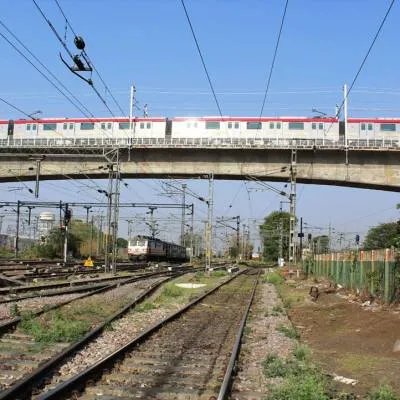
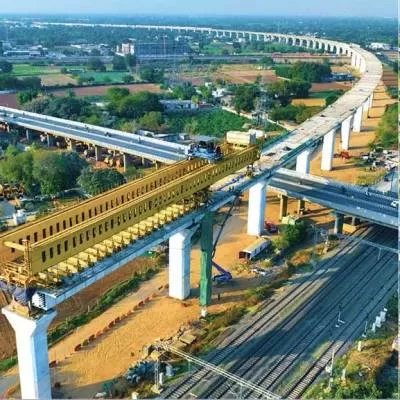
Sectional capacity is also being enhanced through traffic facility works, signalling upgrades, flyovers, bypass lines and the addition of new tracks to ensure smoother handling of higher train volumes. To support the expansion, several projects are under way, including automatic block signalling and flyovers in Puri; pit line electrification, safety fencing, fourth-line works and bypass surveys in Bhubaneswar; and multiple third, fourth, fifth and sixth lines, flyovers and bypass projects in Visakhapatnam.

Nearby stations are being factored into the planning process to ensure balanced network capacity and avoid operational bottlenecks. The capacity-doubling initiative forms part of a nationwide plan covering 48 major cities identified by Indian Railways.

At Puri, two additional full-length integrated pit lines are under construction, which will supplement the existing six pit lines. The entire coaching maintenance facility is proposed to be shifted to a second coaching terminal depot on the sanctioned Puri–Konark new line, for which a final location survey has been proposed. A large-scale coaching complex is also planned on this alignment to cater to future traffic growth, especially during peak pilgrimage and tourist seasons.

Bhubaneswar railway station is being developed as a satellite coaching terminal, supported by a maintenance facility with two pit lines at Mancheswar and dedicated rail connectivity. Given space constraints within the city, additional depots and support infrastructure are planned in nearby areas to reduce pressure on the existing station and yard.

In Visakhapatnam, a detailed project report for extensive yard modification is under consideration by the Railway Board. The proposal includes five additional lines, six new passenger platforms, ten stabling lines and the introduction of electronic interlocking to improve safety and operational flexibility. Jagannadhapuram station on the proposed Kottavalasa–Anakapalle bypass line is also planned as a mega coaching maintenance depot and large-scale complex, operating as a satellite station for the city.

Union Minister for Railways Ashwini Vaishnaw said the initiative reflects Indian Railways’ push towards future-ready infrastructure. He noted that expanding coaching terminals and enhancing sectional and operational capacities will help meet rising passenger demand, reduce congestion and improve nationwide connectivity.

Amid strong growth in passenger travel demand, Indian Railways has drawn up an ambitious infrastructure upgradation plan to double originating train capacity at Bhubaneswar, Puri and Visakhapatnam under the East Coast Railway (ECoR) by 2030. Under the comprehensive plan, railway infrastructure in the three cities will be significantly augmented over the next five years to cater to rising passenger volumes, decongest existing terminals and improve operational efficiency. The strategy includes terminal expansion, development of new satellite stations, creation of large-scale maintenance facilities and strengthening of sectional capacity through modern signalling systems and multi-tracking works. ECoR sources said the focus is on augmenting existing terminals with additional passenger platforms, stabling lines, pit lines and improved shunting facilities, while also developing new terminals in and around urban centres to distribute traffic more evenly. Special emphasis is being placed on setting up mega coaching complexes and modern maintenance depots to support expanded train operations. Sectional capacity is also being enhanced through traffic facility works, signalling upgrades, flyovers, bypass lines and the addition of new tracks to ensure smoother handling of higher train volumes. To support the expansion, several projects are under way, including automatic block signalling and flyovers in Puri; pit line electrification, safety fencing, fourth-line works and bypass surveys in Bhubaneswar; and multiple third, fourth, fifth and sixth lines, flyovers and bypass projects in Visakhapatnam. Nearby stations are being factored into the planning process to ensure balanced network capacity and avoid operational bottlenecks. The capacity-doubling initiative forms part of a nationwide plan covering 48 major cities identified by Indian Railways. At Puri, two additional full-length integrated pit lines are under construction, which will supplement the existing six pit lines. The entire coaching maintenance facility is proposed to be shifted to a second coaching terminal depot on the sanctioned Puri–Konark new line, for which a final location survey has been proposed. A large-scale coaching complex is also planned on this alignment to cater to future traffic growth, especially during peak pilgrimage and tourist seasons. Bhubaneswar railway station is being developed as a satellite coaching terminal, supported by a maintenance facility with two pit lines at Mancheswar and dedicated rail connectivity. Given space constraints within the city, additional depots and support infrastructure are planned in nearby areas to reduce pressure on the existing station and yard. In Visakhapatnam, a detailed project report for extensive yard modification is under consideration by the Railway Board. The proposal includes five additional lines, six new passenger platforms, ten stabling lines and the introduction of electronic interlocking to improve safety and operational flexibility. Jagannadhapuram station on the proposed Kottavalasa–Anakapalle bypass line is also planned as a mega coaching maintenance depot and large-scale complex, operating as a satellite station for the city. Union Minister for Railways Ashwini Vaishnaw said the initiative reflects Indian Railways’ push towards future-ready infrastructure. He noted that expanding coaching terminals and enhancing sectional and operational capacities will help meet rising passenger demand, reduce congestion and improve nationwide connectivity.

Next Story
Infrastructure Urban

Patil Reviews JSJB 2.0 Progress In Water-Stressed Districts

Union Minister of Jal Shakti C R Patil on Tuesday interacted with District Collectors and District Development Officers from 124 over-exploited and critical districts, as identified in the 2024 national groundwater assessment, to review progress on water conservation initiatives. Ministers of State V. Somanna and Dr Raj Bhushan Choudhary also attended the meeting, along with Secretary, Department of Water Resources, River Development and Ganga Rejuvenation, V L Kantha Rao, and senior officials from the Ministries of Jal Shakti and Rural Development. The review centred on Jal Sanchay Jan Bhagi..

Next Story
Infrastructure Urban

Jitendra Singh Inaugurates BRIC Secretariat In New Delhi

Ahead of the New Year, Union Minister of State (Independent Charge) for Science and Technology and Earth Sciences, and Minister of State in the PMO, Personnel, Public Grievances, Pensions, Atomic Energy and Space, Dr Jitendra Singh inaugurated the new Secretariat complex of the Biotechnology Research and Innovation Council (BRIC), calling it a key milestone for strengthening India’s future bioeconomy. The BRIC Secretariat office complex is located on the fourth floor of the NSIC Business Park in New Delhi. It will function as a lean coordinating mechanism to enhance collaboration among BRIC..

Next Story
Infrastructure Energy

PMO Pushes Listing Of Coal India Subsidiaries By 2030

The Prime Minister’s Office (PMO) has directed the Ministry of Coal to map and list all subsidiaries of state-run Coal India Limited (CIL) by 2030, according to sources. The move is aimed at streamlining governance, improving accountability and unlocking value through asset monetisation within the coal public sector undertaking. Coal India Limited accounts for more than 80 per cent of India’s domestic coal production and operates through eight subsidiaries: Eastern Coalfields Limited, Bharat Coking Coal Limited (BCCL), Central Coalfields Limited, Western Coalfields Limited, South Eastern ..

Advertisement

Subscribe to Our Newsletter

Get daily newsletters around different themes from Construction world.

STAY CONNECTED

Advertisement

Advertisement

Advertisement

Advertisement

Open In App