+
Environment Minister Inaugurates TERI Summit And Launches Him-CONNECT
ECONOMY & POLICY

Environment Minister Inaugurates TERI Summit And Launches Him-CONNECT

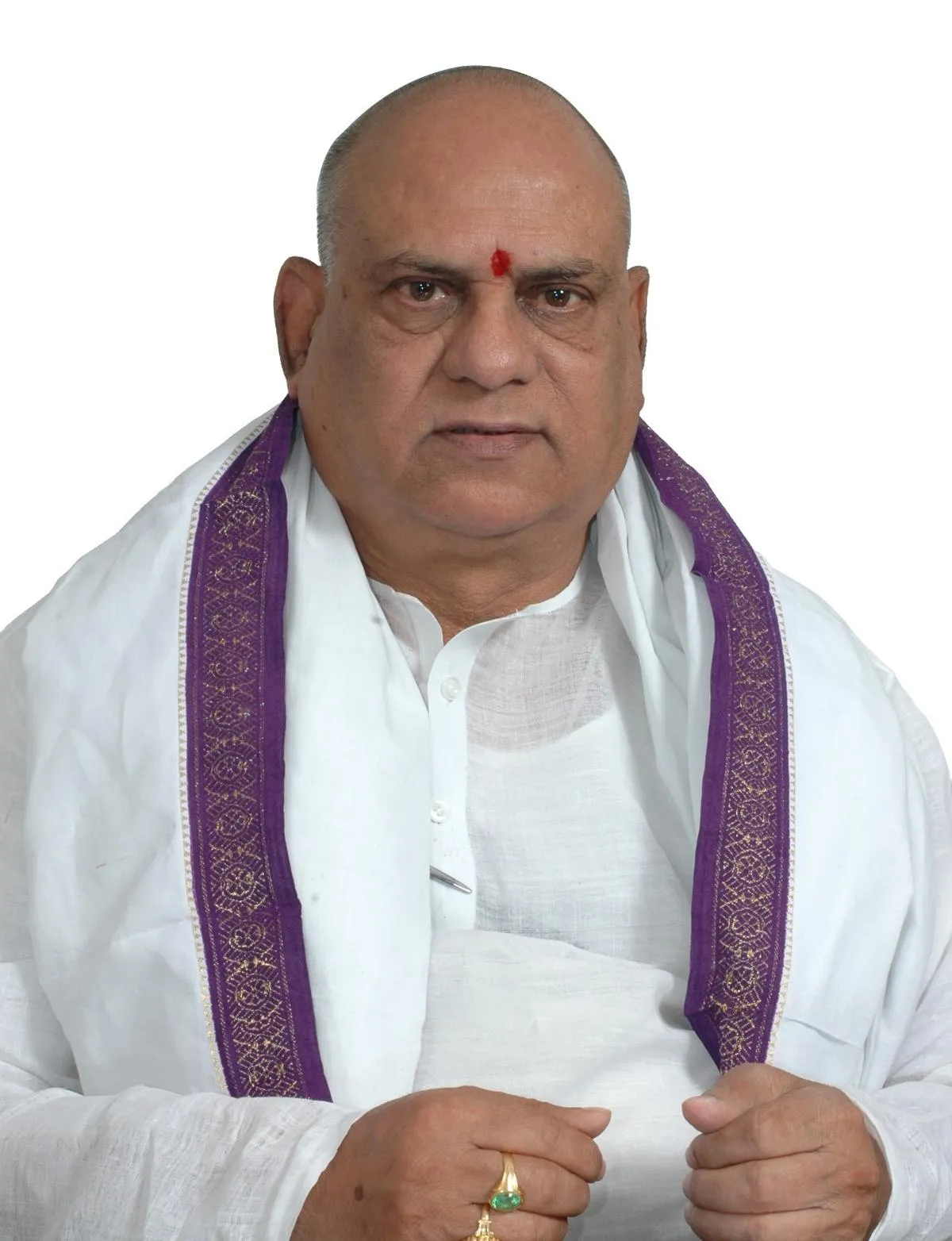
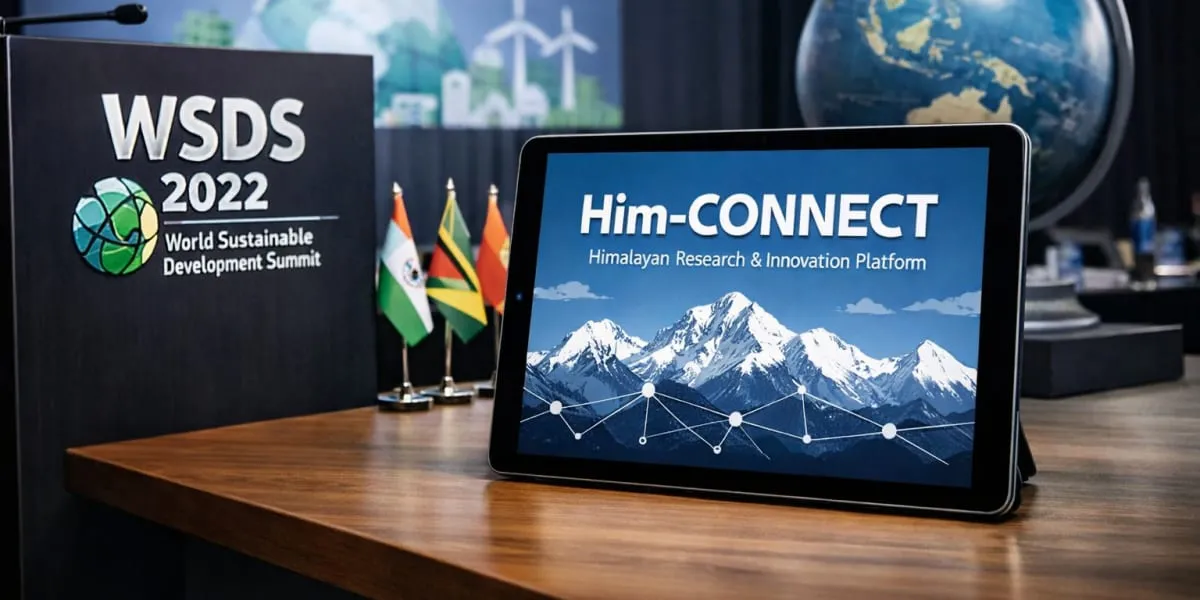
The Union minister for Environment, Forest and Climate Change inaugurated the twenty-five-year edition of The Energy and Resources Institute's World Sustainable Development Summit and launched Him-CONNECT, a platform organised by the Ministry to link researchers in the Himalayan region with start-ups, industry, investors and policymakers. The inauguration brought together representatives from government and institutions, including the vice-president of Guyana and senior figures from TERI and Tata Trusts. The minister noted his long association with TERI and the forum's growth.

He described the summit as a unique forum from the Global South that converts the science of sustainability into policy, partnerships and practical action. Him-CONNECT was presented as a structured mechanism to translate research supported under the National Mission on Himalayan Studies into scalable solutions and a bridge between science and society. The minister acknowledged exhibitors from Himalayan states and union territories and said their participation demonstrated the strength of innovation emerging from mountain ecosystems.

He warned that the first Global Stocktake under the Paris Agreement shows the world is not on a trajectory to limit warming to one point five degrees Celsius, with emissions reductions insufficient, adaptation finance inadequate and uneven implementation of the sustainable development goals. He urged that transformation must go beyond policy tweaks to structural shifts in energy systems, economic models, consumption patterns and global governance. The summit theme was presented as a strategic necessity at a defining moment for the planet.

He outlined India's vision of achieving 500 gigawatt (GW) of non-fossil fuel capacity by 2030, reducing the emissions intensity of gross domestic product (GDP) by 45 per cent from 2005 levels by 2030 and attaining net-zero by 2070. He said the National Green Hydrogen Mission and climate-resilient infrastructure are central to that agenda. He added that globally transformation requires tripling renewable energy, doubling energy efficiency, scaling up adaptation finance and reforming multilateral development banks to unlock climate finance. He affirmed that the summit's silver jubilee should mark acceleration from pledges to performance and reiterated India's readiness to partner with other nations.

The Union minister for Environment, Forest and Climate Change inaugurated the twenty-five-year edition of The Energy and Resources Institute's World Sustainable Development Summit and launched Him-CONNECT, a platform organised by the Ministry to link researchers in the Himalayan region with start-ups, industry, investors and policymakers. The inauguration brought together representatives from government and institutions, including the vice-president of Guyana and senior figures from TERI and Tata Trusts. The minister noted his long association with TERI and the forum's growth. He described the summit as a unique forum from the Global South that converts the science of sustainability into policy, partnerships and practical action. Him-CONNECT was presented as a structured mechanism to translate research supported under the National Mission on Himalayan Studies into scalable solutions and a bridge between science and society. The minister acknowledged exhibitors from Himalayan states and union territories and said their participation demonstrated the strength of innovation emerging from mountain ecosystems. He warned that the first Global Stocktake under the Paris Agreement shows the world is not on a trajectory to limit warming to one point five degrees Celsius, with emissions reductions insufficient, adaptation finance inadequate and uneven implementation of the sustainable development goals. He urged that transformation must go beyond policy tweaks to structural shifts in energy systems, economic models, consumption patterns and global governance. The summit theme was presented as a strategic necessity at a defining moment for the planet. He outlined India's vision of achieving 500 gigawatt (GW) of non-fossil fuel capacity by 2030, reducing the emissions intensity of gross domestic product (GDP) by 45 per cent from 2005 levels by 2030 and attaining net-zero by 2070. He said the National Green Hydrogen Mission and climate-resilient infrastructure are central to that agenda. He added that globally transformation requires tripling renewable energy, doubling energy efficiency, scaling up adaptation finance and reforming multilateral development banks to unlock climate finance. He affirmed that the summit's silver jubilee should mark acceleration from pledges to performance and reiterated India's readiness to partner with other nations.

Next Story
Infrastructure Urban

Implementation Status of Jal Jeevan Mission

Since August 2019 the Government has implemented Jal Jeevan Mission to provide assured potable water through household tap connections in rural India. At the start of the mission only 32.3 million (mn) rural households, representing 16.7 per cent, were reported to have tap water connections. States and union territories have reported that 125.8 mn additional rural households have since been provided with tap connections. As a result, of about 193.6 mn rural households roughly 158.2 mn, or 81.71 per cent, are reported to have tap water supply at home.\n\nThe State, district and village level st..

Next Story
Infrastructure Urban

Jal Jeevan Mission Reaches Eighty One Per Cent Rural Coverage

The Government reported substantial progress under the Jal Jeevan Mission, launched in August 2019 to provide tap water to every rural household. At launch only 32.3 million (mn) rural households had tap connections and states and Union territories reported provision of 125.8 mn additional households by March 2026. Consequently, out of about 193.6 mn rural households around 158.2 mn, or 81.71 per cent, are reported to have tap water at home. The Finance Minister announced extension of the mission until 2028 in the 2025-26 budget speech. The Swachh Bharat Mission Grameen, launched in October 20..

Next Story
Infrastructure Urban

Empowering Local Governance for Sustainable Rural Water Supply

The Ministry of Jal Shakti has aligned the Jal Jeevan Mission (JJM) with the 73rd Amendment to strengthen village level planning and community ownership of water supply. Gram Panchayats, village water and sanitation committees and Pani Samitis are to plan, implement, manage and maintain piped water systems, with gram sabha processes formalising handover and oversight. Implementation support agencies including non government organisations, community based organisations and self help groups have been empanelled to train local committees and promote women participation. Under JJM, the department ..

Advertisement

Subscribe to Our Newsletter

Get daily newsletters around different themes from Construction world.

STAY CONNECTED

Advertisement

Advertisement

Advertisement