European Investment Bank Launches Advisory Initiative in Spain
ECONOMY & POLICY

European Investment Bank Launches Advisory Initiative in Spain

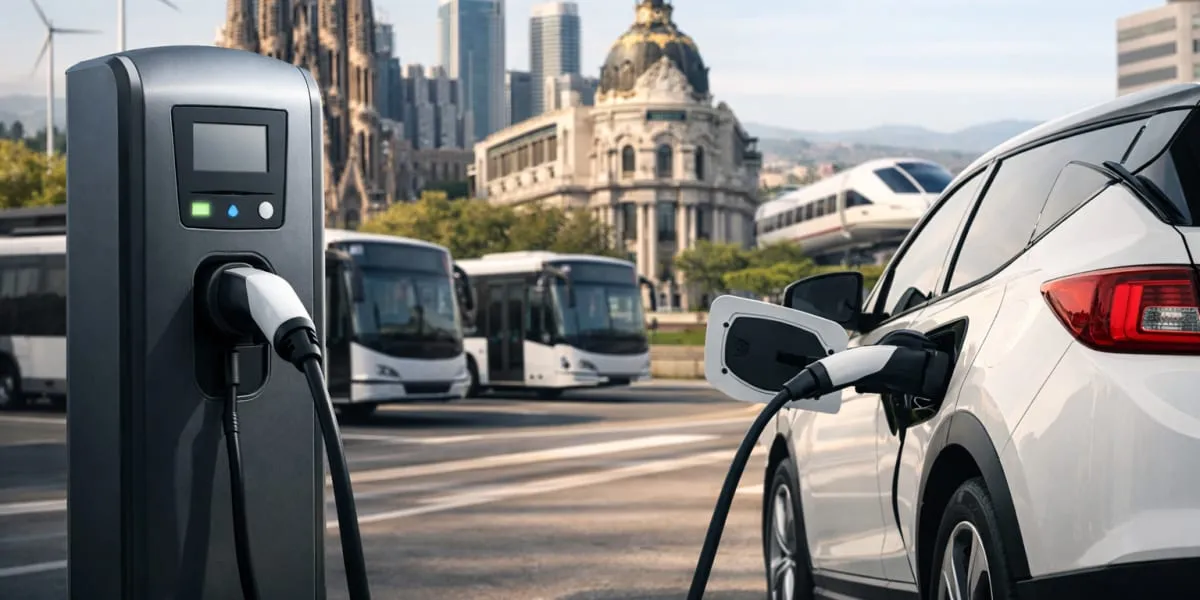
The European Investment Bank (EIB), in collaboration with the European Commission, has launched a technical advisory initiative to accelerate electric mobility across Spain. The programme will support six leading cities — Barcelona, Madrid, Seville, Valencia, Valladolid and Zaragoza — in scaling up electric mobility and building resilient, low-carbon transport ecosystems by 2030. The initiative is presented as a strategic intervention at a critical juncture as urban transport contributes a substantial share of greenhouse gas emissions and electrification is central to the EU Green Deal and the Fit for 55 climate package.

At the heart of the programme is advisory work to accelerate investment in electric vehicle charging infrastructure and to integrate electric mobility into urban transport planning. Participating cities will map infrastructure needs, identify investment gaps and implement phased deployment strategies aligned with EU climate targets. The technical assistance is financed by the InvestEU Advisory Hub and is intended to help unlock public and private capital including opportunities under the InvestEU programme.

The advisory service will support the design of innovative financial and contractual frameworks, such as public-private partnerships, to de-risk investments and attract private sector participation. It aims to create a pipeline of bankable projects ranging from city-wide charging networks to electrified public transport fleets and last-mile delivery solutions. A consortium of consultancies including SUEZ and IDOM will provide expertise in infrastructure planning, environmental engineering and urban development. The assistance is independent of EIB financing to ensure unbiased advisory support tailored to municipal objectives.

The programme emphasises data-driven planning and measurable impact by equipping cities with analytical tools to assess demand patterns, optimise infrastructure placement and monitor environmental outcomes. By promoting knowledge sharing and standardisation it seeks to reduce fragmentation in the electric vehicle market and foster interoperable systems across Europe. Some projections in the material use speculative language and the report has been flagged for review.

The European Investment Bank (EIB), in collaboration with the European Commission, has launched a technical advisory initiative to accelerate electric mobility across Spain. The programme will support six leading cities — Barcelona, Madrid, Seville, Valencia, Valladolid and Zaragoza — in scaling up electric mobility and building resilient, low-carbon transport ecosystems by 2030. The initiative is presented as a strategic intervention at a critical juncture as urban transport contributes a substantial share of greenhouse gas emissions and electrification is central to the EU Green Deal and the Fit for 55 climate package. At the heart of the programme is advisory work to accelerate investment in electric vehicle charging infrastructure and to integrate electric mobility into urban transport planning. Participating cities will map infrastructure needs, identify investment gaps and implement phased deployment strategies aligned with EU climate targets. The technical assistance is financed by the InvestEU Advisory Hub and is intended to help unlock public and private capital including opportunities under the InvestEU programme. The advisory service will support the design of innovative financial and contractual frameworks, such as public-private partnerships, to de-risk investments and attract private sector participation. It aims to create a pipeline of bankable projects ranging from city-wide charging networks to electrified public transport fleets and last-mile delivery solutions. A consortium of consultancies including SUEZ and IDOM will provide expertise in infrastructure planning, environmental engineering and urban development. The assistance is independent of EIB financing to ensure unbiased advisory support tailored to municipal objectives. The programme emphasises data-driven planning and measurable impact by equipping cities with analytical tools to assess demand patterns, optimise infrastructure placement and monitor environmental outcomes. By promoting knowledge sharing and standardisation it seeks to reduce fragmentation in the electric vehicle market and foster interoperable systems across Europe. Some projections in the material use speculative language and the report has been flagged for review.

Next Story
Equipment

India CE Industry Ends FY26 on a Steady Recovery Path

India’s construction equipment industry closed FY26 on a stable note, reflecting measured resilience and gradually improving momentum. Total sales in Q4 FY26 rose 4 per cent year on year to 42,906 units, extending the recovery seen over the past two years.Domestic demand for the full year remained under pressure, declining 7 per cent, but exports provided strong support. Overall exports grew 31 per cent, while non-OEM exports increased 13 per cent, highlighting sustained demand from overseas markets.March 2026 further underlined the recovery, with sales rising 6 per cent year on year and 13 ..

Next Story
Infrastructure Urban

Leaders Question FIR Against Anil Agarwal

Several industry and public figures have questioned the FIR filed against Anil Agarwal following the boiler accident in Chhattisgarh, while also expressing condolences over the loss of lives and calling for a thorough investigation.Naveen Jindal said the tragedy was deeply painful and stressed that compensation, livelihood support for affected families and a fair probe were essential. He also questioned naming Agarwal in the FIR before completion of the investigation.Kiran Bedi urged restraint, saying investigations should focus on learning lessons and strengthening systems rather than prematu..

Next Story
Infrastructure Urban

Tier 2, 3 Cities Drive 66% of New D2C Orders

Tier 2 and Tier 3 cities accounted for 66 per cent of new direct-to-consumer (D2C) orders in FY 2026, according to a new analysis by Unicommerce.The report said buyers from smaller cities also contributed 60 per cent of incremental gross merchandise value (GMV) in FY 2026 compared with FY 2025, highlighting rising demand beyond metro markets.Overall, India’s D2C segment recorded strong growth, with order volumes rising 33 per cent and GMV increasing 32 per cent year-on-year. The findings are based on more than 400 million order items processed through brand websites on Unicommerce’s Uniwar..

Advertisement

Subscribe to Our Newsletter

Get daily newsletters around different themes from Construction world.

STAY CONNECTED

Advertisement

Advertisement

Advertisement