FISME Urges Government to Strengthen Export Testing Infrastructure
ECONOMY & POLICY

FISME Urges Government to Strengthen Export Testing Infrastructure

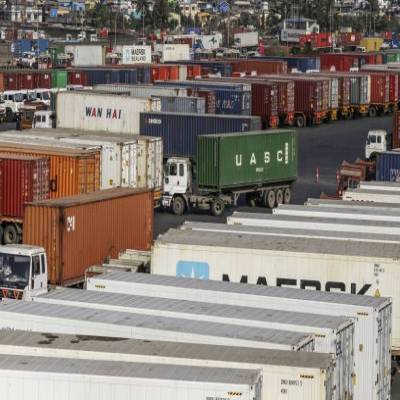
The Federation of Indian Micro and Small & Medium Enterprises (FISME) has urged the government to strengthen testing, standards and certification infrastructure to help micro, small and medium enterprises (MSMEs) use trade agreements and expand in global markets. A delegation led by FISME President Rakesh Chhabra met Commerce and Industry Minister Piyush Goyal on November 9 and submitted a memorandum on export compliance challenges.

The delegation included Rajendra Agrawal, Convenor of Friends of MSMEs in Parliament, and Secretary General Anil Bhardwaj. FISME proposed implementation-oriented studies covering ten priority MSME export sectors for each major trading partner, including the Association of Southeast Asian Nations (ASEAN), Australia, New Zealand and Canada.

The proposed studies would provide product-specific information on market opportunities, rules of origin, technical standards, testing requirements, certification procedures and compliance costs. They would also map tariffs, regulatory approvals, labelling, packaging, traceability and environmental obligations in destination markets, while assessing expenses related to testing, certification, inspections, registration, overseas sample transport and renewals.

FISME recommended an inter-ministerial mechanism led by the Department of Commerce to align Indian testing facilities with export-market requirements. The mechanism would involve the Ministry of MSME, sectoral ministries, the Bureau of Indian Standards (BIS), the Quality Council of India (QCI), the National Accreditation Board for Testing and Calibration Laboratories (NABL), the National Accreditation Board for Certification Bodies (NABCB) and other technical institutions.

The industry body called for capability assessments against international standards, infrastructure upgrades, specialised equipment, skilled personnel and expanded accreditation. It also sought mutual recognition agreements, transparent testing fees, faster turnaround times, pooled testing services and compliance vouchers, along with practical checklists and directories of accredited facilities. FISME said Goyal had responded positively to commissioning sector-specific studies and directed officials to begin the process, which it said could support sustained exports, investment and employment.

The Federation of Indian Micro and Small & Medium Enterprises (FISME) has urged the government to strengthen testing, standards and certification infrastructure to help micro, small and medium enterprises (MSMEs) use trade agreements and expand in global markets. A delegation led by FISME President Rakesh Chhabra met Commerce and Industry Minister Piyush Goyal on November 9 and submitted a memorandum on export compliance challenges. The delegation included Rajendra Agrawal, Convenor of Friends of MSMEs in Parliament, and Secretary General Anil Bhardwaj. FISME proposed implementation-oriented studies covering ten priority MSME export sectors for each major trading partner, including the Association of Southeast Asian Nations (ASEAN), Australia, New Zealand and Canada. The proposed studies would provide product-specific information on market opportunities, rules of origin, technical standards, testing requirements, certification procedures and compliance costs. They would also map tariffs, regulatory approvals, labelling, packaging, traceability and environmental obligations in destination markets, while assessing expenses related to testing, certification, inspections, registration, overseas sample transport and renewals. FISME recommended an inter-ministerial mechanism led by the Department of Commerce to align Indian testing facilities with export-market requirements. The mechanism would involve the Ministry of MSME, sectoral ministries, the Bureau of Indian Standards (BIS), the Quality Council of India (QCI), the National Accreditation Board for Testing and Calibration Laboratories (NABL), the National Accreditation Board for Certification Bodies (NABCB) and other technical institutions. The industry body called for capability assessments against international standards, infrastructure upgrades, specialised equipment, skilled personnel and expanded accreditation. It also sought mutual recognition agreements, transparent testing fees, faster turnaround times, pooled testing services and compliance vouchers, along with practical checklists and directories of accredited facilities. FISME said Goyal had responded positively to commissioning sector-specific studies and directed officials to begin the process, which it said could support sustained exports, investment and employment.

Related Stories

Gold Stories

Next Story
Infrastructure Transport

India to Develop Civil Aircraft Within Two Years, Build 100 Airports

India aims to develop its own civil aircraft within the next two years as it seeks to strengthen domestic aerospace capabilities and reduce dependence on foreign aircraft manufacturers, Civil Aviation Minister Ram Mohan Naidu said on November 12. He said the ambition extended beyond assembling aircraft to developing expertise in aircraft design and production. Speaking at the inaugural session of the Confederation of Indian Industry (CII) Partnership Summit 2026 in Visakhapatnam, Naidu said India wanted to establish itself as a major aerospace manufacturing hub. The government’s approach is ..

Next Story
Infrastructure Urban

Two Korean Firms to Invest Rs. 13.7 bn in Tamil Nadu

Two South Korean automotive component suppliers to Hyundai and Kia plan to invest a combined Rs. 13.7 bn in Tamil Nadu over the next five years, according to sources in the state industries department. The proposed investments come after a political dispute over the reported movement of some automotive investments to Andhra Pradesh. The state government has received letters of intent (LoIs) from Hwashin and Seoyon, while memorandums of understanding (MoUs) are expected to be signed shortly. Both companies communicated their investment plans in letters dated November 11, reaffirming their inten..

Next Story
Building Material

Cement Makers See Margin Relief as Oil Prices Lower Fuel Costs

Cement makers are set to see a significant improvement in profitability in the second half of FY27 as falling global oil prices reduce the cost of key fuels, including petcoke and coal. Higher cement prices are also expected to support earnings, according to a report by Systematix Group. The cement sector remained resilient in Q2 FY27, with volumes across the companies covered by the brokerage rising 7.2 per cent year-on-year. Higher sales volumes and improved realisations contributed to top-line growth during the quarter, although fuel and packaging expenses remained near-term concerns for ma..

Advertisement

Subscribe to Our Newsletter

Get daily newsletters around different themes from Construction world.

STAY CONNECTED

Advertisement

SPECIAL OFFER
QR Code