

Five New STPs Commissioned Under Namami Gange in Q3
ECONOMY & POLICY

Five New STPs Commissioned Under Namami Gange in Q3

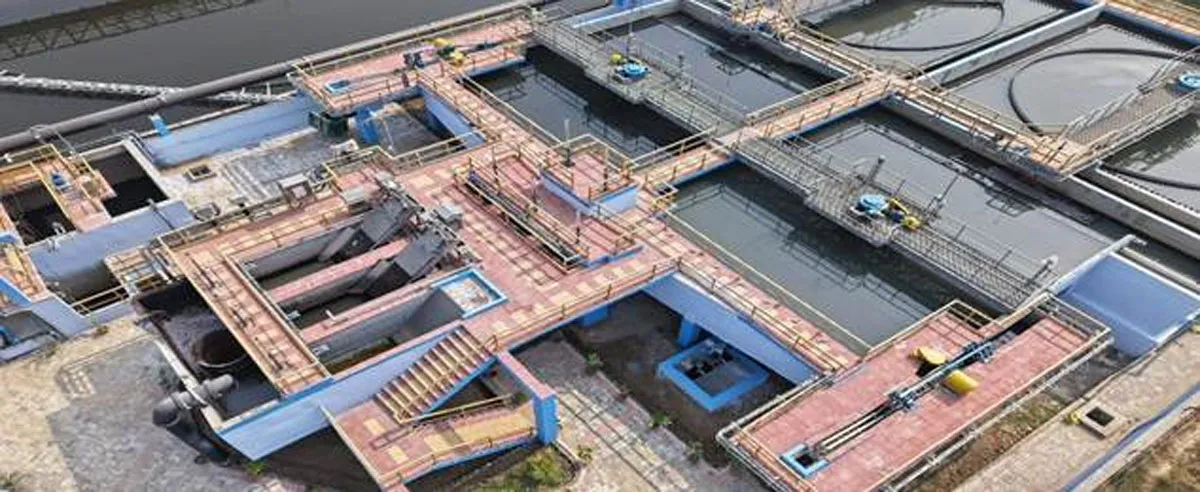
Under Phase II of the Namami Gange Programme, five sewerage infrastructure projects were operationalised during the third quarter of FY 2025–26, marking another step towards pollution abatement and river rejuvenation across multiple states. With these additions, a total of nine projects have been commissioned so far in the current financial year, enhancing sewage treatment capacity in major urban centres.

With the latest commissioning, total sewage treatment plant (STP) capacity under the programme has reached 3,976 million litres per day (MLD), while the number of STPs commissioned has risen to 173. The initiative aims to prevent untreated sewage from entering rivers and to strengthen urban sanitation systems. Earlier in the year, projects in Udham Singh Nagar in Uttarakhand, Moradabad in Uttar Pradesh, and Maheshtala and Jangipur in West Bengal were made operational.

In Shuklagunj, Uttar Pradesh, a 5 MLD STP has been commissioned at a cost of Rs 650 million. Developed under the hybrid annuity model and based on sequential batch reactor technology, the plant is expected to benefit around 300,000 people by ensuring effective interception and diversion of sewage before it reaches the River Ganga.

Agra, a key city in the Yamuna basin, saw the commissioning of two STPs with capacities of 31 MLD and 35 MLD during the quarter. These form part of a larger pollution abatement project sanctioned at Rs 8.42 billion, which envisages a total capacity of 177.6 MLD across 13 STPs. Implemented using the hybrid annuity model, the project is expected to benefit nearly 2.5 million residents and significantly reduce untreated sewage flows into the River Yamuna.

In Varanasi, a 55 MLD STP at Assi–BHU has been made operational under a project sanctioned at Rs 3.08 billion. Implemented under the design–build–operate–transfer model, the facility will serve a population of about 1.8 million and is expected to play a key role in protecting the River Ganga from sewage pollution.

In North Barrackpore, West Bengal, a 30 MLD STP has been commissioned under a project sanctioned at Rs 1.54 billion. The project, designed to meet National Green Tribunal norms, will benefit around 220,000 people and prevent untreated sewage from entering the Ganga.

Additionally, the Patna Kankarbagh STP in Bihar, which was earlier partially commissioned at 15 MLD, has been expanded to its full capacity of 30 MLD during the quarter, further strengthening sewage treatment infrastructure in the city.

These developments mark steady progress towards cleaner rivers and improved urban sanitation, reinforcing the programme’s objective of sustainable and holistic river rejuvenation.

Under Phase II of the Namami Gange Programme, five sewerage infrastructure projects were operationalised during the third quarter of FY 2025–26, marking another step towards pollution abatement and river rejuvenation across multiple states. With these additions, a total of nine projects have been commissioned so far in the current financial year, enhancing sewage treatment capacity in major urban centres. With the latest commissioning, total sewage treatment plant (STP) capacity under the programme has reached 3,976 million litres per day (MLD), while the number of STPs commissioned has risen to 173. The initiative aims to prevent untreated sewage from entering rivers and to strengthen urban sanitation systems. Earlier in the year, projects in Udham Singh Nagar in Uttarakhand, Moradabad in Uttar Pradesh, and Maheshtala and Jangipur in West Bengal were made operational. In Shuklagunj, Uttar Pradesh, a 5 MLD STP has been commissioned at a cost of Rs 650 million. Developed under the hybrid annuity model and based on sequential batch reactor technology, the plant is expected to benefit around 300,000 people by ensuring effective interception and diversion of sewage before it reaches the River Ganga. Agra, a key city in the Yamuna basin, saw the commissioning of two STPs with capacities of 31 MLD and 35 MLD during the quarter. These form part of a larger pollution abatement project sanctioned at Rs 8.42 billion, which envisages a total capacity of 177.6 MLD across 13 STPs. Implemented using the hybrid annuity model, the project is expected to benefit nearly 2.5 million residents and significantly reduce untreated sewage flows into the River Yamuna. In Varanasi, a 55 MLD STP at Assi–BHU has been made operational under a project sanctioned at Rs 3.08 billion. Implemented under the design–build–operate–transfer model, the facility will serve a population of about 1.8 million and is expected to play a key role in protecting the River Ganga from sewage pollution. In North Barrackpore, West Bengal, a 30 MLD STP has been commissioned under a project sanctioned at Rs 1.54 billion. The project, designed to meet National Green Tribunal norms, will benefit around 220,000 people and prevent untreated sewage from entering the Ganga. Additionally, the Patna Kankarbagh STP in Bihar, which was earlier partially commissioned at 15 MLD, has been expanded to its full capacity of 30 MLD during the quarter, further strengthening sewage treatment infrastructure in the city. These developments mark steady progress towards cleaner rivers and improved urban sanitation, reinforcing the programme’s objective of sustainable and holistic river rejuvenation.

Next Story
Infrastructure Energy

ONGC Caps Mori-5 Well in Five Days After Blowout

Oil and Natural Gas Corporation Limited (ONGC) has successfully established well control at the Mori-5 well, completing the capping operation within a record five days. The achievement underscores ONGC’s strong blowout response capability and operational discipline in managing critical field incidents.The blowout occurred on 5 January 2026 during service operations at the well being carried out by PEC contractor M/s Deep Industries Limited. ONGC immediately activated its in-house Crisis Management framework and mobilised specialised manpower and equipment to ensure rapid, safe and controlled..

Next Story
Infrastructure Urban

NIIT MTS Acquires SweetRush for Up to $26 Million

NIIT Learning Systems Limited, through its NIIT Managed Training Services (NIIT MTS) arm, has recently acquired 100 per cent of US-based SweetRush, Inc for an aggregate consideration of up to USD 26 million. The transaction was completed via NIIT MTS’ wholly owned subsidiary, NIIT (USA), Inc., and includes performance-linked earnouts over the next five years, subject to customary adjustments.Headquartered in San Francisco, SweetRush was founded in 2001 by Arturo Schwartzberg and Andrei Hedstrom. The company employs over 100 professionals, supported by an extended network of learning experts ..

Next Story
Infrastructure Urban

Lemon Tree–Fleur Restructuring to Create Two Focused Platforms

Lemon Tree Hotels Limited and Fleur Hotels Limited have recently announced that their Boards have approved a Composite Scheme of Arrangement to simplify group structure, sharpen strategic focus and unlock long-term shareholder value, subject to regulatory and shareholder approvals.The reorganisation will result in two distinct yet complementary platforms. Lemon Tree Hotels will operate as a pure-play, asset-light hotel management and brand platform, while Fleur Hotels, a subsidiary of Lemon Tree, will emerge as a large-scale hotel ownership and development platform with a strong growth pipelin..

Advertisement

Subscribe to Our Newsletter

Get daily newsletters around different themes from Construction world.

STAY CONNECTED

Advertisement

Advertisement

Advertisement

Advertisement

Open In App