


HILT Policy Seen Boosting Telangana Revenue Sharply
ECONOMY & POLICY

HILT Policy Seen Boosting Telangana Revenue Sharply

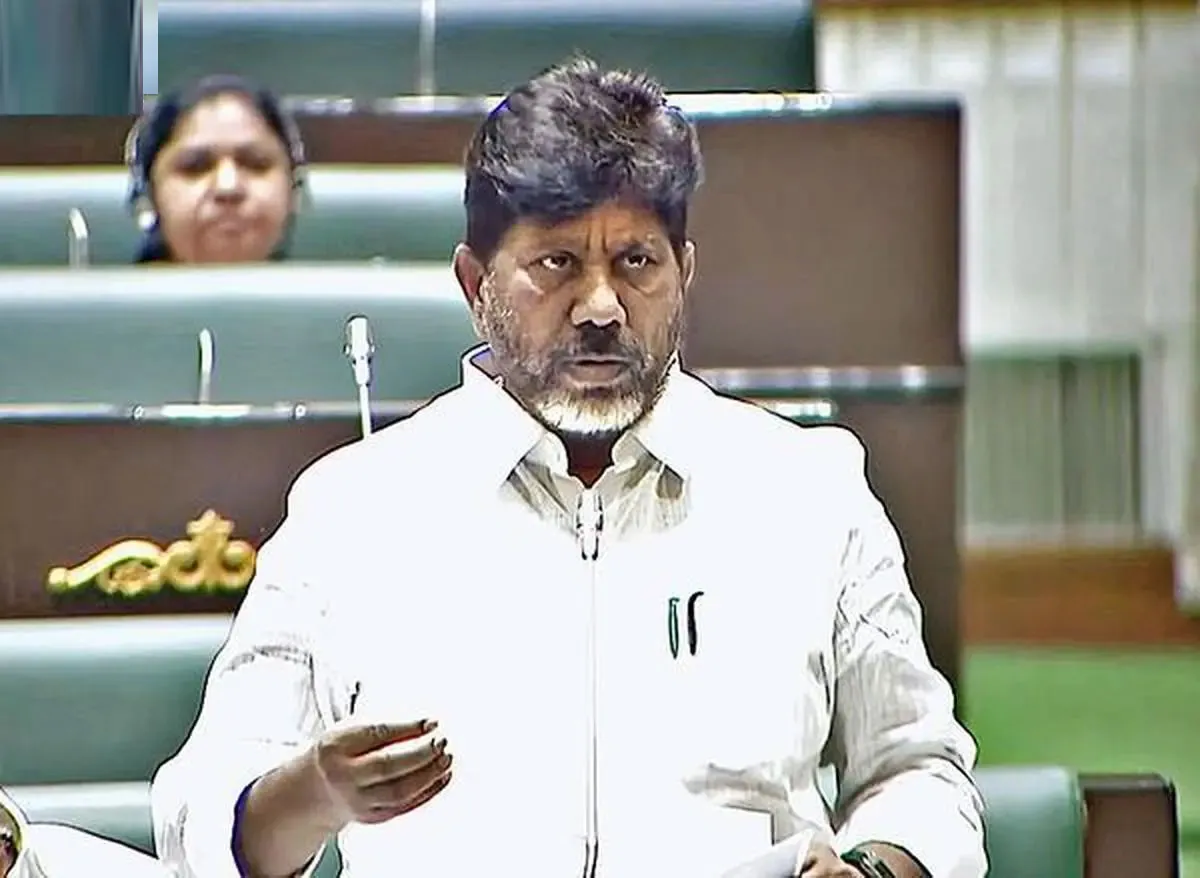
The Hyderabad Industrial Land Transformation (HILT) Policy is expected to generate around Rs 1.08 billion in revenue for the Telangana state exchequer, according to Deputy Chief Minister Bhatti Vikramarka Mallu. Speaking in the Telangana Legislative Assembly, he said the policy would be implemented within a six-month timeframe in a transparent manner, with uniform rules applicable to all stakeholders.

Mr Vikramarka noted that without the HILT Policy, the state would have earned only about Rs 1.2 million per acre. Under the new framework, however, revenue is projected to rise sharply to Rs 70 million per acre, significantly strengthening state finances. He added that while the previous government’s freehold and grid policies generated only Rs 5.74 billion, the HILT Policy alone has been structured to mobilise Rs 1.08 billion for the exchequer.

Addressing concerns raised by the opposition, the Deputy Chief Minister said the government was prepared to clarify all issues and was open to any inquiry by any agency into transactions carried out from 2014 up to the introduction of the HILT Policy. He emphasised that the initiative was designed not only to protect Hyderabad but to benefit the entire state.

As part of broader urban and environmental measures, polluting industries are being shifted beyond the Outer Ring Road, diesel buses within the city are being phased out, and electric buses are being introduced to reduce pollution levels, he added.

The Hyderabad Industrial Land Transformation (HILT) Policy is expected to generate around Rs 1.08 billion in revenue for the Telangana state exchequer, according to Deputy Chief Minister Bhatti Vikramarka Mallu. Speaking in the Telangana Legislative Assembly, he said the policy would be implemented within a six-month timeframe in a transparent manner, with uniform rules applicable to all stakeholders. Mr Vikramarka noted that without the HILT Policy, the state would have earned only about Rs 1.2 million per acre. Under the new framework, however, revenue is projected to rise sharply to Rs 70 million per acre, significantly strengthening state finances. He added that while the previous government’s freehold and grid policies generated only Rs 5.74 billion, the HILT Policy alone has been structured to mobilise Rs 1.08 billion for the exchequer. Addressing concerns raised by the opposition, the Deputy Chief Minister said the government was prepared to clarify all issues and was open to any inquiry by any agency into transactions carried out from 2014 up to the introduction of the HILT Policy. He emphasised that the initiative was designed not only to protect Hyderabad but to benefit the entire state. As part of broader urban and environmental measures, polluting industries are being shifted beyond the Outer Ring Road, diesel buses within the city are being phased out, and electric buses are being introduced to reduce pollution levels, he added.

Next Story
Real Estate

Union Budge: Infra-Led Urban Shift

The Union Budget FY27 reinforces infrastructure-led urbanisation as the backbone of India’s real estate and housing growth. Higher public capital expenditure, City Economic Regions, risk-mitigation mechanisms and REIT-led asset monetisation are being widely viewed as long-term enablers, even as the industry continues to seek sharper supply-side reforms and affordability-focused measures. Here are a few industry insights:Dr Niranjan Hiranandani, Chairman, NAREDCO & Hiranandani Group“The Union Budget 2026-27 is growth-oriented and stability-focused, supporting consumption and aiming to s..

Next Story
Infrastructure Urban

Budget 2026 Charts Path for Infrastructure-Led, Tech-Driven Growth

The Union Budget 2026–27 signals strong continuity in India’s macroeconomic strategy, anchored in elevated public capital expenditure, fiscal discipline, and a sharper focus on manufacturing, infrastructure, and regional development. With capital outlay pegged at ₹12.2 lakh crore and a fiscal deficit target of around 4.3 per cent, the Budget balances growth ambition with stability, offering long-term visibility to investors and project developers.A dominant theme is the centrality of infrastructure as a multiplier for economic expansion. Public capex now accounts for over 3.3 per cent of..

Next Story
Infrastructure Energy

Tata Power Arm Crosses 10 GW EPC Milestone

Tata Power Renewable Energy Ltd (TPREL) has achieved a major milestone by executing 10 gigawatts of engineering, procurement and construction (EPC) renewable energy projects to date, reinforcing its position in India’s clean energy infrastructure sector. According to the company, the executed portfolio comprises 4.2 gigawatts of in-house projects and 5.8 gigawatts of third-party projects. Of the total 10 gigawatts commissioned so far, 9.7 gigawatts are solar projects and 290 megawatts are wind projects. In the first nine months of FY26, TPREL commissioned 1.88 gigawatts of EPC renewable en..

Advertisement

Subscribe to Our Newsletter

Get daily newsletters around different themes from Construction world.

STAY CONNECTED

Advertisement

Advertisement

Advertisement

Advertisement

Open In App














