Hindustan Zinc Expands Women's Economic Independence
ECONOMY & POLICY

Hindustan Zinc Expands Women's Economic Independence

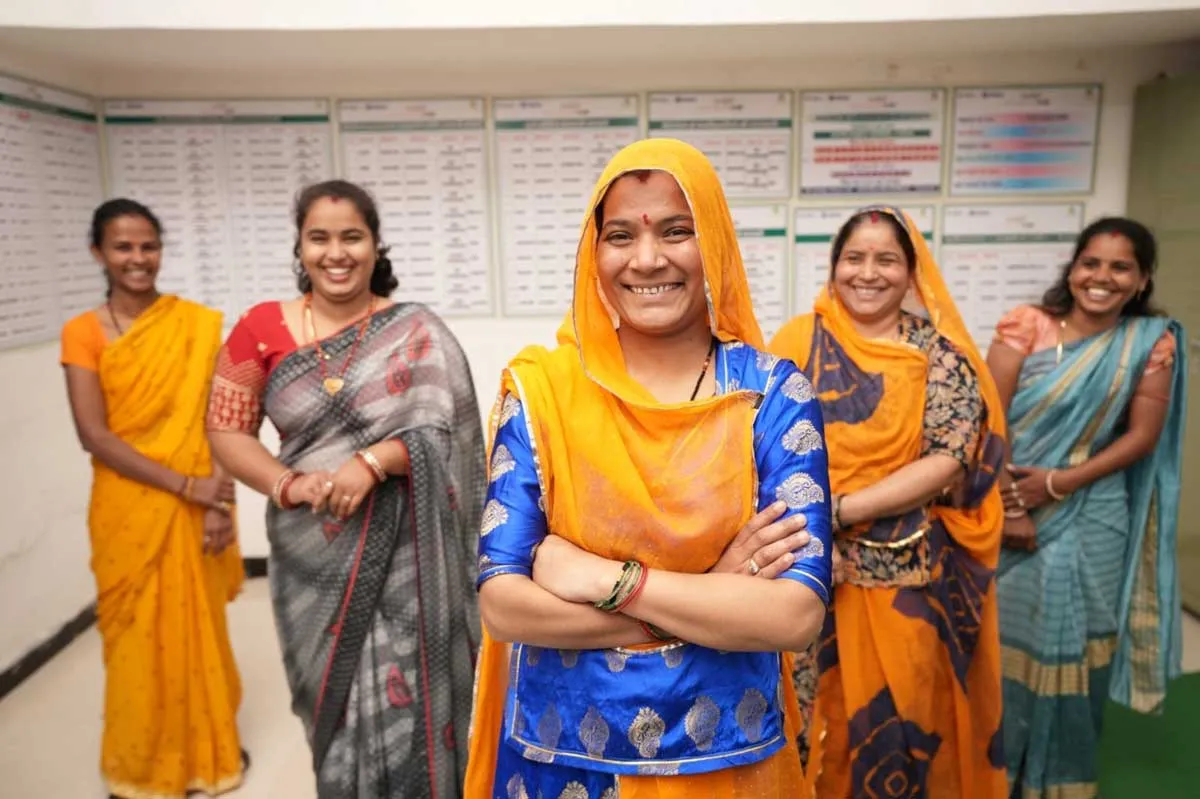
Hindustan Zinc is expanding women's economic participation across rural communities and its mining and manufacturing operations, combining livelihood development with greater representation of women in technology-intensive industrial roles.

The company's flagship Sakhi initiative has connected more than 25,000 rural women through Self-Help Groups, providing access to savings, credit, skills and entrepreneurial training aimed at building sustainable livelihoods.

Among the beneficiaries is Farzana, a production associate with Sakhi Utpadan Samiti, who moved from informal domestic labour to structured textile and FMCG production. She now earns approximately Rs 3.47 lakh annually. During the COVID-19 lockdown, her unit also produced cloth masks, helping sustain incomes while supporting community requirements.

Hindustan Zinc's Samadhan initiative is similarly supporting agriculture and livestock-based livelihoods through technical and market assistance. Prem Bai Vyas from Matoon village expanded her dairy operations from around 10 litres of milk per day to approximately 85 litres. She now earns more than Rs 90,000 a month, receives payments directly into her bank account and independently manages a 20-cattle unit.

Amarendu Prakash, CEO, Hindustan Zinc, said the company aims to create opportunities that enable women to achieve economic independence, whether through rural enterprises or leadership roles in advanced manufacturing technologies.

Women currently account for 26.3 per cent of Hindustan Zinc's workforce, which the company says is the highest in India's metals and mining sector. Around 62 per cent of its employees are under 35.

Women employees are working underground, operating heavy equipment, managing critical processes across shifts and participating in mine rescue operations. They are also taking up roles involving artificial intelligence, machine learning, automation and digitalisation.

Through its Tejaswini initiative, all-women teams are managing operations across shifts in the Leaching & Purification section at the Chanderiya Smelting Complex.

At Zinc Smelter Debari, Swapnil Thori, Lead – Digitalisation and an IIT Delhi graduate, is leading AI and machine learning-led transformation across smelters and power plants. Her work covers areas including consumable optimisation, predictive maintenance and process integration.

The Vedanta Group company said it will continue integrating inclusion into its business and community programmes across education, skilling, healthcare and livelihood development as India advances towards its Viksit Bharat @2047 goals.

Hindustan Zinc is expanding women's economic participation across rural communities and its mining and manufacturing operations, combining livelihood development with greater representation of women in technology-intensive industrial roles.The company's flagship Sakhi initiative has connected more than 25,000 rural women through Self-Help Groups, providing access to savings, credit, skills and entrepreneurial training aimed at building sustainable livelihoods.Among the beneficiaries is Farzana, a production associate with Sakhi Utpadan Samiti, who moved from informal domestic labour to structured textile and FMCG production. She now earns approximately Rs 3.47 lakh annually. During the COVID-19 lockdown, her unit also produced cloth masks, helping sustain incomes while supporting community requirements.Hindustan Zinc's Samadhan initiative is similarly supporting agriculture and livestock-based livelihoods through technical and market assistance. Prem Bai Vyas from Matoon village expanded her dairy operations from around 10 litres of milk per day to approximately 85 litres. She now earns more than Rs 90,000 a month, receives payments directly into her bank account and independently manages a 20-cattle unit.Amarendu Prakash, CEO, Hindustan Zinc, said the company aims to create opportunities that enable women to achieve economic independence, whether through rural enterprises or leadership roles in advanced manufacturing technologies.Women currently account for 26.3 per cent of Hindustan Zinc's workforce, which the company says is the highest in India's metals and mining sector. Around 62 per cent of its employees are under 35.Women employees are working underground, operating heavy equipment, managing critical processes across shifts and participating in mine rescue operations. They are also taking up roles involving artificial intelligence, machine learning, automation and digitalisation.Through its Tejaswini initiative, all-women teams are managing operations across shifts in the Leaching & Purification section at the Chanderiya Smelting Complex.At Zinc Smelter Debari, Swapnil Thori, Lead – Digitalisation and an IIT Delhi graduate, is leading AI and machine learning-led transformation across smelters and power plants. Her work covers areas including consumable optimisation, predictive maintenance and process integration.The Vedanta Group company said it will continue integrating inclusion into its business and community programmes across education, skilling, healthcare and livelihood development as India advances towards its Viksit Bharat @2047 goals.

Related Stories

Gold Stories

Next Story
Infrastructure Transport

GMDA to Spend Rs 86 mn on Green Belts Along Seven Gurugram Roads

The Gurugram Metropolitan Development Authority (GMDA) will spend Rs 86 mn to develop, upgrade and maintain green areas along seven key sector-dividing roads in the city after three tenders were floated, officials said. The project is intended to create landscaped stretches that can absorb additional rainwater runoff and reduce waterlogging during the monsoon. Contractors will be given six months to complete development work and 36 months of maintenance obligations. GMDA chief executive officer PC Meena stated that green areas will be established along sector-dividing roads in sectors 47/49, 4..

Next Story
Infrastructure Urban

Modern College Inaugurates Phase Two Campus Road Supported By HiKOKI

Modern College in Kohima formally inaugurated Phase two of its campus road on 12 August 2026 in an event marked by senior officials of HiKOKI Power Tools India Pvt. Ltd. The programme began at 10:30 am with a prayer led by Pezangulie Keyho, pastor of Piphema A Baptist Church, followed by the unveiling of a road monolith and a sapling plantation drive. The ceremony brought together college administrators, company representatives and students to witness completion of the latest stretch of the thoroughfare. The HiKOKI delegation included Rajan Batra, director of sales, Harsha Kumar, assistant gen..

Next Story
Infrastructure Urban

158 Remote Villages in Andhra Pradesh to Get Roads

In a major push to take development to the doorstep of people in remote habitations, 158 villages and hamlets in Andhra Pradesh will receive road connectivity for the first time under the Pradhan Mantri Gram Sadak Yojana. The project carries an administrative sanction of Rs 4.22 billion (bn) and officials said it is expected to transform access to education, healthcare, markets and other essential services for thousands of residents. The scheme covers construction and bridging works across several districts. The plan provides for 146 roads covering 347 km and 19 bridges to be built, with execu..

Advertisement

Subscribe to Our Newsletter

Get daily newsletters around different themes from Construction world.

STAY CONNECTED

Advertisement