Hindustan Zinc’s Samadhan Empowers 35,000 Farmer Families in Rajasthan
ECONOMY & POLICY

Hindustan Zinc’s Samadhan Empowers 35,000 Farmer Families in Rajasthan

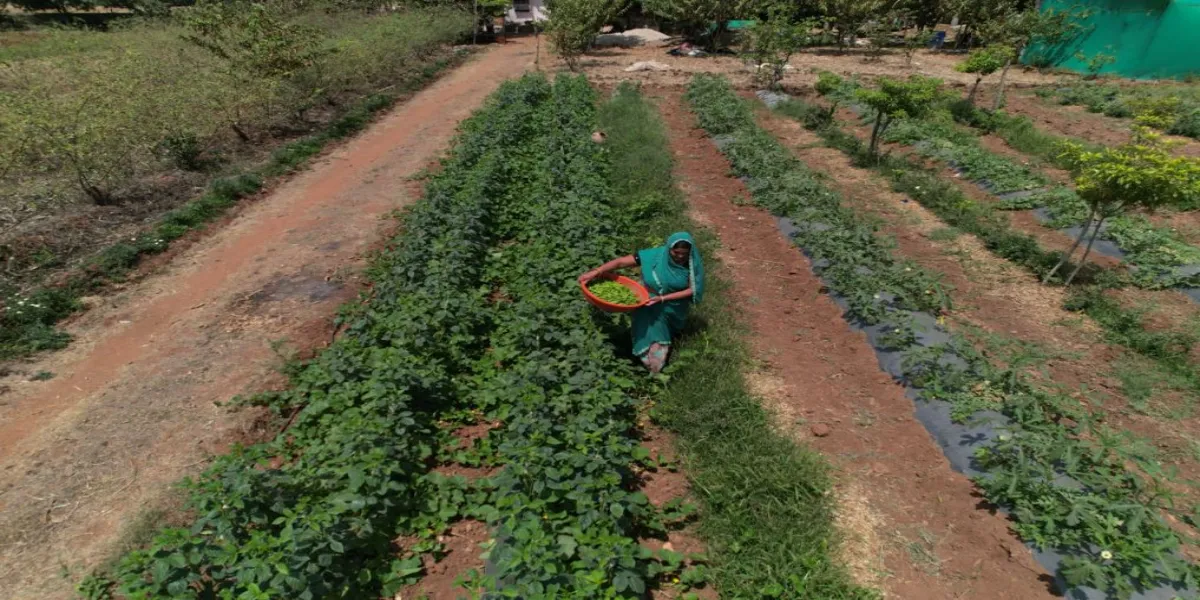
Hindustan Zinc Limited (NSE: HINDZINC), the world’s largest and India’s only integrated producer of zinc, continues to drive large-scale rural transformation in Rajasthan through its flagship CSR initiative, Samadhan. Launched in partnership with BAIF Development Research Foundation, the program promotes sustainable farming, livelihood diversification, and rural entrepreneurship, and has now impacted over 35,000 farmer families across the state.

Now in its latest phase, Samadhan is transforming agrarian communities by equipping farmers with knowledge, tools, and market linkages that are helping them increase productivity, reduce input costs, and adopt climate-resilient farming methods. The initiative offers training in modern agricultural practices, sustainable irrigation, cattle management, and collective marketing—empowering farmers to transition from subsistence to profitable, market-ready farming.

“Samadhan is not just a livelihood initiative—it is a rural empowerment model,” said a Hindustan Zinc spokesperson. “We are proud to support farmers in achieving income stability and long-term resilience, while contributing to the broader vision of Atmanirbhar Bharat and the UN Sustainable Development Goals.”

Hindustan Zinc Limited (NSE: HINDZINC), the world’s largest and India’s only integrated producer of zinc, continues to drive large-scale rural transformation in Rajasthan through its flagship CSR initiative, Samadhan. Launched in partnership with BAIF Development Research Foundation, the program promotes sustainable farming, livelihood diversification, and rural entrepreneurship, and has now impacted over 35,000 farmer families across the state. Now in its latest phase, Samadhan is transforming agrarian communities by equipping farmers with knowledge, tools, and market linkages that are helping them increase productivity, reduce input costs, and adopt climate-resilient farming methods. The initiative offers training in modern agricultural practices, sustainable irrigation, cattle management, and collective marketing—empowering farmers to transition from subsistence to profitable, market-ready farming. “Samadhan is not just a livelihood initiative—it is a rural empowerment model,” said a Hindustan Zinc spokesperson. “We are proud to support farmers in achieving income stability and long-term resilience, while contributing to the broader vision of Atmanirbhar Bharat and the UN Sustainable Development Goals.”

Next Story
Infrastructure Transport

Delhi Airport to Finalise 20-Year Master Plan

Delhi International Airport Ltd (DIAL) is finalising a 20-year master plan to guide long term infrastructure and operational development at Indira Gandhi International Airport, an official said. The operator expects the plan to reflect changes in the airline industry, shifts in the competitive landscape and evolving infrastructure requirements across terminals, airside and support services. The official said the document is likely to be ready in the next two to two-and-a-half months as the operator moves through planning stages. The plan will be prepared after consultations with airport users ..

Next Story
Real Estate

Aadhar Housing Finance Targets Rs 500 bn AUM By FY29

Aadhar Housing Finance has set a target to raise its asset under management to Rs 500 billion (bn) by the end of FY29, aiming to achieve this over the next three financial years through an 18-20 per cent loan growth trajectory. The firm focuses on the low-income segment with a ticket size of less than Rs 1.5 million (mn) and has relied on that segment to drive expansion. The company closed FY26 with an AUM of Rs 305.71 bn, reflecting the expansion in recent years, and it reported a net profit rise of 22 per cent to Rs 11.08 bn. Management indicated that gross non-performing assets stood at 1.0..

Next Story
Infrastructure Energy

Government to Launch Coal Gasification Urea Policy

The government will unveil a coal gasification based policy for urea production within one month, aiming to promote the use of domestic coal feedstock in synthetic fertiliser manufacture. The move seeks to enhance self reliance in fertiliser supply and to provide an alternative route to natural gas based synthesis. Officials said the policy will set out technical standards, permitting norms and incentives for projects that adopt coal gasification technology. It will aim to attract investments from both public sector undertakings and private manufacturers. The scheme will address logistical and..

Advertisement

Subscribe to Our Newsletter

Get daily newsletters around different themes from Construction world.

STAY CONNECTED

Advertisement

Advertisement

Advertisement