Hyderabad Commuters Urge Suburban Rail Link To Airport
ECONOMY & POLICY

Hyderabad Commuters Urge Suburban Rail Link To Airport

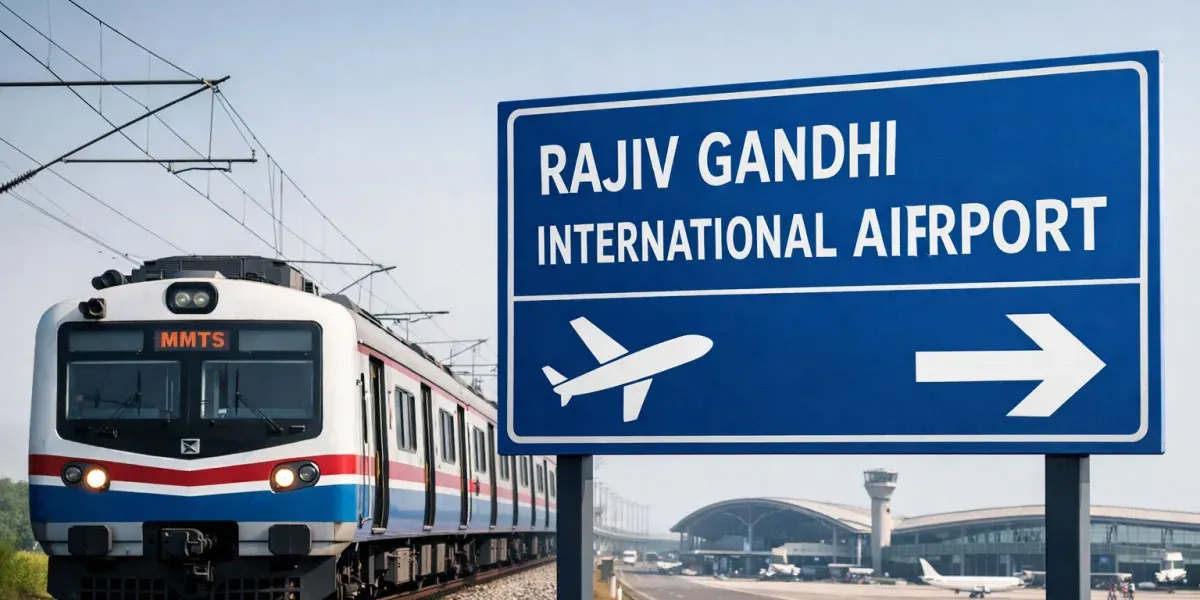
Hyderabad is expected to become part of India's high-speed rail network with a proposed corridor near Shamshabad, but commuters say immediate priority must be given to affordable suburban rail connectivity to Rajiv Gandhi International Airport. They argue that transforming Shamshabad into a multimodal hub should begin with mass public transport systems such as the Multi-Modal Transport System (MMTS) rather than projects that may take years to materialise. The demand reflects concerns over access, cost and journey reliability for daily travellers.

Transport experts note that high-speed rail projects involve lengthy processes including surveys, land acquisition and construction, often taking five to 10 years. They say phased improvements to suburban services would deliver tangible benefits sooner and help integrate future high-speed facilities. Phased suburban upgrades could be implemented within a shorter timeframe and with lower capital outlay than high-speed corridors. At present Rajiv Gandhi International Airport is accessible only by road, forcing passengers to rely on private vehicles, taxis and buses.

A ZRUCC member and the Long Trains and MMTS Travellers Association president recalled that earlier MMTS extension proposals stalled after land issues between the Railways and the airport concessionaire. The Railways maintained that seamless connectivity up to the terminal was essential. Stakeholders said that resolving land and coordination issues would be vital to ensure timely delivery of services. The official added that MMTS access would benefit hundreds of thousands of passengers and support future high-speed rail infrastructure at Shamshabad.

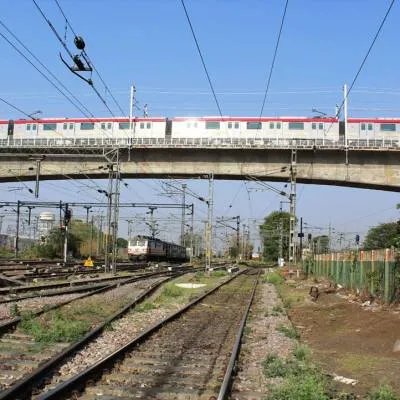
Commuter groups and experts urge authorities to prioritise MMTS upgrades and to plan multimodal integration so that airports, metro lines and bus services connect efficiently. They recommend that investments focus on affordable fares, frequency improvements and station access to encourage modal shift from private vehicles. Implementing suburban rail linkages first would relieve congestion and provide a cost-effective, reliable alternative while longer-term high-speed projects proceed.

Hyderabad is expected to become part of India's high-speed rail network with a proposed corridor near Shamshabad, but commuters say immediate priority must be given to affordable suburban rail connectivity to Rajiv Gandhi International Airport. They argue that transforming Shamshabad into a multimodal hub should begin with mass public transport systems such as the Multi-Modal Transport System (MMTS) rather than projects that may take years to materialise. The demand reflects concerns over access, cost and journey reliability for daily travellers. Transport experts note that high-speed rail projects involve lengthy processes including surveys, land acquisition and construction, often taking five to 10 years. They say phased improvements to suburban services would deliver tangible benefits sooner and help integrate future high-speed facilities. Phased suburban upgrades could be implemented within a shorter timeframe and with lower capital outlay than high-speed corridors. At present Rajiv Gandhi International Airport is accessible only by road, forcing passengers to rely on private vehicles, taxis and buses. A ZRUCC member and the Long Trains and MMTS Travellers Association president recalled that earlier MMTS extension proposals stalled after land issues between the Railways and the airport concessionaire. The Railways maintained that seamless connectivity up to the terminal was essential. Stakeholders said that resolving land and coordination issues would be vital to ensure timely delivery of services. The official added that MMTS access would benefit hundreds of thousands of passengers and support future high-speed rail infrastructure at Shamshabad. Commuter groups and experts urge authorities to prioritise MMTS upgrades and to plan multimodal integration so that airports, metro lines and bus services connect efficiently. They recommend that investments focus on affordable fares, frequency improvements and station access to encourage modal shift from private vehicles. Implementing suburban rail linkages first would relieve congestion and provide a cost-effective, reliable alternative while longer-term high-speed projects proceed.

Next Story
Infrastructure Urban

Güntner Showcases Cooling Tech at China Expo

Güntner showcased its latest refrigeration and air conditioning innovations at China Refrigeration 2026, highlighting digital intelligence and carbon-neutral solutions.The company presented its aicore™ Controls and IoT platform, designed to optimise energy consumption, enable remote monitoring and enhance lifecycle management of cooling systems. The solution integrates advanced controllers and cloud-based capabilities to improve operational efficiency and reduce energy use.Güntner also demonstrated advancements in heat pump technologies, including its role in projects such as the Ordos Zer..

Next Story
Real Estate

Superb Realty Ties Up with Praan for AI Air Tech

Superb Realty has partnered with Praan to deploy AI-powered autonomous air infrastructure across over one million sq ft of real estate in Mumbai, marking a significant move towards intelligent indoor environments.The rollout will begin at Superb Altura and expand across upcoming residential and mixed-use developments. The initiative aims to integrate real-time sensing, adaptive purification and AI-led optimisation to improve indoor air quality and occupant experience.Praan’s technology is designed to remove ultrafine particles significantly smaller than conventional systems and eliminate har..

Next Story
Technology

DAAKit Raises $138,000 in Pre-Seed Round

DAAKit has raised $138,000 in a pre-seed funding round led by Inflection Point Ventures to expand its hyperlocal fulfilment network and strengthen technology capabilities.The company plans to use the funds to launch 25 new dark stores across Tier I and Tier II cities, enhance its technology infrastructure, and expand its leadership and operations teams. Currently operational in Delhi, Gurugram, Mumbai, Bengaluru and Kolkata, DAAKit is also piloting expansion into Tier II markets through Lucknow.Built on an asset-light, technology-driven model, the platform enables brands to position inventory ..

Advertisement

Subscribe to Our Newsletter

Get daily newsletters around different themes from Construction world.

STAY CONNECTED

Advertisement

Advertisement

Advertisement