Hyundai To Roll Out First Mass-Market Electric Vehicle In India
ECONOMY & POLICY

Hyundai To Roll Out First Mass-Market Electric Vehicle In India

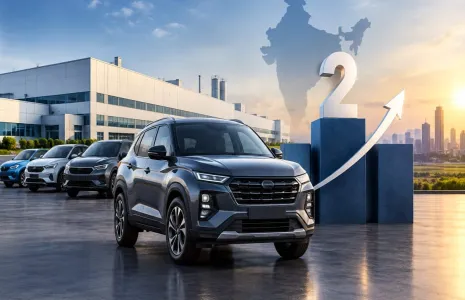
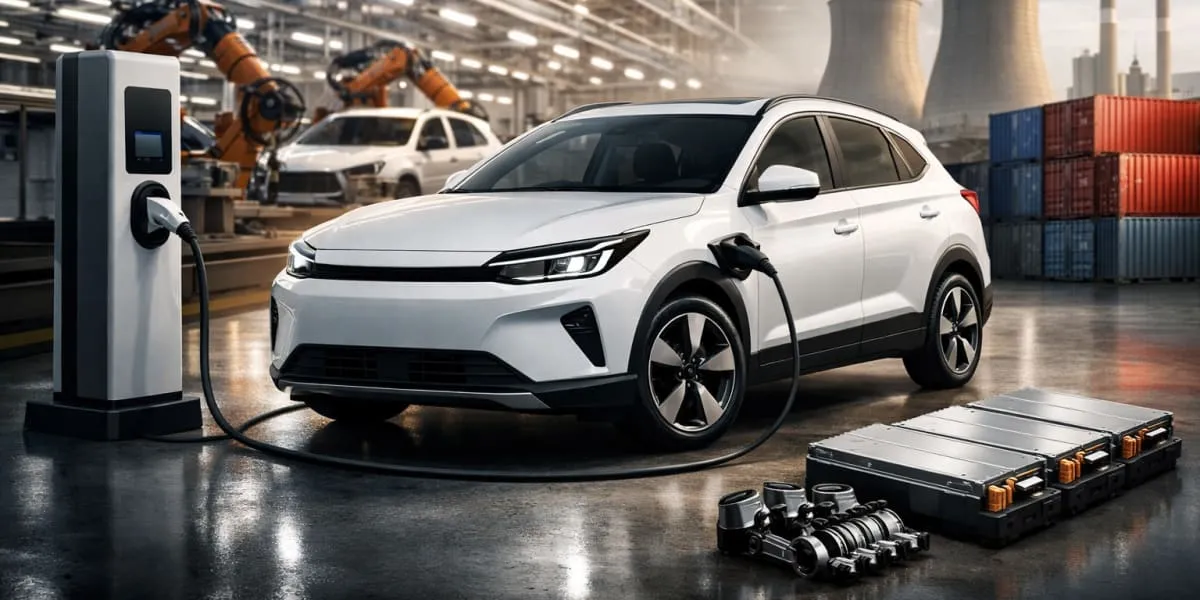
Hyundai Motor India will roll out two new models from its Chennai manufacturing facility this year, including its first mass-market electric vehicle (EV). The company said the move will mark a key step in broadening affordable EV offerings in India and in strengthening its local manufacturing footprint.

Hyundai committed to making Tamil Nadu its flagship EV hub for India and said it will enhance localisation across both electric vehicle (EV) and internal combustion engine (ICE) manufacturing operations, aiming to raise localisation from 82 per cent to 90 per cent over the next five to six years. The plan is presented as part of a wider strategy to reduce dependence on imports and to deepen supplier engagement.

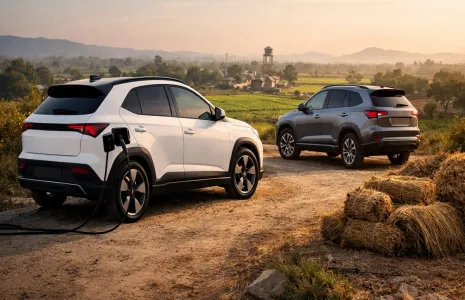
The company said it is well-positioned to expand coverage across major cities and highways over the next two to three years, backed by a strategically distributed network of high-capacity chargers across key urban and transit corridors. This infrastructure support is intended to underpin the roll-out of more affordable models and to improve charging accessibility for customers.

Hyundai plans to increase purchasing value from Tamil Nadu-based suppliers by Rs 40 billion (Rs 40 bn), which it expects will create around 2,000 additional jobs in the state over the next five to six years. The company stated these efforts will significantly strengthen domestic manufacturing capabilities and support broader economic activity in the region.

The company said its supplier engagement will include measures to enhance capability and quality, enabling higher local content in both EV and ICE parts. It added that such measures are designed to support long-term competitiveness and to help suppliers scale their operations. The improvement in localisation is intended to coincide with capacity upgrades at the Chennai facility.

By increasing purchases from local suppliers and investing in infrastructure, the firm aims to create a more resilient domestic ecosystem and to make EV ownership more accessible. The roll-out of two new models this year is presented as a tangible step in that direction, anchored by the Chennai hub.

Hyundai Motor India will roll out two new models from its Chennai manufacturing facility this year, including its first mass-market electric vehicle (EV). The company said the move will mark a key step in broadening affordable EV offerings in India and in strengthening its local manufacturing footprint. Hyundai committed to making Tamil Nadu its flagship EV hub for India and said it will enhance localisation across both electric vehicle (EV) and internal combustion engine (ICE) manufacturing operations, aiming to raise localisation from 82 per cent to 90 per cent over the next five to six years. The plan is presented as part of a wider strategy to reduce dependence on imports and to deepen supplier engagement. The company said it is well-positioned to expand coverage across major cities and highways over the next two to three years, backed by a strategically distributed network of high-capacity chargers across key urban and transit corridors. This infrastructure support is intended to underpin the roll-out of more affordable models and to improve charging accessibility for customers. Hyundai plans to increase purchasing value from Tamil Nadu-based suppliers by Rs 40 billion (Rs 40 bn), which it expects will create around 2,000 additional jobs in the state over the next five to six years. The company stated these efforts will significantly strengthen domestic manufacturing capabilities and support broader economic activity in the region. The company said its supplier engagement will include measures to enhance capability and quality, enabling higher local content in both EV and ICE parts. It added that such measures are designed to support long-term competitiveness and to help suppliers scale their operations. The improvement in localisation is intended to coincide with capacity upgrades at the Chennai facility. By increasing purchases from local suppliers and investing in infrastructure, the firm aims to create a more resilient domestic ecosystem and to make EV ownership more accessible. The roll-out of two new models this year is presented as a tangible step in that direction, anchored by the Chennai hub.

Next Story
Real Estate

AI: The New Recruit

From getting ideas to evaluating designs, presenting concepts to clients and tracking projects, artificial intelligence (AI) is helping architects work better and faster.“AI allows architects to spend more time doing what only they can do: think critically, synthesise complexity and design with intent,” says Dikshu C Kukreja, Managing Principal, CP Kukreja Architects. “Every minute reclaimed from repetitive processes can be invested in creativity, contextual understanding, interdisciplinary collaboration and innovation – the qualities that define meaningful architecture.”To read the ..

Next Story
Real Estate

Redevelopment 2.0

In 2017, Mumbai identified 160,000 ageing buildings due for structural audit. Close to half of these were in the Western Suburbs. Redeveloping the oldest and structurally weakest of these would help unlock new housing, much needed given the city’s growing population density and constant developed area of 437.7 sq km. At 30,600 people per sq km in 2024, Mumbai’s density was almost thrice that of Gurugram, and 60 per cent higher than Bengaluru’s.Essentially, Mumbai’s realty market has demand. It has capital. It has realty development potential.Fast forward to 2026. Mumbai has 1,094 regis..

Next Story
Technology

Cost intelligence will become a strategic contributor to project success

As India's construction industry accelerates its digital transformation, integrated platforms, AI and connected data are becoming essential to improving cost certainty, project efficiency and sustainability. Ravi Kumar, Sales Director – India, RIB Software India, shares how digital workflows are reshaping project planning, commercial management and decision-making across the construction value chain.India's construction sector is embracing digital technologies at an unprecedented pace. From your perspective, what are the biggest shifts driving this transformation and how is RIB Software enab..

Advertisement

Subscribe to Our Newsletter

Get daily newsletters around different themes from Construction world.

STAY CONNECTED

Advertisement

Advertisement

Advertisement