


IBBI, INSOL India Host Global Conclave On IBC At 10
ECONOMY & POLICY

IBBI, INSOL India Host Global Conclave On IBC At 10

Insolvency and Bankruptcy Board of India, in association with INSOL India, organised the 3rd International Conclave, bringing together policymakers, legal experts and insolvency practitioners from India and abroad to reflect on a decade of the Insolvency and Bankruptcy Code and to discuss the future of insolvency resolution in the country.

Justice (Retd.) Ramalingam Sudhakar, President of the National Company Law Tribunal, attended as Chief Guest. In his address, he traced the evolution of the Insolvency and Bankruptcy Code and highlighted its transformative impact on India’s resolution framework. He said the creation of a dedicated adjudicatory mechanism under the IBC has been a key factor in its success compared with the pre-IBC regime, adding that the Code has strengthened credit discipline by acting as a strong deterrent against default. He also noted that India’s insolvency framework could serve as a reference model for other emerging economies.

In his special address, M. Nagaraju, Secretary, Department of Financial Services, Ministry of Finance, underlined the role of the IBC in improving the health of the banking sector, including a reduction in non-performing assets and improved profitability. He said the Code has brought about significant behavioural changes across the debtor-creditor ecosystem, while acknowledging that certain challenges remain and will require continued policy attention. He added that proposed amendments and ongoing initiatives by the department would help address these issues and further strengthen implementation.

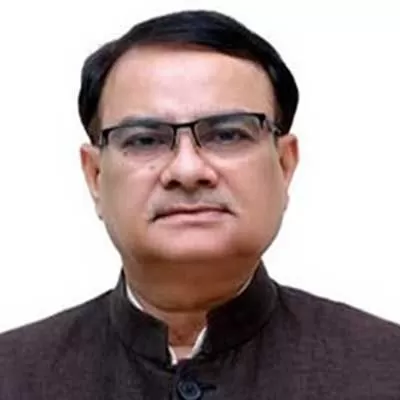
Ravi Mital, Chairperson of IBBI, also delivered a special address, outlining the evolution of the IBC over the past ten years. He said the framework has matured into one of the most robust insolvency resolution systems globally, delivering gains in credit discipline, faster resolutions and improved post-resolution performance of companies. He referred to studies by IIM Ahmedabad and IIM Bangalore, which point to better borrower behaviour and improved operational and financial outcomes for companies resolved under the Code.

In her welcome address, Pooja Mahajan, President of INSOL India, highlighted the organisation’s role in strengthening India’s insolvency ecosystem and promoting best practices through domestic and international collaboration. Dr Bhushan Kumar Sinha, Whole Time Member of IBBI, delivered the vote of thanks, noting the positive impact of the IBC on both the banking sector and the wider economy.

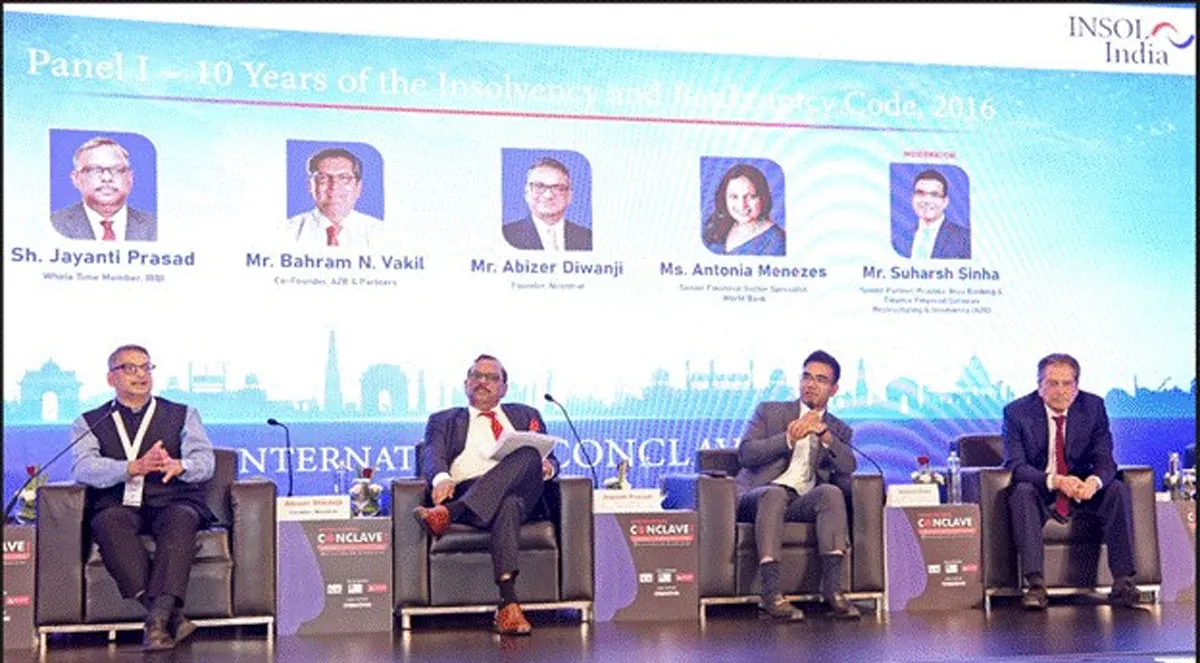
The Conclave featured five panel discussions. The first panel, titled “10 Years of the Insolvency and Bankruptcy Code, 2016”, reflected on the Code’s achievements, challenges and the way forward. The second panel focused on asset tracing, enforcement and recovery, examining cross-border best practices. The third panel discussed out-of-court workouts and pre-pack solutions and their role in enabling timely resolutions. The fourth panel explored financing distressed acquisitions and special situations, with particular reference to alternative investment funds and the housing sector. The fifth panel deliberated on the UNCITRAL Model Law and cross-border insolvency, assessing India’s preparedness for adoption.

The event saw wide participation from across the insolvency ecosystem, including insolvency professionals, lawyers, consultants, financial creditors, resolution applicants, regulators, academics and government officials, underscoring the growing maturity and global relevance of India’s insolvency framework.

Insolvency and Bankruptcy Board of India, in association with INSOL India, organised the 3rd International Conclave, bringing together policymakers, legal experts and insolvency practitioners from India and abroad to reflect on a decade of the Insolvency and Bankruptcy Code and to discuss the future of insolvency resolution in the country. Justice (Retd.) Ramalingam Sudhakar, President of the National Company Law Tribunal, attended as Chief Guest. In his address, he traced the evolution of the Insolvency and Bankruptcy Code and highlighted its transformative impact on India’s resolution framework. He said the creation of a dedicated adjudicatory mechanism under the IBC has been a key factor in its success compared with the pre-IBC regime, adding that the Code has strengthened credit discipline by acting as a strong deterrent against default. He also noted that India’s insolvency framework could serve as a reference model for other emerging economies. In his special address, M. Nagaraju, Secretary, Department of Financial Services, Ministry of Finance, underlined the role of the IBC in improving the health of the banking sector, including a reduction in non-performing assets and improved profitability. He said the Code has brought about significant behavioural changes across the debtor-creditor ecosystem, while acknowledging that certain challenges remain and will require continued policy attention. He added that proposed amendments and ongoing initiatives by the department would help address these issues and further strengthen implementation. Ravi Mital, Chairperson of IBBI, also delivered a special address, outlining the evolution of the IBC over the past ten years. He said the framework has matured into one of the most robust insolvency resolution systems globally, delivering gains in credit discipline, faster resolutions and improved post-resolution performance of companies. He referred to studies by IIM Ahmedabad and IIM Bangalore, which point to better borrower behaviour and improved operational and financial outcomes for companies resolved under the Code. In her welcome address, Pooja Mahajan, President of INSOL India, highlighted the organisation’s role in strengthening India’s insolvency ecosystem and promoting best practices through domestic and international collaboration. Dr Bhushan Kumar Sinha, Whole Time Member of IBBI, delivered the vote of thanks, noting the positive impact of the IBC on both the banking sector and the wider economy. The Conclave featured five panel discussions. The first panel, titled “10 Years of the Insolvency and Bankruptcy Code, 2016”, reflected on the Code’s achievements, challenges and the way forward. The second panel focused on asset tracing, enforcement and recovery, examining cross-border best practices. The third panel discussed out-of-court workouts and pre-pack solutions and their role in enabling timely resolutions. The fourth panel explored financing distressed acquisitions and special situations, with particular reference to alternative investment funds and the housing sector. The fifth panel deliberated on the UNCITRAL Model Law and cross-border insolvency, assessing India’s preparedness for adoption. The event saw wide participation from across the insolvency ecosystem, including insolvency professionals, lawyers, consultants, financial creditors, resolution applicants, regulators, academics and government officials, underscoring the growing maturity and global relevance of India’s insolvency framework.

Next Story
Real Estate

Union Budge: Infra-Led Urban Shift

The Union Budget FY27 reinforces infrastructure-led urbanisation as the backbone of India’s real estate and housing growth. Higher public capital expenditure, City Economic Regions, risk-mitigation mechanisms and REIT-led asset monetisation are being widely viewed as long-term enablers, even as the industry continues to seek sharper supply-side reforms and affordability-focused measures. Here are a few industry insights:Dr Niranjan Hiranandani, Chairman, NAREDCO & Hiranandani Group“The Union Budget 2026-27 is growth-oriented and stability-focused, supporting consumption and aiming to s..

Next Story
Infrastructure Urban

Budget 2026 Charts Path for Infrastructure-Led, Tech-Driven Growth

The Union Budget 2026–27 signals strong continuity in India’s macroeconomic strategy, anchored in elevated public capital expenditure, fiscal discipline, and a sharper focus on manufacturing, infrastructure, and regional development. With capital outlay pegged at ₹12.2 lakh crore and a fiscal deficit target of around 4.3 per cent, the Budget balances growth ambition with stability, offering long-term visibility to investors and project developers.A dominant theme is the centrality of infrastructure as a multiplier for economic expansion. Public capex now accounts for over 3.3 per cent of..

Next Story
Infrastructure Energy

Tata Power Arm Crosses 10 GW EPC Milestone

Tata Power Renewable Energy Ltd (TPREL) has achieved a major milestone by executing 10 gigawatts of engineering, procurement and construction (EPC) renewable energy projects to date, reinforcing its position in India’s clean energy infrastructure sector. According to the company, the executed portfolio comprises 4.2 gigawatts of in-house projects and 5.8 gigawatts of third-party projects. Of the total 10 gigawatts commissioned so far, 9.7 gigawatts are solar projects and 290 megawatts are wind projects. In the first nine months of FY26, TPREL commissioned 1.88 gigawatts of EPC renewable en..

Advertisement

Subscribe to Our Newsletter

Get daily newsletters around different themes from Construction world.

STAY CONNECTED

Advertisement

Advertisement

Advertisement

Advertisement

Open In App