ICEGATE–LPMS Integration Launched at ICP Agartala to Boost Trade
ECONOMY & POLICY

ICEGATE–LPMS Integration Launched at ICP Agartala to Boost Trade

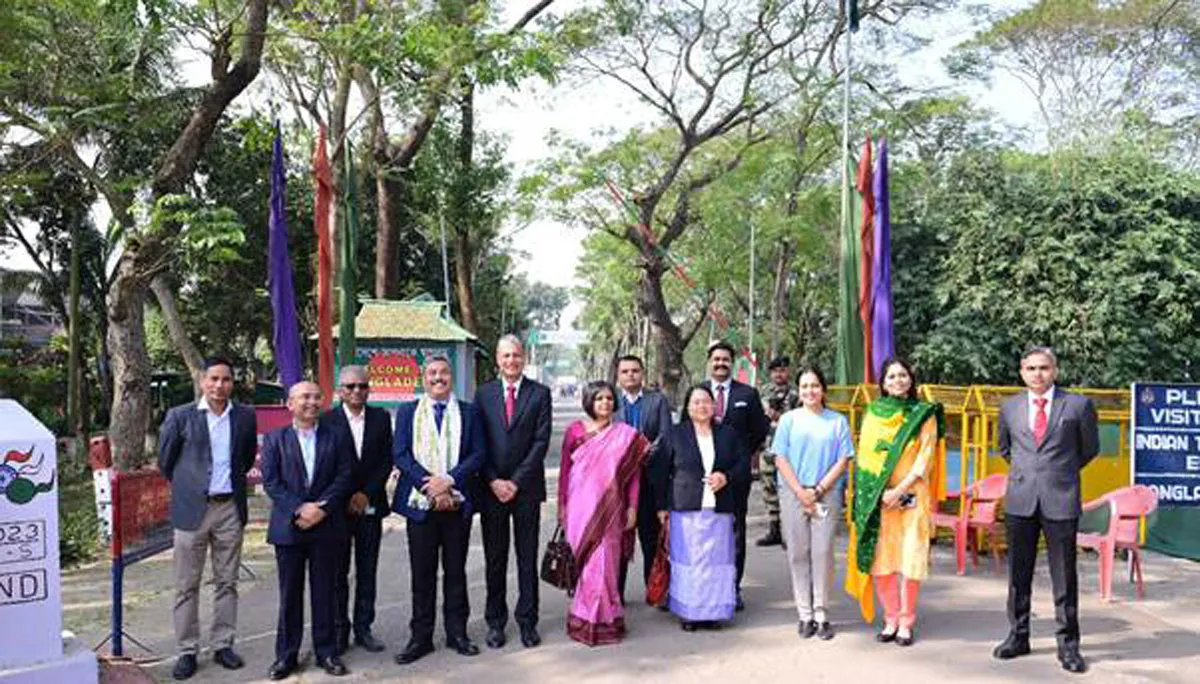
Surjit Bhujabal, Special Secretary and Member (Customs), Central Board of Indirect Taxes & Customs (CBIC), inaugurated the integration of the Indian Customs Electronic Gateway with the Land Port Management System (ICEGATE–LPMS) at the Integrated Check Post (ICP) in Agartala, Tripura. The initiative marks an important milestone in CBIC’s ongoing efforts to drive comprehensive digital transformation in cross-border trade facilitation.

The ICEGATE–LPMS integration enables real-time, two-way exchange of data between ICEGATE and the Land Port Management System, creating a seamless digital ecosystem at land ports. The system brings to Integrated Check Posts efficiencies similar to those already achieved at seaports, airports and inland container depots, resulting in faster clearance of goods, automated import and export workflows, secure data exchange and robust reconciliation mechanisms to ensure data integrity.

The integration covers key customs data elements such as the Bill of Entry, Shipping Bill, Out of Charge (OOC) and Let Export Order (LEO), along with event-based updates that track cargo movement from slot booking to gate-in and gate-out. These features significantly reduce manual intervention, streamline procedures and enhance operational efficiency at ICPs.

The initiative also strengthens Coordinated Border Management by promoting harmonised functioning among multiple border agencies through shared data, common risk assessment and synchronised decision-making. Automated status updates and end-to-end digital workflows help lower transaction costs and improve the ease of doing business, aligning India’s land border operations with global best practices.

From an enforcement perspective, the integration enhances risk-based targeting. Real-time logistics data from the Land Port Management System, when combined with declarations and intelligence available on ICEGATE, enables early risk assessment, detection of anomalies and selective application of controls. This ensures improved compliance while minimising disruption to legitimate trade.

The launch reflects the collaborative efforts of CBIC and the Land Ports Authority of India (LPAI) to make India’s trade infrastructure future-ready, simpler, faster and more transparent, while strengthening the country’s global competitiveness in cross-border trade.

Surjit Bhujabal, Special Secretary and Member (Customs), Central Board of Indirect Taxes & Customs (CBIC), inaugurated the integration of the Indian Customs Electronic Gateway with the Land Port Management System (ICEGATE–LPMS) at the Integrated Check Post (ICP) in Agartala, Tripura. The initiative marks an important milestone in CBIC’s ongoing efforts to drive comprehensive digital transformation in cross-border trade facilitation.The ICEGATE–LPMS integration enables real-time, two-way exchange of data between ICEGATE and the Land Port Management System, creating a seamless digital ecosystem at land ports. The system brings to Integrated Check Posts efficiencies similar to those already achieved at seaports, airports and inland container depots, resulting in faster clearance of goods, automated import and export workflows, secure data exchange and robust reconciliation mechanisms to ensure data integrity.The integration covers key customs data elements such as the Bill of Entry, Shipping Bill, Out of Charge (OOC) and Let Export Order (LEO), along with event-based updates that track cargo movement from slot booking to gate-in and gate-out. These features significantly reduce manual intervention, streamline procedures and enhance operational efficiency at ICPs.The initiative also strengthens Coordinated Border Management by promoting harmonised functioning among multiple border agencies through shared data, common risk assessment and synchronised decision-making. Automated status updates and end-to-end digital workflows help lower transaction costs and improve the ease of doing business, aligning India’s land border operations with global best practices.From an enforcement perspective, the integration enhances risk-based targeting. Real-time logistics data from the Land Port Management System, when combined with declarations and intelligence available on ICEGATE, enables early risk assessment, detection of anomalies and selective application of controls. This ensures improved compliance while minimising disruption to legitimate trade.The launch reflects the collaborative efforts of CBIC and the Land Ports Authority of India (LPAI) to make India’s trade infrastructure future-ready, simpler, faster and more transparent, while strengthening the country’s global competitiveness in cross-border trade.

Next Story
Infrastructure Urban

Implementation Status of Jal Jeevan Mission

Since August 2019 the Government has implemented Jal Jeevan Mission to provide assured potable water through household tap connections in rural India. At the start of the mission only 32.3 million (mn) rural households, representing 16.7 per cent, were reported to have tap water connections. States and union territories have reported that 125.8 mn additional rural households have since been provided with tap connections. As a result, of about 193.6 mn rural households roughly 158.2 mn, or 81.71 per cent, are reported to have tap water supply at home.\n\nThe State, district and village level st..

Next Story
Infrastructure Urban

Jal Jeevan Mission Reaches Eighty One Per Cent Rural Coverage

The Government reported substantial progress under the Jal Jeevan Mission, launched in August 2019 to provide tap water to every rural household. At launch only 32.3 million (mn) rural households had tap connections and states and Union territories reported provision of 125.8 mn additional households by March 2026. Consequently, out of about 193.6 mn rural households around 158.2 mn, or 81.71 per cent, are reported to have tap water at home. The Finance Minister announced extension of the mission until 2028 in the 2025-26 budget speech. The Swachh Bharat Mission Grameen, launched in October 20..

Next Story
Infrastructure Urban

Empowering Local Governance for Sustainable Rural Water Supply

The Ministry of Jal Shakti has aligned the Jal Jeevan Mission (JJM) with the 73rd Amendment to strengthen village level planning and community ownership of water supply. Gram Panchayats, village water and sanitation committees and Pani Samitis are to plan, implement, manage and maintain piped water systems, with gram sabha processes formalising handover and oversight. Implementation support agencies including non government organisations, community based organisations and self help groups have been empanelled to train local committees and promote women participation. Under JJM, the department ..

Advertisement

Subscribe to Our Newsletter

Get daily newsletters around different themes from Construction world.

STAY CONNECTED

Advertisement

Advertisement

Advertisement