India’s Skilling System Shifts to Unified, Outcome-Led Framework
ECONOMY & POLICY

India’s Skilling System Shifts to Unified, Outcome-Led Framework

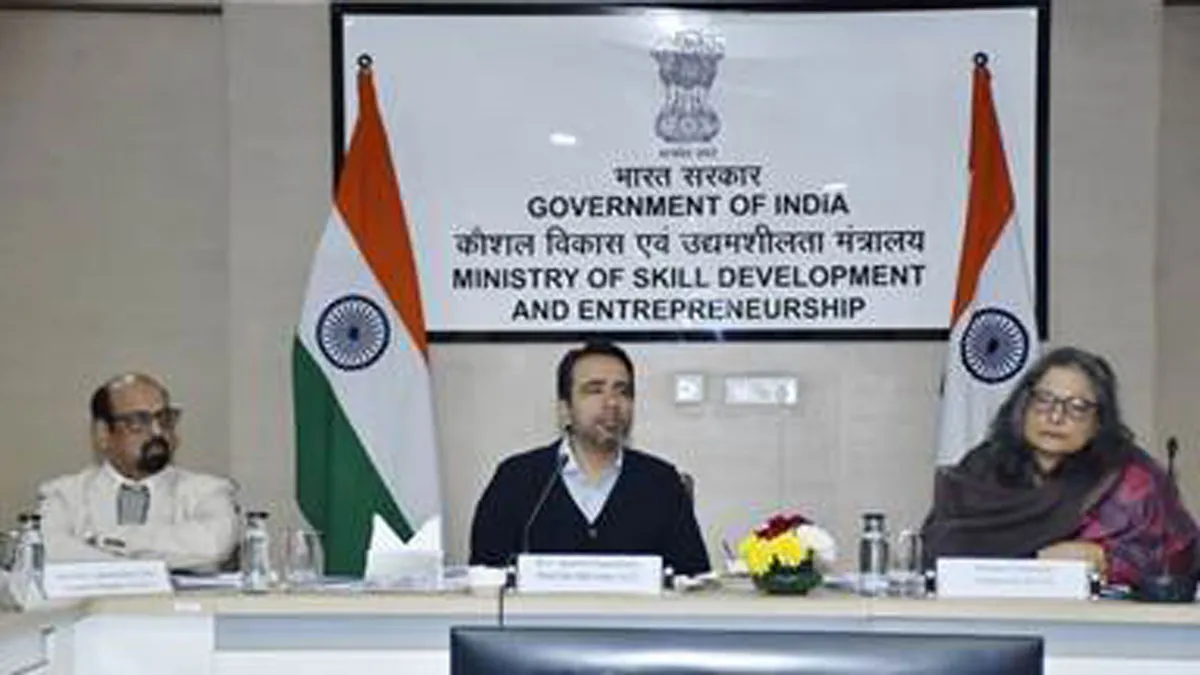
Union Minister of State (Independent Charge) for Skill Development and Entrepreneurship and Minister of State for Education Jayant Chaudhary chaired the first General Body Meeting of the National Council for Vocational Education and Training (NCVET) at Kaushal Bhawan, New Delhi. Addressing the meeting, the Minister said that India’s skilling ecosystem is undergoing a paradigm shift from fragmented systems to a unified, outcome-oriented framework aligned with education, industry and future technologies, with NCVET playing a central role in making the transition credible, transparent and learner-centric.

Jayant Chaudhary emphasised that the integration of skilling with mainstream schooling and  higher education, enabled through the National Credit Framework and other NCVET initiatives, is making skilling aspirational while ensuring seamless horizontal and vertical mobility for learners across the education ecosystem.

The General Body reviewed the institutional progress of NCVET since it became operational on August 1, 2020. As the apex national regulator for skilling, NCVET has subsumed the functions of the erstwhile National Skill Development Agency and National Council for Vocational Training, consolidating India’s skilling regulatory architecture. Currently, NCVET regulates 161 Awarding Bodies and 68 Assessment Agencies nationwide.

A key agenda item was the review of the Revised Guidelines for Recognition and Regulation of Awarding Bodies and Assessment Agencies (2025). The guidelines are aligned with the National Education Policy 2020, the National Credit Framework and the revised National Skills Qualification Framework 2023, with a strong focus on learning outcomes, technology-enabled assessments and evidence-based monitoring.

The Minister lauded the launch of KaushalVerse, NCVET’s unified digital enterprise portal that automates recognition, qualification management, monitoring and grievance redressal, enhancing transparency and ease of compliance. The meeting also reviewed flagship initiatives such as SOAR for AI readiness, Project Punah Sthapan for defence personnel transition, and the Semiconductor Workforce Strategy 2025.

Reaffirming inclusive growth, the General Body approved recognition of Persons with Disabilities as a separate sector in the National Qualification Register and cleared the proposal to establish a dedicated Research Division within NCVET to support evidence-based policy and labour market analysis.

Union Minister of State (Independent Charge) for Skill Development and Entrepreneurship and Minister of State for Education Jayant Chaudhary chaired the first General Body Meeting of the National Council for Vocational Education and Training (NCVET) at Kaushal Bhawan, New Delhi. Addressing the meeting, the Minister said that India’s skilling ecosystem is undergoing a paradigm shift from fragmented systems to a unified, outcome-oriented framework aligned with education, industry and future technologies, with NCVET playing a central role in making the transition credible, transparent and learner-centric.Jayant Chaudhary emphasised that the integration of skilling with mainstream schooling and  higher education, enabled through the National Credit Framework and other NCVET initiatives, is making skilling aspirational while ensuring seamless horizontal and vertical mobility for learners across the education ecosystem.The General Body reviewed the institutional progress of NCVET since it became operational on August 1, 2020. As the apex national regulator for skilling, NCVET has subsumed the functions of the erstwhile National Skill Development Agency and National Council for Vocational Training, consolidating India’s skilling regulatory architecture. Currently, NCVET regulates 161 Awarding Bodies and 68 Assessment Agencies nationwide.A key agenda item was the review of the Revised Guidelines for Recognition and Regulation of Awarding Bodies and Assessment Agencies (2025). The guidelines are aligned with the National Education Policy 2020, the National Credit Framework and the revised National Skills Qualification Framework 2023, with a strong focus on learning outcomes, technology-enabled assessments and evidence-based monitoring.The Minister lauded the launch of KaushalVerse, NCVET’s unified digital enterprise portal that automates recognition, qualification management, monitoring and grievance redressal, enhancing transparency and ease of compliance. The meeting also reviewed flagship initiatives such as SOAR for AI readiness, Project Punah Sthapan for defence personnel transition, and the Semiconductor Workforce Strategy 2025.Reaffirming inclusive growth, the General Body approved recognition of Persons with Disabilities as a separate sector in the National Qualification Register and cleared the proposal to establish a dedicated Research Division within NCVET to support evidence-based policy and labour market analysis.

Next Story
Infrastructure Urban

PM Modi Engages Youth at Viksit Bharat Young Leaders Dialogue 2026

Prime Minister Narendra Modi addressed the concluding session of the second edition of the Viksit Bharat Young Leaders Dialogue (VBYLD) 2026 at Bharat Mandapam, New Delhi, marking the culmination of the four-day event on National Youth Day. The programme coincided with the birth anniversary of Swami Vivekananda and witnessed enthusiastic participation from young leaders across the country.Interacting with the youth, the Prime Minister said that many participants were not yet born when he first took oath as Chief Minister, and were still children when he assumed office as Prime Minister in 2014..

Advertisement

Subscribe to Our Newsletter

Get daily newsletters around different themes from Construction world.

STAY CONNECTED

Advertisement

Advertisement

Advertisement

Advertisement

Open In App