India Adds Three Gigawatts Of Open Access Solar In Second Quarter
ECONOMY & POLICY

India Adds Three Gigawatts Of Open Access Solar In Second Quarter

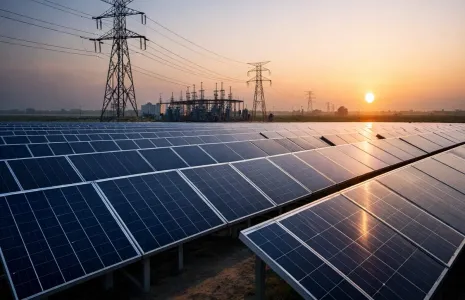
India added three gigawatts (GW) of open-access solar capacity in the second quarter of 2026, a quarterly record that brought cumulative installations to 36 GW at the end of June. First-half additions reached nearly six GW, up 42 per cent year on year as commercial and industrial demand and regulatory deadlines accelerated activity. The data appear in Mercom India’s report on the second quarter and first half of 2026.

In the open-access model commercial and industrial consumers procure power from off-site solar projects through transmission and distribution networks rather than from local distribution companies. Supply is typically via third-party power purchase agreements or captive and group-captive arrangements, with project economics influenced by state open-access rules, grid charges, banking provisions and surcharges. These elements affect project viability across states.

The report said open-access installations rose 10 per cent quarter on quarter, with Rajasthan accounting for 25 per cent of additions in the quarter. Mercom India said developers advanced procurement and commissioning in the first half ahead of a phased reduction of the interstate transmission system charge waiver and the introduction of sourcing rules under the Approved List of Models and Manufacturers List-II. Those sourcing requirements were deferred until the end of 2026 but the extension followed the original deadline.

Mercom India noted that record installations and a large pipeline reflected strong demand from commercial and industrial consumers while warning that rising project costs, transmission constraints, shifting banking and open-access regulations and domestic sourcing requirements were straining project economics. India’s cumulative open-access capacity stood at 36 GW at the end of June 2026, with Karnataka holding 21 per cent of cumulative capacity and Rajasthan and Maharashtra each holding 16 per cent. The five leading states accounted for 77 per cent of capacity, highlighting concentration in industrial regions and underlining the need for predictable state regulations and competitive tariffs.

India added three gigawatts (GW) of open-access solar capacity in the second quarter of 2026, a quarterly record that brought cumulative installations to 36 GW at the end of June. First-half additions reached nearly six GW, up 42 per cent year on year as commercial and industrial demand and regulatory deadlines accelerated activity. The data appear in Mercom India’s report on the second quarter and first half of 2026. In the open-access model commercial and industrial consumers procure power from off-site solar projects through transmission and distribution networks rather than from local distribution companies. Supply is typically via third-party power purchase agreements or captive and group-captive arrangements, with project economics influenced by state open-access rules, grid charges, banking provisions and surcharges. These elements affect project viability across states. The report said open-access installations rose 10 per cent quarter on quarter, with Rajasthan accounting for 25 per cent of additions in the quarter. Mercom India said developers advanced procurement and commissioning in the first half ahead of a phased reduction of the interstate transmission system charge waiver and the introduction of sourcing rules under the Approved List of Models and Manufacturers List-II. Those sourcing requirements were deferred until the end of 2026 but the extension followed the original deadline. Mercom India noted that record installations and a large pipeline reflected strong demand from commercial and industrial consumers while warning that rising project costs, transmission constraints, shifting banking and open-access regulations and domestic sourcing requirements were straining project economics. India’s cumulative open-access capacity stood at 36 GW at the end of June 2026, with Karnataka holding 21 per cent of cumulative capacity and Rajasthan and Maharashtra each holding 16 per cent. The five leading states accounted for 77 per cent of capacity, highlighting concentration in industrial regions and underlining the need for predictable state regulations and competitive tariffs.

Related Stories

Gold Stories

Next Story
Real Estate

Gradiant expands Coimbatore engineering centre

Gradiant has expanded its Global Engineering Center (GEC) in Coimbatore, more than doubling its engineering workforce from approximately 100 to over 200 professionals as it strengthens its global project execution capabilities.The expanded centre will bring together multidisciplinary expertise across process engineering, detailed design and project engineering, enabling the India team to take on greater responsibility for the engineering and design of Gradiant’s international projects.According to Govind Alagappan, COO, Gradiant, Coimbatore’s engineering talent and industrial heritage make..

Next Story
Infrastructure Urban

Domestic Firms Choose Locally Designed Reactors to Cut Delays

Domestic companies in the nuclear sector are choosing locally designed reactors to avoid time consuming approvals and supply chain bottlenecks that can delay project execution. The shift reflects an emphasis on reducing dependence on foreign designs and accelerating construction schedules by aligning design, manufacturing and regulatory processes within national frameworks. Industry participants expect that locally designed systems will allow closer coordination with regulators and vendors, shortening lead times for certification and component delivery. Localisation is projected to stimulate t..

Next Story
Infrastructure Urban

Kadiyam Kavya Seeks Separate Railway Division For Kazipet

Warangal Member of Parliament Kadiyam Kavya has urged the establishment of a separate railway division based at Kazipet and submitted a representation to the South Central Railway (SCR) general manager at the headquarters in Secunderabad. She highlighted Kazipet's role as a major railway hub and argued that the junction has not seen development commensurate with its strategic importance. The representative action aimed to press for administrative reorganisation to address local operational and developmental needs. She noted that creation of an independent Kazipet division has been a long stand..

Advertisement

Subscribe to Our Newsletter

Get daily newsletters around different themes from Construction world.

STAY CONNECTED

Advertisement