India And Netherlands Adopt Strategic Partnership Roadmap
ECONOMY & POLICY

India And Netherlands Adopt Strategic Partnership Roadmap

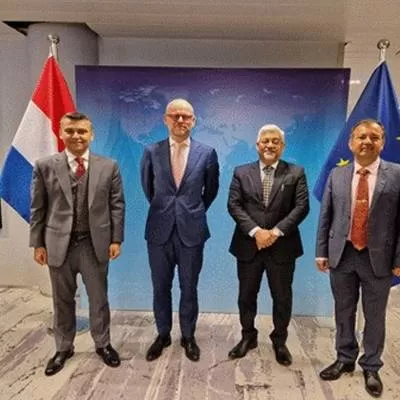
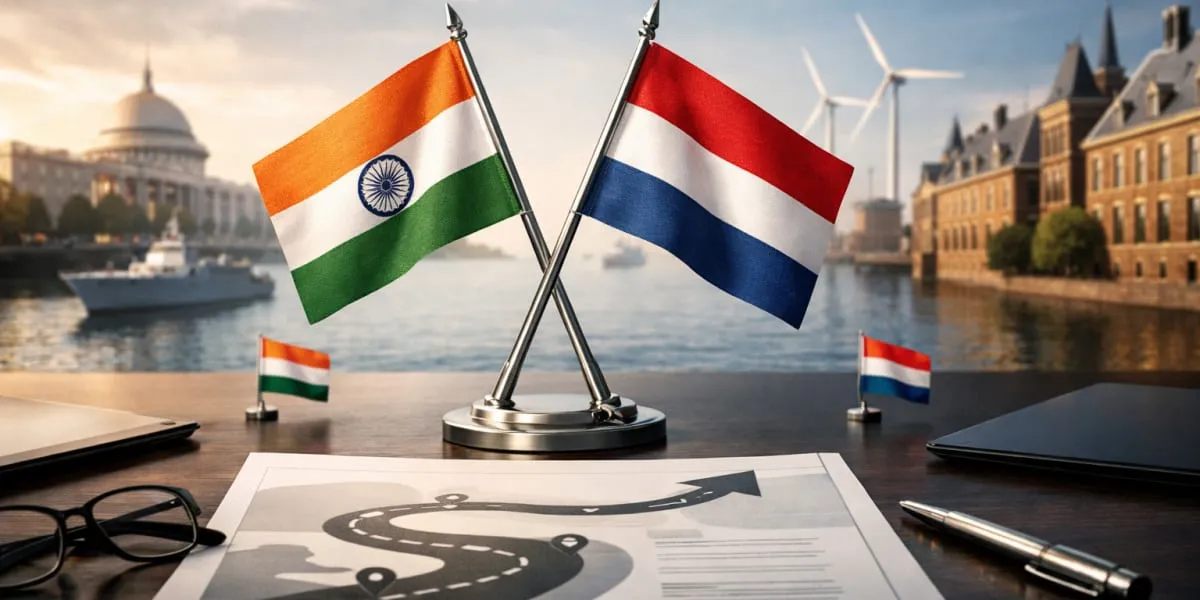
India and the Netherlands agreed to elevate their bilateral relationship to a Strategic Partnership and adopted a roadmap for the next five years (2026-2030) after a meeting in The Hague on 16 May 2026. The roadmap sets time bound initiatives across political dialogue, economy, water, technology, energy, maritime, defence, security, migration and culture. An annual foreign minister level mechanism will review progress.

They committed to maintain regular reciprocal visits by heads of government, ministers and senior officials and to intensify ministry level interactions. Economic cooperation will be advanced through the Joint Trade and Investment Committee (JTIC) to boost trade, market access and investment, focusing on renewables, semiconductors, innovation, agriculture and pharmaceuticals. The roadmap promotes joint ventures, industrial partnerships and SME participation to enhance supply chain resilience.

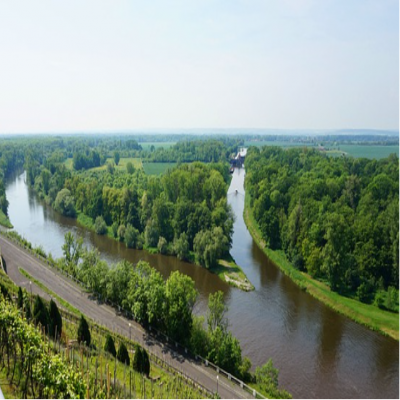
Water, agriculture and health are central to the partnership, with plans to renew the Strategic Partnership on Water and to strengthen integrated water resources management, urban water systems and river basin planning in the Ganga Basin. The Centre of Excellence on Water will be used for knowledge exchange, capacity building and support for start-ups, while agriculture cooperation will target climate resilient farming and agri?tech.

The roadmap expands cooperation on emerging technologies, research and education with emphasis on semiconductors, artificial intelligence, cybersecurity, photonics and biomolecular sciences. It links the Dutch Semicon Competence Centre with the Indian Semiconductor Mission and supports memoranda between universities and technical institutes to build a brain bridge backed by industry partners for talent development, research and start-up collaboration. Space applications will be further explored.

Energy transition and maritime development will be pursued via a Joint Working Group on Renewable Energy, action planning for renewable hydrogen and a proposed green and digital sea corridor to promote sustainable shipping and trade. Defence and security cooperation will include tri service interactions, maritime engagement, cyber dialogue and steps towards mutual legal assistance and extradition arrangements. Migration and cultural exchanges will be facilitated.

India and the Netherlands agreed to elevate their bilateral relationship to a Strategic Partnership and adopted a roadmap for the next five years (2026-2030) after a meeting in The Hague on 16 May 2026. The roadmap sets time bound initiatives across political dialogue, economy, water, technology, energy, maritime, defence, security, migration and culture. An annual foreign minister level mechanism will review progress. They committed to maintain regular reciprocal visits by heads of government, ministers and senior officials and to intensify ministry level interactions. Economic cooperation will be advanced through the Joint Trade and Investment Committee (JTIC) to boost trade, market access and investment, focusing on renewables, semiconductors, innovation, agriculture and pharmaceuticals. The roadmap promotes joint ventures, industrial partnerships and SME participation to enhance supply chain resilience. Water, agriculture and health are central to the partnership, with plans to renew the Strategic Partnership on Water and to strengthen integrated water resources management, urban water systems and river basin planning in the Ganga Basin. The Centre of Excellence on Water will be used for knowledge exchange, capacity building and support for start-ups, while agriculture cooperation will target climate resilient farming and agri?tech. The roadmap expands cooperation on emerging technologies, research and education with emphasis on semiconductors, artificial intelligence, cybersecurity, photonics and biomolecular sciences. It links the Dutch Semicon Competence Centre with the Indian Semiconductor Mission and supports memoranda between universities and technical institutes to build a brain bridge backed by industry partners for talent development, research and start-up collaboration. Space applications will be further explored. Energy transition and maritime development will be pursued via a Joint Working Group on Renewable Energy, action planning for renewable hydrogen and a proposed green and digital sea corridor to promote sustainable shipping and trade. Defence and security cooperation will include tri service interactions, maritime engagement, cyber dialogue and steps towards mutual legal assistance and extradition arrangements. Migration and cultural exchanges will be facilitated.

Next Story
Real Estate

WSB Invests in Omaxe for Tier II Expansion

WSB Partners, a real estate-focused investment firm, has invested Rs 750 million in Omaxe Group to support residential plotted developments in Ujjain and Indore.The investment marks WSB’s entry into Tier II markets and reflects growing institutional interest in emerging cities supported by infrastructure growth, improving affordability and rising housing demand.According to the companies, the funding will be deployed primarily as growth capital, with a portion allocated towards working capital and reserves. The investment has been undertaken alongside affiliates of WSB Partners and co-invest..

Next Story
Infrastructure Transport

RAHSTA Awards 2026 Opens for India’s Leading Road Developers

RAHSTA (Roads and Highways Sustainable Technologies & Advancement), Asia’s leading road infrastructure platform, has officially opened nominations for the RAHSTA Awards 2026 under the Road Developers category. The awards will honour companies and organisations that are shaping India’s highway infrastructure landscape through innovation, sustainability, quality execution and efficient asset management.Scheduled alongside RAHSTA 2026 on July 8–9, 2026 at the Jio World Convention Centre, Mumbai, the awards have emerged as one of the most respected recognitions for the roads and highways..

Next Story
Infrastructure Transport

Railways To Sell 10 per cent In PSUs To Raise Rs Two Point Six Two tn

The railway ministry has outlined a plan to sell up to 10 per cent stakes in several public sector undertakings as part of a broader asset monetisation drive. The move is designed to unlock value and generate funds for capital expenditure and network modernisation. The programme targets private participation through offer for sale and minority stake divestments across operating and finance entities. The initiative follows previous asset recycling efforts and seeks to capture market interest for strategic holdings. The target for the exercise is Rs two point six two trillion (tn) to be realised..

Advertisement

Subscribe to Our Newsletter

Get daily newsletters around different themes from Construction world.

STAY CONNECTED

Advertisement

Advertisement

Advertisement

-->