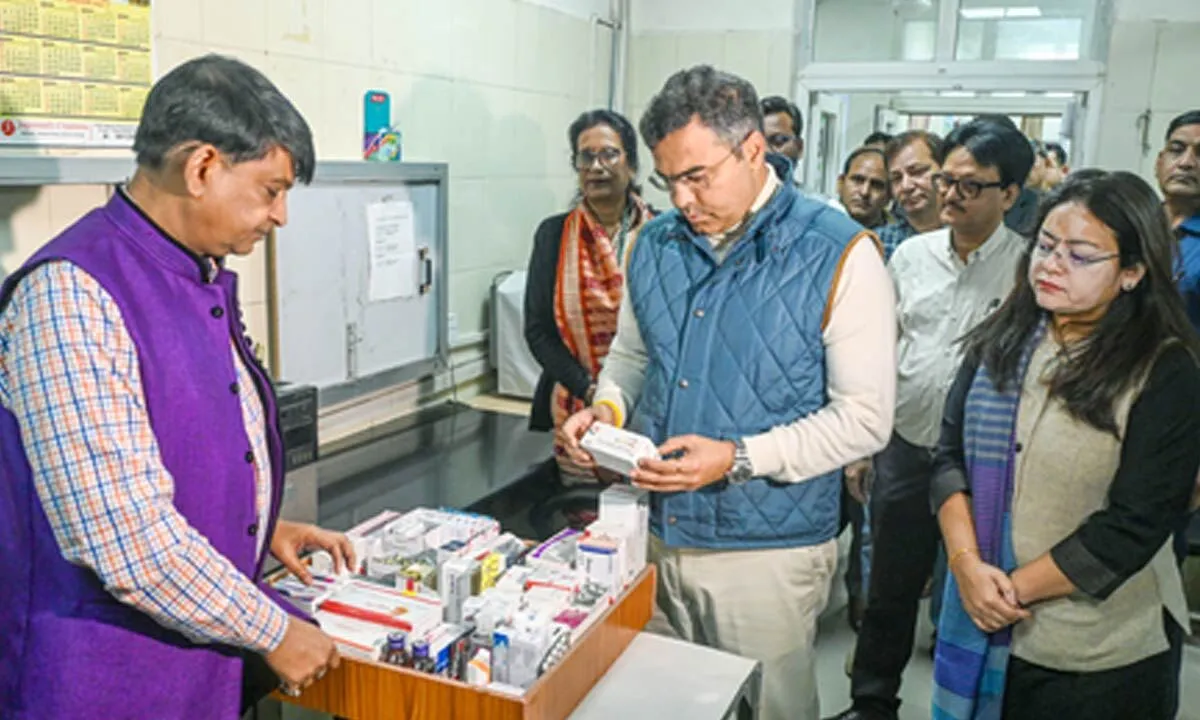



India Crosses 50,000 Public Facilities Under NQAS
ECONOMY & POLICY

India Crosses 50,000 Public Facilities Under NQAS

India has reached a major milestone in strengthening the quality of public healthcare, with 50,373 public health facilities across all states and Union Territories certified under the National Quality Assurance Standards as of 31 December 2025. The certification programme, established by the Ministry of Health and Family Welfare, marks a significant step in improving safety, quality and patient-centred care, particularly for poor, vulnerable and marginalised populations.

The achievement takes India past the 50,000 mark for NQAS-certified facilities, highlighting the government’s sustained commitment to equitable access to high-quality public healthcare. The NQAS initiative began in 2015 with just 10 certified facilities, initially covering district hospitals. Over the years, it has expanded systematically to include sub-district hospitals, community health centres, Ayushman Arogya Mandir primary health centres, urban primary health centres and sub-health centres, embedding quality assurance across all tiers of public healthcare delivery.

The introduction of virtual assessments has sharply accelerated the pace of certification. The number of certified facilities rose from 6,506 in December 2023 to 22,786 in December 2024, before more than doubling to 50,373 by December 2025. Of these, 48,663 are Ayushman Arogya Mandirs at the sub-health centre, primary health centre and urban primary health centre levels, while 1,710 are secondary care facilities, including community health centres, sub-district hospitals and district hospitals. This rapid expansion reflects the institutionalisation of quality standards throughout the public health system.

The scale-up aligns with India’s pursuit of universal health coverage under the National Health Policy 2017, which emphasises affordable, quality healthcare without financial hardship. Progress has been driven by a multi-pronged approach involving continuous capacity building, digital innovation, a substantial expansion of the assessor pool and ongoing quality improvement mechanisms.

Crossing the 50,000 mark is seen as a testament to India’s resolve to build a resilient, self-reliant and high-quality public health system, reflecting the broader goals of Aatmanirbhar Bharat and inclusive development. The government has reiterated its commitment to sustaining and expanding NQAS certification, with an interim target of certifying at least 50 per cent of public healthcare facilities by March 2026, further embedding quality, safety and patient-centred care nationwide.

India has reached a major milestone in strengthening the quality of public healthcare, with 50,373 public health facilities across all states and Union Territories certified under the National Quality Assurance Standards as of 31 December 2025. The certification programme, established by the Ministry of Health and Family Welfare, marks a significant step in improving safety, quality and patient-centred care, particularly for poor, vulnerable and marginalised populations. The achievement takes India past the 50,000 mark for NQAS-certified facilities, highlighting the government’s sustained commitment to equitable access to high-quality public healthcare. The NQAS initiative began in 2015 with just 10 certified facilities, initially covering district hospitals. Over the years, it has expanded systematically to include sub-district hospitals, community health centres, Ayushman Arogya Mandir primary health centres, urban primary health centres and sub-health centres, embedding quality assurance across all tiers of public healthcare delivery. The introduction of virtual assessments has sharply accelerated the pace of certification. The number of certified facilities rose from 6,506 in December 2023 to 22,786 in December 2024, before more than doubling to 50,373 by December 2025. Of these, 48,663 are Ayushman Arogya Mandirs at the sub-health centre, primary health centre and urban primary health centre levels, while 1,710 are secondary care facilities, including community health centres, sub-district hospitals and district hospitals. This rapid expansion reflects the institutionalisation of quality standards throughout the public health system. The scale-up aligns with India’s pursuit of universal health coverage under the National Health Policy 2017, which emphasises affordable, quality healthcare without financial hardship. Progress has been driven by a multi-pronged approach involving continuous capacity building, digital innovation, a substantial expansion of the assessor pool and ongoing quality improvement mechanisms. Crossing the 50,000 mark is seen as a testament to India’s resolve to build a resilient, self-reliant and high-quality public health system, reflecting the broader goals of Aatmanirbhar Bharat and inclusive development. The government has reiterated its commitment to sustaining and expanding NQAS certification, with an interim target of certifying at least 50 per cent of public healthcare facilities by March 2026, further embedding quality, safety and patient-centred care nationwide.

Next Story
Infrastructure Urban

Mount Invests Rs 250 Cr, Adds PUF & PEB Plants, 400+ Jobs

TUMKUR, Karnataka, January 8, 2025 - Mount Roofing & Structures Private Limited, one of India's  fastest-growing manufacturers in PUF and a leading solutions provider across Pre-Engineered Building  (PEB) and Polycarbonate sheets, simultaneously inaugurated its second fully automated continuous  Sandwich Panel manufacturing line and a new PEB manufacturing plant at its integrated campus in  Tumkur." The milestone expansion, part of a total investment of INR 250 crores, marks a significant  advancement in the company's commitment to engineered performance, manu..

Next Story
Infrastructure Urban

Titan Intech Strengthens UltraLED Push With Global LED Veteran

Titan Intech has announced the induction of global LED industry veteran Su Piow Ko to its Board of Directors, marking a strategic step in strengthening its UltraLED Displays roadmap and building globally competitive LED display solutions from India.The appointment aligns with Titan Intech’s ambition to position India as a hub for advanced, high-quality LED display manufacturing. With an increased focus on UltraLED Displays, the company aims to enhance technical governance, raise manufacturing standards and expand its presence across global markets.Su Piow Ko brings over three decades of inte..

Next Story
Infrastructure Urban

Dun & Bradstreet Flags New Growth Engines in India 2026 Outlook

Dun & Bradstreet has released its India 2026: D&B’s Perspective report, projecting a stable macroeconomic environment underpinned by fresh opportunities for productivity-led and inclusive growth. The report outlines how India’s next growth phase will be driven by digitised logistics, trusted data ecosystems, clean energy and rising city vitality.According to the outlook, India’s GDP growth is expected to reach around 6.6 per cent by FY2027, supported by resilient consumer demand and sustained public investment. Manufacturing is seen entering a new phase, moving beyond scale towar..

Advertisement

Subscribe to Our Newsletter

Get daily newsletters around different themes from Construction world.

STAY CONNECTED

Advertisement

Advertisement

Advertisement

Advertisement

Open In App