



India Exports First Fuel To Europe Since Ban
ECONOMY & POLICY

India Exports First Fuel To Europe Since Ban

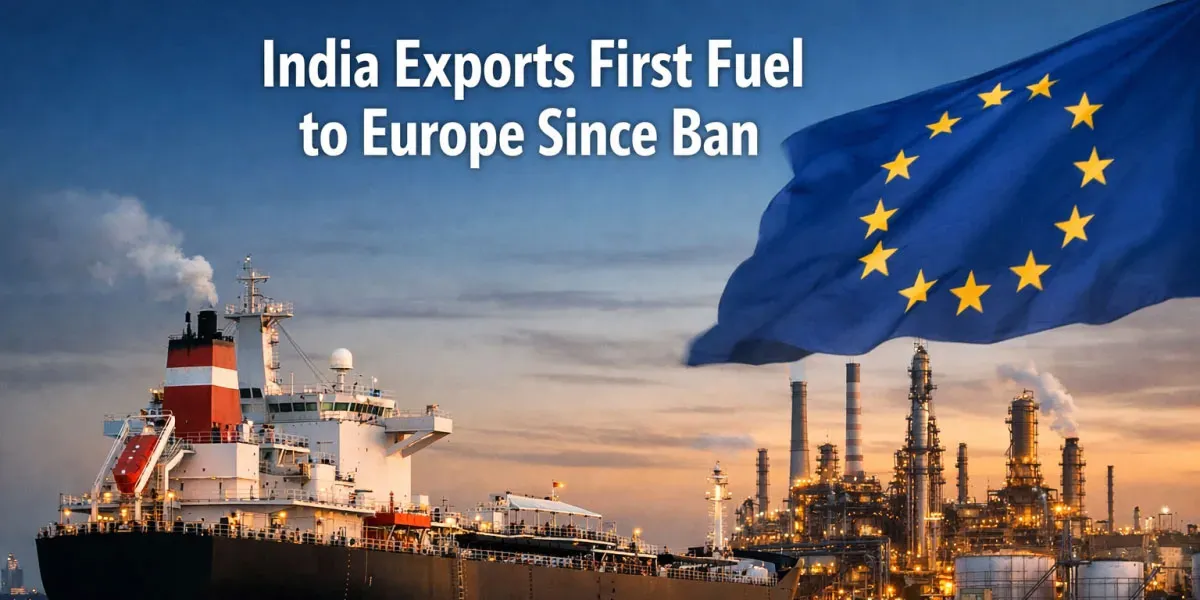
India has exported its first fuel shipment to Europe since the ban on products derived from Russian crude took effect, marking a notable change in global product flows. Officials indicated the consignment comprised refined petroleum products produced at Indian refineries and was routed to European buyers as traders adjusted supply chains. The move reflected the ability of Indian refiners to access alternative feedstock and to find new markets in the aftermath of sanctions and trade restrictions.

Market participants said the cargo underscores how trading patterns have shifted as European buyers sought non-Russian sources of fuel. Refiners and trading houses reworked sourcing and logistics to meet demand, with ships and port services adapting to new routes. Analysts noted that the export may encourage further shipments from Asia to Europe and could alter seasonal flows, particularly for diesel and other middle distillates where Europe has shown acute demand.

Government and industry actors framed the export as a commercial response rather than a political statement, emphasising market forces and contractual obligations. Export documentation and customs clearances were handled under standard procedures, and insurers and charterers adjusted terms to reflect cargo origin and routing. The adjustment period required close coordination among refiners, traders, shipping firms and regulators to ensure compliance with sanctions and with import rules in destination ports.

Investors and commodity traders will watch subsequent shipments for indications of scale and sustainability, including the frequency of voyages and the types of products offered. Officials said monitoring would continue to assess impacts on domestic supply and on refinery margins, with policy responses kept in reserve should domestic shortages arise. The development signals the evolving nature of global fuel markets as participants adapt to regulatory and geopolitical shifts.

"Join industry leaders at RAHSTA Expo, India's premier platform for roads, highways and traffic infrastructure. Register now to explore innovations, network with experts and shape the future of mobility."

India has exported its first fuel shipment to Europe since the ban on products derived from Russian crude took effect, marking a notable change in global product flows. Officials indicated the consignment comprised refined petroleum products produced at Indian refineries and was routed to European buyers as traders adjusted supply chains. The move reflected the ability of Indian refiners to access alternative feedstock and to find new markets in the aftermath of sanctions and trade restrictions. Market participants said the cargo underscores how trading patterns have shifted as European buyers sought non-Russian sources of fuel. Refiners and trading houses reworked sourcing and logistics to meet demand, with ships and port services adapting to new routes. Analysts noted that the export may encourage further shipments from Asia to Europe and could alter seasonal flows, particularly for diesel and other middle distillates where Europe has shown acute demand. Government and industry actors framed the export as a commercial response rather than a political statement, emphasising market forces and contractual obligations. Export documentation and customs clearances were handled under standard procedures, and insurers and charterers adjusted terms to reflect cargo origin and routing. The adjustment period required close coordination among refiners, traders, shipping firms and regulators to ensure compliance with sanctions and with import rules in destination ports. Investors and commodity traders will watch subsequent shipments for indications of scale and sustainability, including the frequency of voyages and the types of products offered. Officials said monitoring would continue to assess impacts on domestic supply and on refinery margins, with policy responses kept in reserve should domestic shortages arise. The development signals the evolving nature of global fuel markets as participants adapt to regulatory and geopolitical shifts.

Next Story
Real Estate

Pecan Realty Completes Rs 1.5 Billion Transactions

Pecan Realty has recently completed four institutional transactions worth over Rs 1.5 billion over the past two years, strengthening its position as an execution-led real estate platform. The deals include resolution-led acquisitions, structured finance transactions and capital partnerships across its development portfolio.The transactions covered acquisitions through the National Company Law Tribunal process and helped provide repayment or exits to both private and public sector lenders. The company said the deals demonstrate its ability to resolve complex project situations, work with instit..

Next Story
Real Estate

SNN Estates Expands North Bengaluru Housing Project

SNN Estates has announced an expansion of its SNN Estates Felicity residential project in North Bengaluru following strong buyer demand, with 75 per cent of the first-phase inventory sold within three days of launch.The developer will add 76 apartments in the new phase, taking the project's estimated revenue potential to around Rs 1,000 crore upon completion of Phase 2.Spread across 6.5 acres in Rachenahalli, near Manyata Tech Park, the project comprises 604 apartments in 1.5, 2, 2.5, 3 and 4 BHK configurations. The development includes a 50,000-sq-ft clubhouse with amenities such as sports co..

Next Story
Infrastructure Urban

SCG Drives ASEAN Industrial Transformation Strategy

SCG is strengthening its focus on ASEAN as a key growth region by advancing industrial transformation, enhancing competitiveness and building resilient regional value chains. Thammasak Sethaudom, President and Chief Executive Officer, SCG, highlighted the need for industries to continuously develop capabilities, strengthen resilience and deepen regional cooperation to achieve sustainable long-term growth.SCG views ASEAN as an important growth engine alongside China, supported by favourable demographics, trade connectivity and investment flows. With ASEAN’s GDP projected to grow by around 4.7..

Advertisement

Subscribe to Our Newsletter

Get daily newsletters around different themes from Construction world.

STAY CONNECTED

Advertisement

Advertisement

Advertisement