+
India Must Accelerate Shift To Electric Trucks And Domestic Manufacturing
ECONOMY & POLICY

India Must Accelerate Shift To Electric Trucks And Domestic Manufacturing

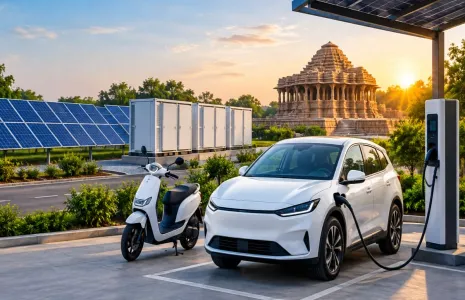
Tarun Kapoor, Advisor to the Prime Minister, said at the 66th Society of Indian Automobile Manufacturers annual convention in New Delhi that India must accelerate its transition to electric mobility, particularly for trucks and buses, and build domestic capacity in critical technologies and components to reduce vulnerabilities to global supply disruptions. He said the next five years would be critical for the automobile industry and that incremental changes would be insufficient to meet India's energy security and technology goals. Kapoor urged a major landscape change rather than incremental measures.

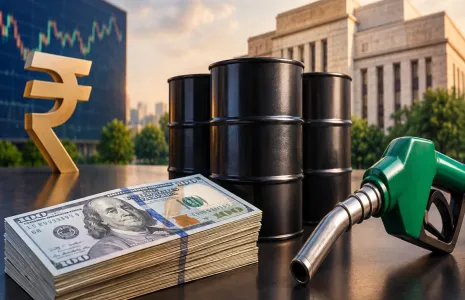
He noted rising concerns over energy security and dependence on imported crude and said the shift towards sustainability, energy efficiency and cleaner fuels would accelerate. The government, he said, would need to collaborate with manufacturers and financiers to design supportive financing models. He also highlighted the role of policy measures in steering large scale change.

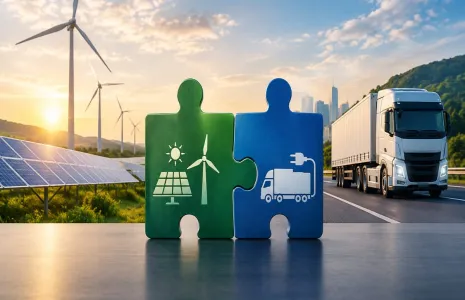
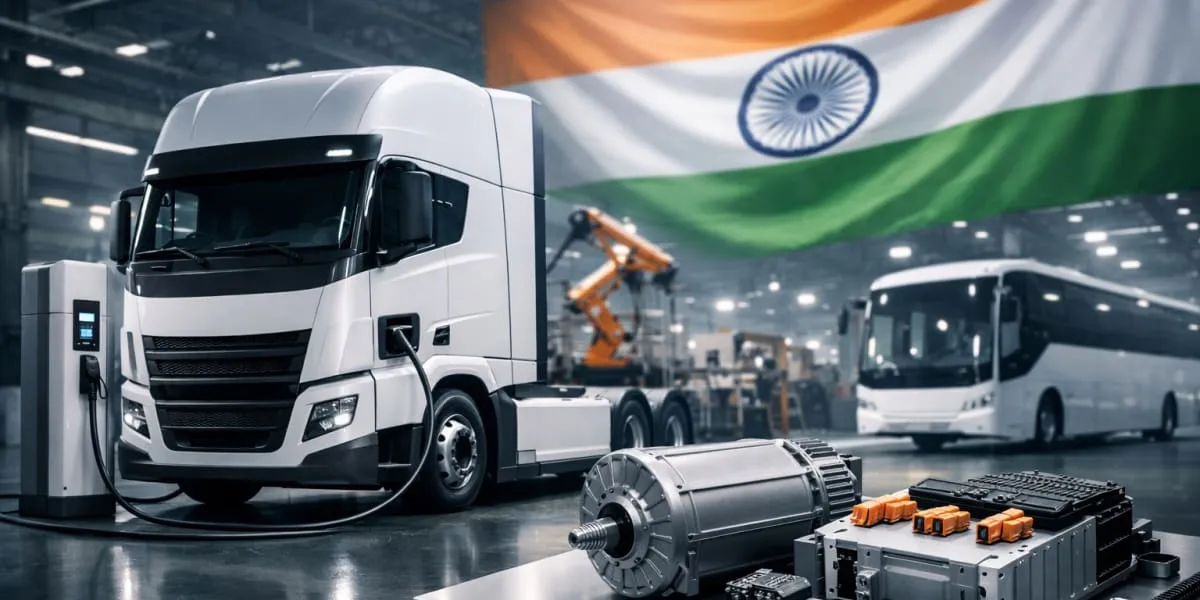
He identified heavy vehicles, particularly trucks, as a priority for faster electrification and said diesel dependence remained a major bottleneck for India. Kapoor said the government would work with industry on financing mechanisms, battery swapping and highway charging infrastructure to reduce costs and improve viability for electric trucks. He noted the PM E-DRIVE scheme currently provides for 5,000 electric trucks but only around 150 have been covered so far.

Beyond mobility, he called for a stronger domestic manufacturing base for semiconductors and other critical components used in vehicles and cited recent supply disruptions involving rare earth magnets as an example of vulnerability in concentrated global supply chains. Kapoor said India should aim to emerge as a global automobile manufacturing, technology and export hub with greater research and development, design, component manufacturing and innovation taking place domestically. He indicated that measures such as restrictions, taxation policies and schemes to replace older commercial vehicles could be considered and asked the industry to come forward with ideas to scale the transition.

Tarun Kapoor, Advisor to the Prime Minister, said at the 66th Society of Indian Automobile Manufacturers annual convention in New Delhi that India must accelerate its transition to electric mobility, particularly for trucks and buses, and build domestic capacity in critical technologies and components to reduce vulnerabilities to global supply disruptions. He said the next five years would be critical for the automobile industry and that incremental changes would be insufficient to meet India's energy security and technology goals. Kapoor urged a major landscape change rather than incremental measures. He noted rising concerns over energy security and dependence on imported crude and said the shift towards sustainability, energy efficiency and cleaner fuels would accelerate. The government, he said, would need to collaborate with manufacturers and financiers to design supportive financing models. He also highlighted the role of policy measures in steering large scale change. He identified heavy vehicles, particularly trucks, as a priority for faster electrification and said diesel dependence remained a major bottleneck for India. Kapoor said the government would work with industry on financing mechanisms, battery swapping and highway charging infrastructure to reduce costs and improve viability for electric trucks. He noted the PM E-DRIVE scheme currently provides for 5,000 electric trucks but only around 150 have been covered so far. Beyond mobility, he called for a stronger domestic manufacturing base for semiconductors and other critical components used in vehicles and cited recent supply disruptions involving rare earth magnets as an example of vulnerability in concentrated global supply chains. Kapoor said India should aim to emerge as a global automobile manufacturing, technology and export hub with greater research and development, design, component manufacturing and innovation taking place domestically. He indicated that measures such as restrictions, taxation policies and schemes to replace older commercial vehicles could be considered and asked the industry to come forward with ideas to scale the transition.

Related Stories

Gold Stories

Next Story
Infrastructure Urban

TransIndia Launches World View Collection at Meridian

TransIndia Group has recently launched ‘The World View Collection’ at TransIndia Meridian, its residential development in Mumbai’s Sion-Matunga Corridor. The campaign introduces residences located on the 22nd floor and above, offering expansive views of the cityscape, Eastern Bay and the sea.The collection positions elevation as an integral part of the living experience, with the higher-floor homes designed around openness, changing skylines and wider city views. Rather than focusing only on floor height, the campaign highlights how elevated residences can offer a different perspective o..

Next Story
Real Estate

Villaro Design Studio Opens on MG Road in Delhi

Furniture designer Yuvraj Vohra has recently launched the new Villaro Design Studio on MG Road, Delhi, introducing a furniture brand built around an architectural approach to design, materiality and craftsmanship.Trained as an architect, Vohra approaches furniture as an integral part of the spatial experience rather than as standalone objects. Villaro's design philosophy focuses on proportion, material expression and the relationship between furniture and its surrounding architecture.The collection explores combinations of stone, marble, wood, metal and upholstery, with materials treated as st..

Next Story
Infrastructure Urban

India-Belgium Trade Shows Signs of Recovery in FY2026

India-Belgium economic relations are gaining renewed momentum following Belgian Prime Minister Bart De Wever’s three-day official visit to India from September 2–4, 2026. The visit, the first by a Belgian Prime Minister to India in two decades, focused on strengthening cooperation across trade, investment, defence, technology, connectivity and logistics.Belgium is an important European investment and trading partner for India, with cumulative foreign direct investment inflows of around $4.25 billion between April 2000 and March 2026. The country is a major European manufacturing, trade and..

Advertisement

Subscribe to Our Newsletter

Get daily newsletters around different themes from Construction world.

STAY CONNECTED

Advertisement

SPECIAL OFFER
QR Code