

India Must Build Better Cities Not Just Bigger Ones
ECONOMY & POLICY

India Must Build Better Cities Not Just Bigger Ones

India’s urbanisation is accelerating, with nearly 600 million (mn) Indians expected to live in urban areas by 2030, placing pressure on housing, transport, water and civic infrastructure.

Dr Sanjeev Vidyarthi, provost of Anant National University, said preparedness must widen beyond scale to include health, safety and quality of life.

The Smart Cities Mission produced a mixed record by shifting focus from conventional infrastructure to integrated area planning, technology enabled governance and citizen oriented service delivery while accelerating investments.

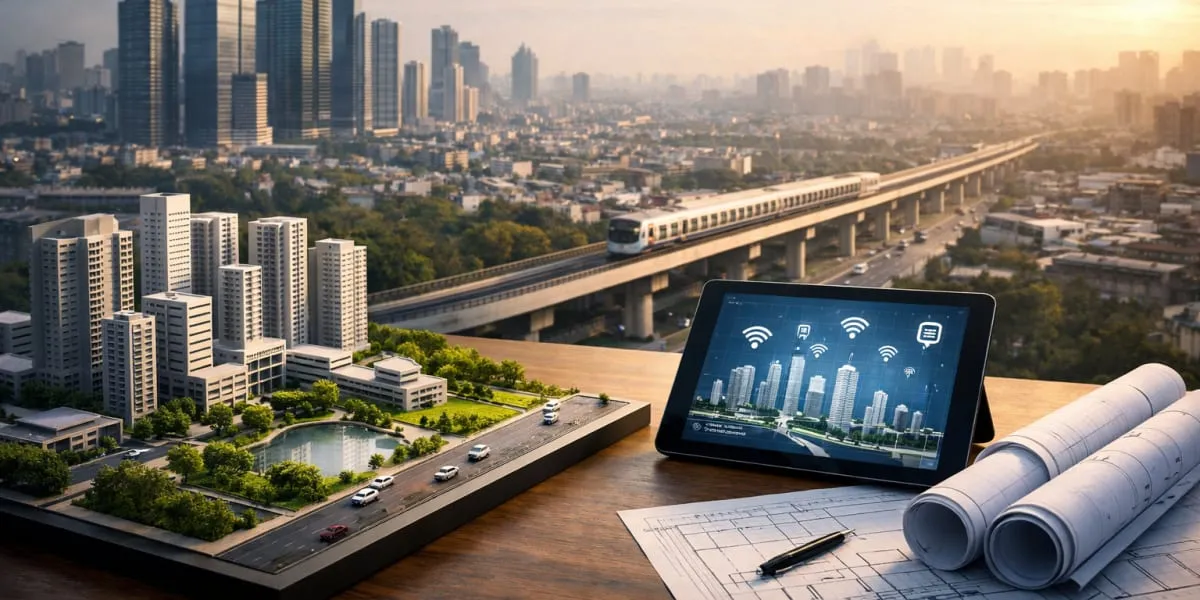
Much work remained project specific rather than enabling citywide transformation, and Vidyarthi argued housing, mobility, public spaces, environmental resilience and governance must be planned together.

Climate risks add urgency, with floods, heatwaves and water shortages increasingly affecting urban populations and infrastructure.

Vidyarthi noted that more than half of the housing required by 2070 is yet to be built, creating an opportunity to embed climate responsive design from the outset rather than rely on retrofitting.

He cited Kolkata’s flood forecasting and warning system, Chennai’s stormwater initiatives and Ahmedabad’s Heat Action Plan as instructive, and said Jaipur illustrates how heritage and planning can align.

Governance remains a central constraint despite foundation from the 74th Constitutional Amendment, with many urban local bodies lacking financial autonomy and decision making powers.

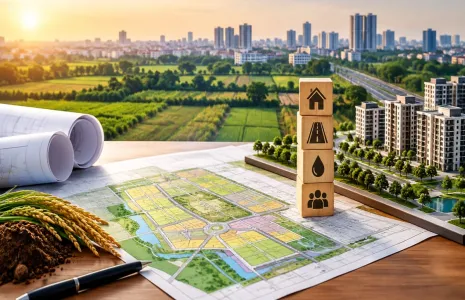
Vidyarthi recommended three priorities for Viksit Bharat 2047: strengthen urban local bodies with resources and citizen participation; focus on class III and IV towns to improve infrastructure and economic opportunities; and broaden planning to include air and water quality, public spaces and the ecological systems that sustain cities.

He added that technology such as artificial intelligence and digital twins can assist planners but cannot replace governance, which requires policies on equity, privacy and the digital divide.

India’s urbanisation is accelerating, with nearly 600 million (mn) Indians expected to live in urban areas by 2030, placing pressure on housing, transport, water and civic infrastructure. Dr Sanjeev Vidyarthi, provost of Anant National University, said preparedness must widen beyond scale to include health, safety and quality of life. The Smart Cities Mission produced a mixed record by shifting focus from conventional infrastructure to integrated area planning, technology enabled governance and citizen oriented service delivery while accelerating investments. Much work remained project specific rather than enabling citywide transformation, and Vidyarthi argued housing, mobility, public spaces, environmental resilience and governance must be planned together. Climate risks add urgency, with floods, heatwaves and water shortages increasingly affecting urban populations and infrastructure. Vidyarthi noted that more than half of the housing required by 2070 is yet to be built, creating an opportunity to embed climate responsive design from the outset rather than rely on retrofitting. He cited Kolkata’s flood forecasting and warning system, Chennai’s stormwater initiatives and Ahmedabad’s Heat Action Plan as instructive, and said Jaipur illustrates how heritage and planning can align. Governance remains a central constraint despite foundation from the 74th Constitutional Amendment, with many urban local bodies lacking financial autonomy and decision making powers. Vidyarthi recommended three priorities for Viksit Bharat 2047: strengthen urban local bodies with resources and citizen participation; focus on class III and IV towns to improve infrastructure and economic opportunities; and broaden planning to include air and water quality, public spaces and the ecological systems that sustain cities. He added that technology such as artificial intelligence and digital twins can assist planners but cannot replace governance, which requires policies on equity, privacy and the digital divide.

Related Stories

Gold Stories
Next Story
Infrastructure Urban

Sabarmati Riverfront Two Plots Up for Auction at Rs2.24 bn Base Price

Two commercial plots on the western bank of the Sabarmati Riverfront will be auctioned with a base price of Rs 112 crore each, equivalent to Rs 1.12 bn apiece and Rs 2.24 billion in total. The parcels are located adjacent to the Metro Rail Bridge in Ahmedabad and form the first commercial offering after a prolonged pause. The Riverfront Development Corporation has framed the sale as part of a phased commercial release to revive development along the riverfront. The combined base valuation has been set by the corporation to reflect market rates along the riverfront. The corporation has fixed a ..

Next Story
Infrastructure Urban

Andhra Pradesh to Connect Over One Million Streetlights

Andhra Pradesh will undertake a statewide smart streetlighting programme across all 123 Urban Local Bodies (ULBs), bringing around 1.05 million (mn) streetlights under an AI enabled monitoring and management system. The programme will be implemented by Energy Efficiency Services Limited (EESL) with the Commissioner and Director of Municipal Administration under the state Municipal Administration and Urban Development Department. The project aims to convert conventional streetlighting into a digitally managed municipal service monitored and maintained remotely. The initial phase will cover abou..

Next Story
Infrastructure Urban

AMC To Procure Four Machines For Guard Rail Cleaning

Ahmedabad Municipal Corporation will introduce four specialised machines for cleaning guard railings along major roads and the central verges of BRTS and Metro corridors. The civic body plans to replace manual labour with mechanised cleaning to improve maintenance of road infrastructure and greenery. The purchase is estimated at Rs 82.8 million (mn), excluding GST. The proposal sets the base price of each machine at about Rs 20.7 million (mn) so four units total Rs 82.8 million (mn) before GST. 18 per cent GST will be applicable separately. During the warranty period each machine will operate ..

Advertisement

Subscribe to Our Newsletter

Get daily newsletters around different themes from Construction world.

STAY CONNECTED

Advertisement