India Netherlands Elevate Ties To Strategic Partnership
ECONOMY & POLICY

India Netherlands Elevate Ties To Strategic Partnership

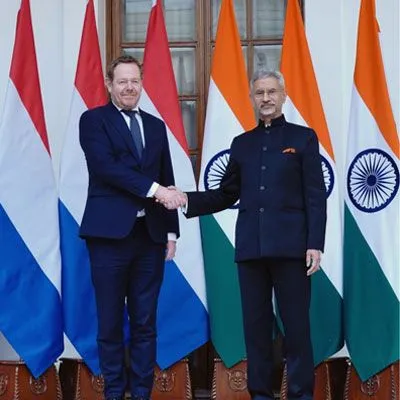
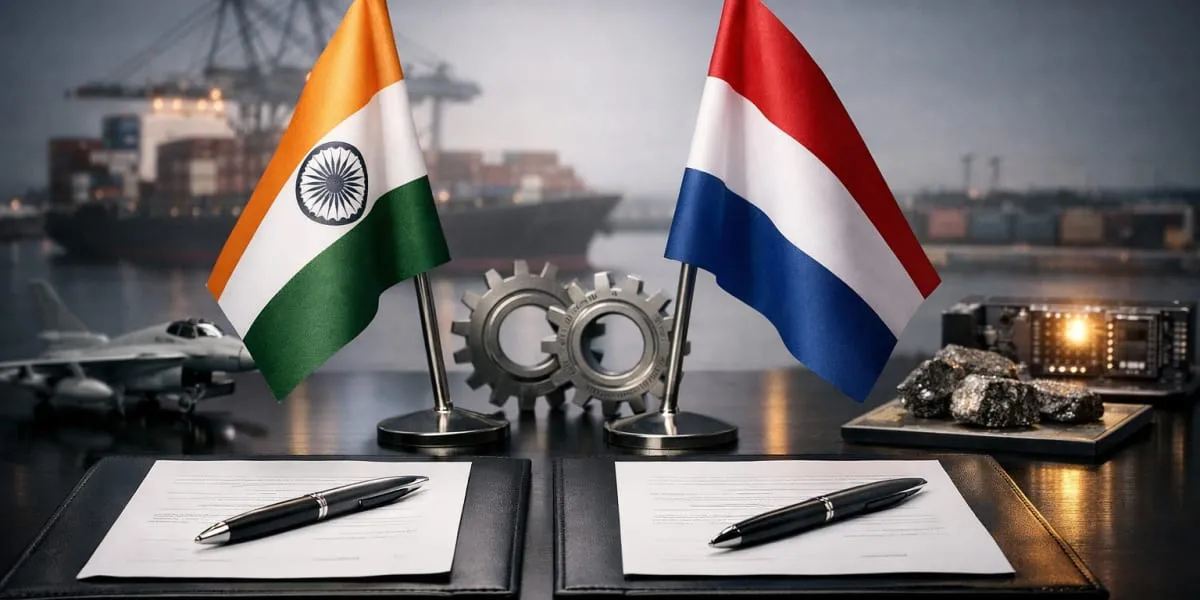
India and the Netherlands elevated their bilateral relationship to a strategic partnership and signed 17 agreements aimed at strengthening cooperation across defence, critical minerals, technology and trade. The decision followed talks between Prime Minister Narendra Modi and Dutch Prime Minister Rob Jetten in The Hague. The accords were presented as a comprehensive effort to deepen ties across economic and security domains. The agreements were described by officials as building blocks for long term collaboration across public and private sectors.

The leaders unveiled a strategic partnership roadmap covering defence and security, semiconductors, artificial intelligence, quantum computing, space cooperation and green hydrogen initiatives. They committed to pursue cooperation on semiconductors and advanced technologies while building frameworks for research and investment. Both sides agreed to explore opportunities for joint manufacturing of defence equipment through technology transfer and industrial partnerships. The roadmap included measures to enhance joint research funding and regulatory alignment to speed deployment.

Discussions also addressed a range of global concerns, including the situation in West Asia, disruptions to global energy supplies and developments in Ukraine. The leaders emphasised the importance of sustained dialogue, diplomacy and freedom of navigation to maintain stability and secure supply chains. They signalled intent to use multilateral forums and bilateral mechanisms to coordinate responses to emerging crises. Officials indicated that existing bilateral channels would be used to monitor implementation and resolve technical issues.

The Netherlands remains one of India's major European partners and bilateral trade reached Rs 27.8 bn in 2024-25. The two countries agreed to expand cooperation in health, agriculture, sustainability, climate action and people-to-people exchanges in order to foster closer economic and social links. Officials noted that the 17 agreements are intended to translate the strategic roadmap into concrete projects and joint initiatives across public and private sectors. Business forums and cultural programmes will support the initiatives.

India and the Netherlands elevated their bilateral relationship to a strategic partnership and signed 17 agreements aimed at strengthening cooperation across defence, critical minerals, technology and trade. The decision followed talks between Prime Minister Narendra Modi and Dutch Prime Minister Rob Jetten in The Hague. The accords were presented as a comprehensive effort to deepen ties across economic and security domains. The agreements were described by officials as building blocks for long term collaboration across public and private sectors. The leaders unveiled a strategic partnership roadmap covering defence and security, semiconductors, artificial intelligence, quantum computing, space cooperation and green hydrogen initiatives. They committed to pursue cooperation on semiconductors and advanced technologies while building frameworks for research and investment. Both sides agreed to explore opportunities for joint manufacturing of defence equipment through technology transfer and industrial partnerships. The roadmap included measures to enhance joint research funding and regulatory alignment to speed deployment. Discussions also addressed a range of global concerns, including the situation in West Asia, disruptions to global energy supplies and developments in Ukraine. The leaders emphasised the importance of sustained dialogue, diplomacy and freedom of navigation to maintain stability and secure supply chains. They signalled intent to use multilateral forums and bilateral mechanisms to coordinate responses to emerging crises. Officials indicated that existing bilateral channels would be used to monitor implementation and resolve technical issues. The Netherlands remains one of India's major European partners and bilateral trade reached Rs 27.8 bn in 2024-25. The two countries agreed to expand cooperation in health, agriculture, sustainability, climate action and people-to-people exchanges in order to foster closer economic and social links. Officials noted that the 17 agreements are intended to translate the strategic roadmap into concrete projects and joint initiatives across public and private sectors. Business forums and cultural programmes will support the initiatives.

Next Story
Real Estate

AI: The New Recruit

From getting ideas to evaluating designs, presenting concepts to clients and tracking projects, artificial intelligence (AI) is helping architects work better and faster.“AI allows architects to spend more time doing what only they can do: think critically, synthesise complexity and design with intent,” says Dikshu C Kukreja, Managing Principal, CP Kukreja Architects. “Every minute reclaimed from repetitive processes can be invested in creativity, contextual understanding, interdisciplinary collaboration and innovation – the qualities that define meaningful architecture.”To read the ..

Next Story
Real Estate

Redevelopment 2.0

In 2017, Mumbai identified 160,000 ageing buildings due for structural audit. Close to half of these were in the Western Suburbs. Redeveloping the oldest and structurally weakest of these would help unlock new housing, much needed given the city’s growing population density and constant developed area of 437.7 sq km. At 30,600 people per sq km in 2024, Mumbai’s density was almost thrice that of Gurugram, and 60 per cent higher than Bengaluru’s.Essentially, Mumbai’s realty market has demand. It has capital. It has realty development potential.Fast forward to 2026. Mumbai has 1,094 regis..

Next Story
Technology

Cost intelligence will become a strategic contributor to project success

As India's construction industry accelerates its digital transformation, integrated platforms, AI and connected data are becoming essential to improving cost certainty, project efficiency and sustainability. Ravi Kumar, Sales Director – India, RIB Software India, shares how digital workflows are reshaping project planning, commercial management and decision-making across the construction value chain.India's construction sector is embracing digital technologies at an unprecedented pace. From your perspective, what are the biggest shifts driving this transformation and how is RIB Software enab..

Advertisement

Subscribe to Our Newsletter

Get daily newsletters around different themes from Construction world.

STAY CONNECTED

Advertisement

Advertisement

Advertisement