India Second Largest Contributor To Global Construction Growth
ECONOMY & POLICY

India Second Largest Contributor To Global Construction Growth

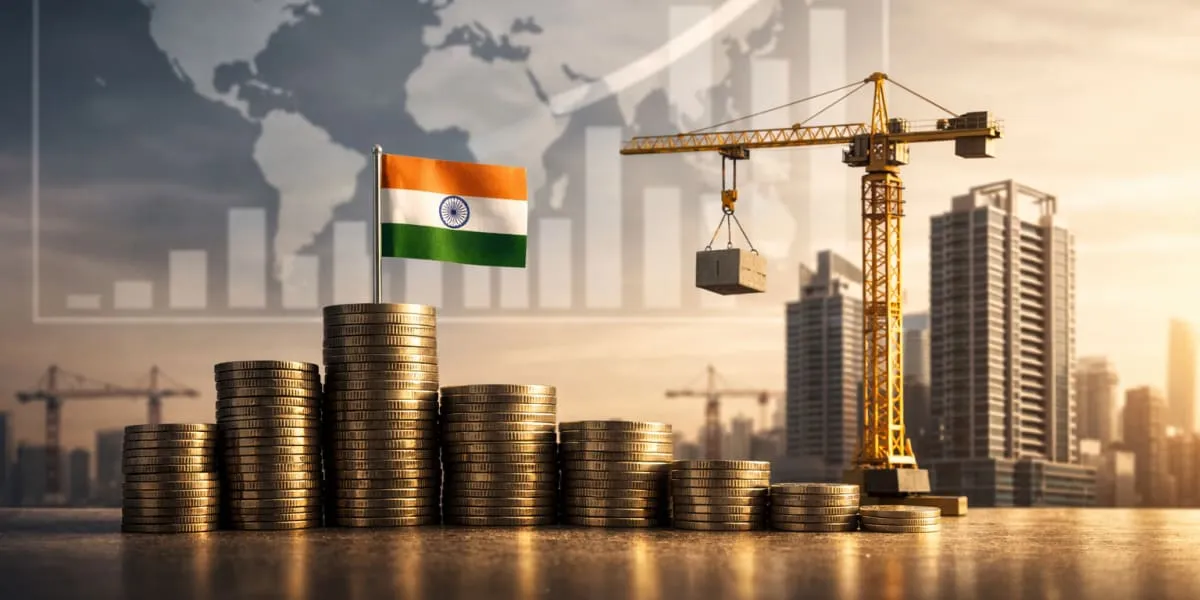
The State of the Project Economy 2026 report from Foundamental found that India was the second-largest single-country contributor to global construction growth between 2020 and 2030. India and China together accounted for nearly 40 per cent of growth over the period, and global capital expenditure was increasingly concentrated in five countries: India, China, the United States, Germany and France. The report put India’s share at 14.1 per cent, behind China at 26.1 per cent and ahead of the United States at 11.1 per cent.

Global construction spending reached US$15.97 tn in 2024 and was projected to reach US$19.86 tn by 2028, implying a compound annual growth rate of five point six per cent. Infrastructure was identified as the fastest-growing major segment, expanding at five point one per cent between 2020 and 2025. The report noted that India’s infrastructure market was forecast to grow at around eight per cent annually through the decade.

Foundamental linked India’s rising share of capital expenditure to an infrastructure agenda, rapid urbanisation, manufacturing-led growth and investment in logistics, transportation and energy networks. The firm observed that expansion in India is increasingly driven by discrete, time-bound projects across infrastructure, energy, real estate and manufacturing rather than routine operations. The report summarised five structural drivers of the project economy: re-industrialisation, data centres, energy infrastructure, civil infrastructure and defence projects.

The report forecast that global data centre construction would double by 2030 versus 2018 and could add between 10 and 15 per cent to the construction market, driven by artificial intelligence and cloud computing. It also highlighted the consequent need for substantial investment in power generation, transmission and grid modernisation and noted that the United States may require the equivalent of 35 nuclear plants’ worth of new power. The report concluded that India was well placed to benefit from simultaneous long-term trends and would remain an influential contributor to construction growth through 2030 and beyond.

"Join industry leaders at RAHSTA Expo, India's premier platform for roads, highways and traffic infrastructure. Register now to explore innovations, network with experts and shape the future of mobility."

The State of the Project Economy 2026 report from Foundamental found that India was the second-largest single-country contributor to global construction growth between 2020 and 2030. India and China together accounted for nearly 40 per cent of growth over the period, and global capital expenditure was increasingly concentrated in five countries: India, China, the United States, Germany and France. The report put India’s share at 14.1 per cent, behind China at 26.1 per cent and ahead of the United States at 11.1 per cent. Global construction spending reached US$15.97 tn in 2024 and was projected to reach US$19.86 tn by 2028, implying a compound annual growth rate of five point six per cent. Infrastructure was identified as the fastest-growing major segment, expanding at five point one per cent between 2020 and 2025. The report noted that India’s infrastructure market was forecast to grow at around eight per cent annually through the decade. Foundamental linked India’s rising share of capital expenditure to an infrastructure agenda, rapid urbanisation, manufacturing-led growth and investment in logistics, transportation and energy networks. The firm observed that expansion in India is increasingly driven by discrete, time-bound projects across infrastructure, energy, real estate and manufacturing rather than routine operations. The report summarised five structural drivers of the project economy: re-industrialisation, data centres, energy infrastructure, civil infrastructure and defence projects. The report forecast that global data centre construction would double by 2030 versus 2018 and could add between 10 and 15 per cent to the construction market, driven by artificial intelligence and cloud computing. It also highlighted the consequent need for substantial investment in power generation, transmission and grid modernisation and noted that the United States may require the equivalent of 35 nuclear plants’ worth of new power. The report concluded that India was well placed to benefit from simultaneous long-term trends and would remain an influential contributor to construction growth through 2030 and beyond.

Next Story
Real Estate

Pecan Realty Completes Rs 1.5 Billion Transactions

Pecan Realty has recently completed four institutional transactions worth over Rs 1.5 billion over the past two years, strengthening its position as an execution-led real estate platform. The deals include resolution-led acquisitions, structured finance transactions and capital partnerships across its development portfolio.The transactions covered acquisitions through the National Company Law Tribunal process and helped provide repayment or exits to both private and public sector lenders. The company said the deals demonstrate its ability to resolve complex project situations, work with instit..

Next Story
Real Estate

SNN Estates Expands North Bengaluru Housing Project

SNN Estates has announced an expansion of its SNN Estates Felicity residential project in North Bengaluru following strong buyer demand, with 75 per cent of the first-phase inventory sold within three days of launch.The developer will add 76 apartments in the new phase, taking the project's estimated revenue potential to around Rs 1,000 crore upon completion of Phase 2.Spread across 6.5 acres in Rachenahalli, near Manyata Tech Park, the project comprises 604 apartments in 1.5, 2, 2.5, 3 and 4 BHK configurations. The development includes a 50,000-sq-ft clubhouse with amenities such as sports co..

Next Story
Infrastructure Urban

SCG Drives ASEAN Industrial Transformation Strategy

SCG is strengthening its focus on ASEAN as a key growth region by advancing industrial transformation, enhancing competitiveness and building resilient regional value chains. Thammasak Sethaudom, President and Chief Executive Officer, SCG, highlighted the need for industries to continuously develop capabilities, strengthen resilience and deepen regional cooperation to achieve sustainable long-term growth.SCG views ASEAN as an important growth engine alongside China, supported by favourable demographics, trade connectivity and investment flows. With ASEAN’s GDP projected to grow by around 4.7..

Advertisement

Subscribe to Our Newsletter

Get daily newsletters around different themes from Construction world.

STAY CONNECTED

Advertisement

Advertisement

Advertisement