+
India Semiconductor Mission 2.0 Accelerates Domestic Chip Capacity
ECONOMY & POLICY

India Semiconductor Mission 2.0 Accelerates Domestic Chip Capacity

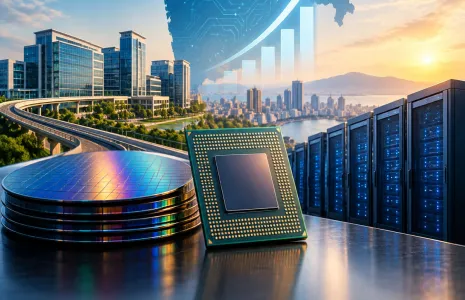
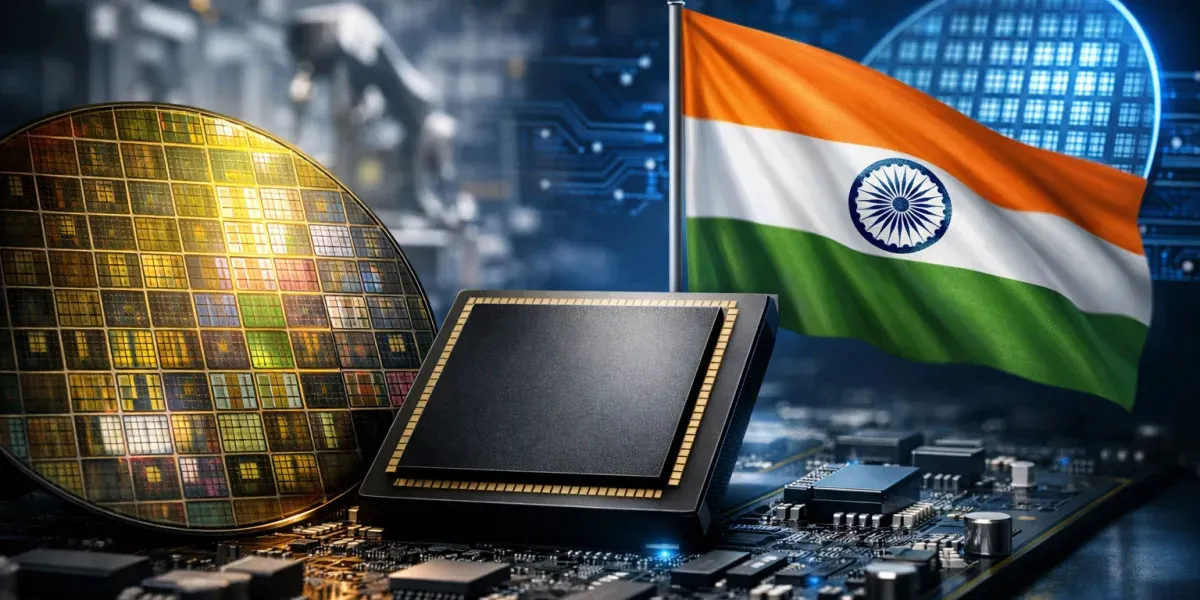
The Union Budget 2026–27 announced India Semiconductor Mission 2.0 (ISM 2.0), signalling a policy push to deepen domestic chip capabilities. The phase will prioritise production of semiconductor equipment and materials, full stack domestic intellectual property development and the strengthening of supply chains. A provision of Rs 10 billion (bn) has been allocated for ISM 2.0, with emphasis on industry led research and training centres to develop technology and skills.

ISM 2.0 builds on earlier progress, where an incentive framework of Rs 760 bn supported silicon fabs, compound semiconductor facilities and chip design. As of December 2025, ten projects with total investment of Rs 1.6 trillion (tn) have been approved across six states, covering fabrication, advanced packaging and assembly and testing infrastructure. The roadmap targets advanced nodes and aims to position India among leading semiconductor nations by 2035.

For 2026–27 the modified programme for semiconductor and display manufacturing has a total financial outlay of Rs 80 bn, aiming to accelerate capital investment, generate high quality employment and expand domestic fabrication, packaging and design capabilities. The modified fab scheme expects support for one fab with investment of Rs 40 bn and employment of 1,500 persons, while compound semiconductor and ATMP schemes envisage unit investments of Rs 110 bn and employment of 3,000 persons. The design linked incentive scheme plans to support 30 companies, develop 10 semiconductor IP cores and employ 200 design professionals.

The mission also emphasises design and talent development through startup support, academic programmes and national design platforms. The national EDA platform recorded 22.5 million (mn) tool hours, about 62,000 engineers have been trained and the Chips to Start up initiative targets zero point one million (mn) engineers. Indigenous microprocessor development, including the DHRUV64 family, is being advanced to reduce import dependence and support telecom, automotive and defence applications. Together these measures are intended to consolidate the ecosystem and attract private investment to scale capacity.

The Union Budget 2026–27 announced India Semiconductor Mission 2.0 (ISM 2.0), signalling a policy push to deepen domestic chip capabilities. The phase will prioritise production of semiconductor equipment and materials, full stack domestic intellectual property development and the strengthening of supply chains. A provision of Rs 10 billion (bn) has been allocated for ISM 2.0, with emphasis on industry led research and training centres to develop technology and skills. ISM 2.0 builds on earlier progress, where an incentive framework of Rs 760 bn supported silicon fabs, compound semiconductor facilities and chip design. As of December 2025, ten projects with total investment of Rs 1.6 trillion (tn) have been approved across six states, covering fabrication, advanced packaging and assembly and testing infrastructure. The roadmap targets advanced nodes and aims to position India among leading semiconductor nations by 2035. For 2026–27 the modified programme for semiconductor and display manufacturing has a total financial outlay of Rs 80 bn, aiming to accelerate capital investment, generate high quality employment and expand domestic fabrication, packaging and design capabilities. The modified fab scheme expects support for one fab with investment of Rs 40 bn and employment of 1,500 persons, while compound semiconductor and ATMP schemes envisage unit investments of Rs 110 bn and employment of 3,000 persons. The design linked incentive scheme plans to support 30 companies, develop 10 semiconductor IP cores and employ 200 design professionals. The mission also emphasises design and talent development through startup support, academic programmes and national design platforms. The national EDA platform recorded 22.5 million (mn) tool hours, about 62,000 engineers have been trained and the Chips to Start up initiative targets zero point one million (mn) engineers. Indigenous microprocessor development, including the DHRUV64 family, is being advanced to reduce import dependence and support telecom, automotive and defence applications. Together these measures are intended to consolidate the ecosystem and attract private investment to scale capacity.

Next Story
Resources

Hisense Opens First India Manufacturing Plant at Sri City

Hisense has inaugurated its first manufacturing facility in India at Sri City, Andhra Pradesh, through a joint venture with Epack Manufacturing Technologies Private Limited, a wholly owned subsidiary of Epack Durable Limited.The 10-acre facility, developed with an investment exceeding USD 30 million, is located within Epack Durable’s industrial park at Sri City and will commence commercial production from February 2026. Once fully operational, the plant will manufacture Room Air Conditioners (RACs) exclusively for Hisense India, accounting for 100 per cent of the brand’s domestic RAC outpu..

Next Story
Real Estate

Superb Realty Launches Altura, Focuses on IAQ-Led Office Design

Superb Realty has launched Superb Altura, a mixed-use Grade A commercial development at Amar Mahal junction in the Chembur–Ghatkopar corridor, positioning indoor air quality and intelligent building systems at the centre of its design strategy amid rising pollution levels in Mumbai.The development reflects a shift in office real estate priorities, where occupiers increasingly evaluate how buildings manage health, energy efficiency and operational resilience in high-pollution urban environments. Altura integrates advanced systems that continuously monitor and optimise indoor environments, cov..

Next Story
Infrastructure Transport

CPCL Tops NHAI’s First DPR Consultant Ranking

Chaitanya Projects Consultancy (CPCL) has secured the top position in the National Highways Authority of India’s first-ever provisional DPR consultants rating, achieving a score of 80.75 out of 100. The ranking places CPCL ahead of 55 peer firms, including Pentacle Consultants (78), L&T Infrastructure Engineering (76), MSV International Technology (74), and Transys Consulting (72).The rankings, released in the fourth week of January 2026, mark NHAI’s first structured and transparent evaluation of DPR consultants to improve quality standards under Bharatmala and other national highway p..

Advertisement

Subscribe to Our Newsletter

Get daily newsletters around different themes from Construction world.

STAY CONNECTED

Advertisement

Advertisement

Advertisement

Open In App