India UAE CEPA Boosts Opportunities For Farmers And MSMEs
ECONOMY & POLICY

India UAE CEPA Boosts Opportunities For Farmers And MSMEs

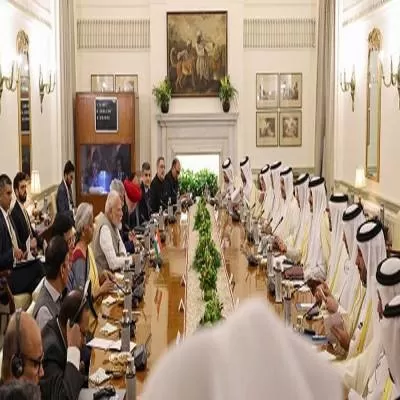
Union Commerce and Industry Minister Piyush Goyal said the India–UAE Comprehensive Economic Partnership Agreement, which came into force four years ago, has created a transformational opportunity for Indian farmers, micro, small and medium enterprises and other businesses. He conveyed this in a social media post that reviewed the trade and investment trajectory between the two countries. The minister said the pact has supported deeper commercial ties and expanded market access for smaller producers and exporters.

Bilateral merchandise ties between India and the UAE have grown strongly and have crossed 100 billion dollars (100 bn dollars), the minister noted, while services trade has also risen steadily and opened new markets and greater value. The growth in goods and services flows has been accompanied by intensified commercial engagement and increased diversification of export baskets. This expansion has translated into higher order flows and broader participation by regional exporters.

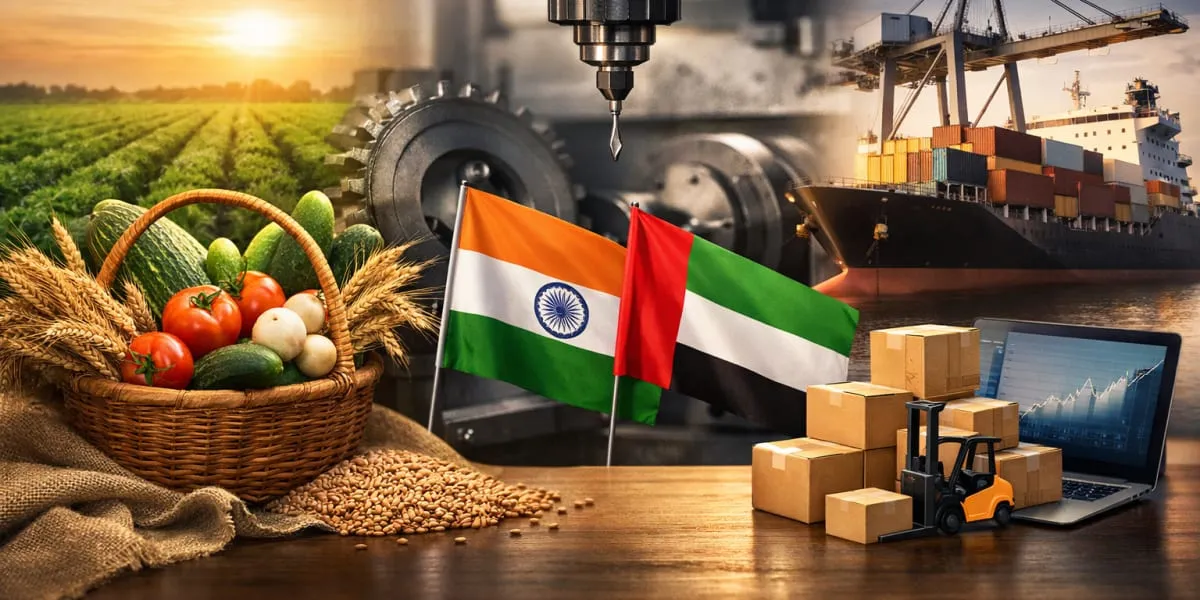
Mr Goyal highlighted that expansion across sectors such as gems and jewellery, engineering goods, electronics and agriculture is delivering tangible gains for producers and traders. He pointed to enhanced demand, improved supply chain linkages and better price realisation as factors that have supported exporters in these segments. The minister suggested that sectoral gains are indicative of the agreement's broader economic effect.

He underlined that foreign direct investment inflows from the UAE and India's overseas investments further reflect the deepening economic linkages of the two nations. The CEPA framework has been described as facilitating investment flows, joint ventures and collaborative projects that strengthen bilateral value chains. This, in turn, has supported job creation and enterprise scaling across participating regions.

Looking ahead, the minister asserted that the pact will continue to create opportunities for farmers and MSMEs as market access expands and value chains deepen. He said government engagement and private sector adaptation remain important to translate trade gains into livelihood improvements. The agreement is portrayed as a platform for sustained commercial integration between India and the UAE.

Union Commerce and Industry Minister Piyush Goyal said the India–UAE Comprehensive Economic Partnership Agreement, which came into force four years ago, has created a transformational opportunity for Indian farmers, micro, small and medium enterprises and other businesses. He conveyed this in a social media post that reviewed the trade and investment trajectory between the two countries. The minister said the pact has supported deeper commercial ties and expanded market access for smaller producers and exporters. Bilateral merchandise ties between India and the UAE have grown strongly and have crossed 100 billion dollars (100 bn dollars), the minister noted, while services trade has also risen steadily and opened new markets and greater value. The growth in goods and services flows has been accompanied by intensified commercial engagement and increased diversification of export baskets. This expansion has translated into higher order flows and broader participation by regional exporters. Mr Goyal highlighted that expansion across sectors such as gems and jewellery, engineering goods, electronics and agriculture is delivering tangible gains for producers and traders. He pointed to enhanced demand, improved supply chain linkages and better price realisation as factors that have supported exporters in these segments. The minister suggested that sectoral gains are indicative of the agreement's broader economic effect. He underlined that foreign direct investment inflows from the UAE and India's overseas investments further reflect the deepening economic linkages of the two nations. The CEPA framework has been described as facilitating investment flows, joint ventures and collaborative projects that strengthen bilateral value chains. This, in turn, has supported job creation and enterprise scaling across participating regions. Looking ahead, the minister asserted that the pact will continue to create opportunities for farmers and MSMEs as market access expands and value chains deepen. He said government engagement and private sector adaptation remain important to translate trade gains into livelihood improvements. The agreement is portrayed as a platform for sustained commercial integration between India and the UAE.

Next Story
Real Estate

AI: The New Recruit

From getting ideas to evaluating designs, presenting concepts to clients and tracking projects, artificial intelligence (AI) is helping architects work better and faster.“AI allows architects to spend more time doing what only they can do: think critically, synthesise complexity and design with intent,” says Dikshu C Kukreja, Managing Principal, CP Kukreja Architects. “Every minute reclaimed from repetitive processes can be invested in creativity, contextual understanding, interdisciplinary collaboration and innovation – the qualities that define meaningful architecture.”To read the ..

Next Story
Real Estate

Redevelopment 2.0

In 2017, Mumbai identified 160,000 ageing buildings due for structural audit. Close to half of these were in the Western Suburbs. Redeveloping the oldest and structurally weakest of these would help unlock new housing, much needed given the city’s growing population density and constant developed area of 437.7 sq km. At 30,600 people per sq km in 2024, Mumbai’s density was almost thrice that of Gurugram, and 60 per cent higher than Bengaluru’s.Essentially, Mumbai’s realty market has demand. It has capital. It has realty development potential.Fast forward to 2026. Mumbai has 1,094 regis..

Next Story
Technology

Cost intelligence will become a strategic contributor to project success

As India's construction industry accelerates its digital transformation, integrated platforms, AI and connected data are becoming essential to improving cost certainty, project efficiency and sustainability. Ravi Kumar, Sales Director – India, RIB Software India, shares how digital workflows are reshaping project planning, commercial management and decision-making across the construction value chain.India's construction sector is embracing digital technologies at an unprecedented pace. From your perspective, what are the biggest shifts driving this transformation and how is RIB Software enab..

Advertisement

Subscribe to Our Newsletter

Get daily newsletters around different themes from Construction world.

STAY CONNECTED

Advertisement

Advertisement

Advertisement