India’s Iron Ore Imports Hit Six-Year High In 2025
Steel

India’s Iron Ore Imports Hit Six-Year High In 2025

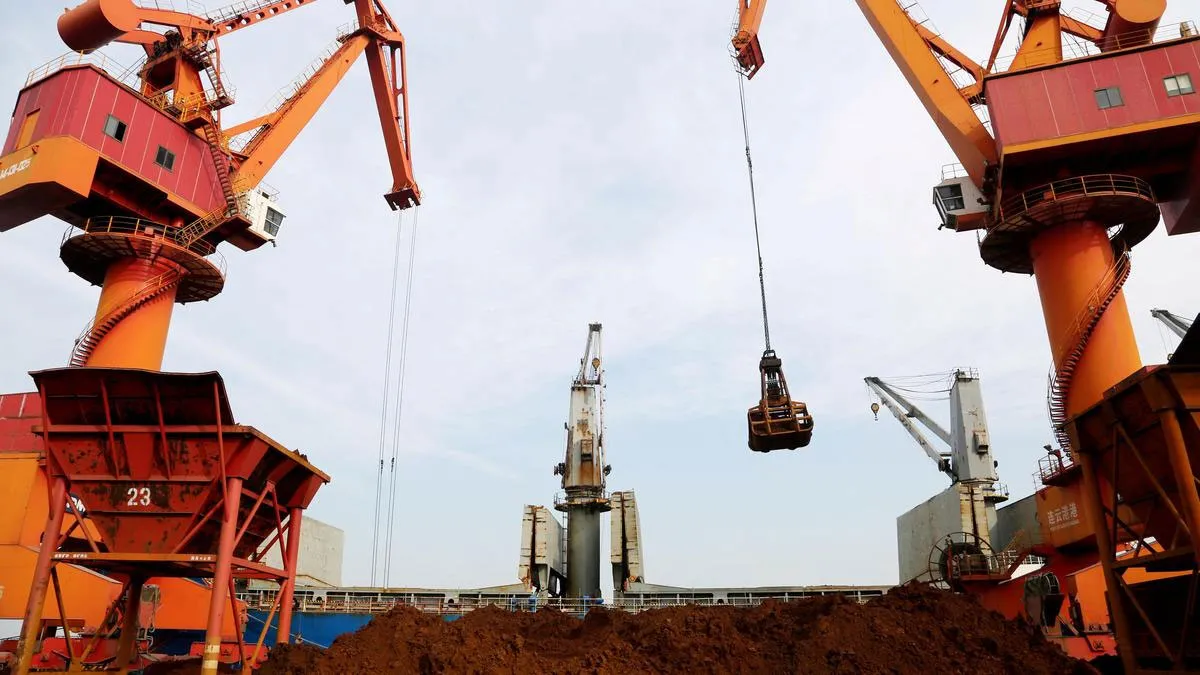
India’s iron ore imports have climbed to a six-year high as steelmakers increased overseas purchases to offset shortages of high-grade ore and benefit from softer global prices, according to analysts and trade officials.

Imports more than doubled to over 10 million tonnes in the first 10 months of 2025 compared with the same period last year, Lalit Ladkat, senior analyst at London-based CRU Group, told Reuters. Between January and October, JSW Steel — India’s largest steel producer by capacity — emerged as the country’s top importer, analysts said.

Average annual imports between 2019 and 2024 stood at 4.3 million tonnes. In 2025, demand outpaced domestic production, and shortages of higher-grade ore became a significant concern. Ladkat noted that delays in commencing operations at auctioned mines contributed to sluggish supply growth.

This contrasts with recent assurances from the Ministry of Steel, whose top civil servant last month dismissed concerns about domestic shortages.

Lower import prices, along with the logistical advantage for coastal steel plants such as JSW Steel’s Maharashtra unit, also boosted overseas shipments, analysts and officials said. India has been sourcing most of its imported ore from Brazil, Oman and Australia.

Brazilian miner Vale is preparing to meet India’s rising demand, anticipating that the country could double its steel production by the end of the decade, CEO Gustavo Pimenta told Reuters.

Heavy rainfall in Odisha — which accounts for nearly 55 per cent of India’s iron ore output — curbed production this year, commodities consultancy BigMint said. It expects imports to exceed 11–12 million tonnes in FY26 and remain elevated unless domestic output or captive sourcing improves.

India, the world’s second-largest crude steel producer, saw iron ore production rise to 289 million tonnes in FY25 from 277 million tonnes the previous year, government data showed. Earlier this year, the Government urged steelmakers to acquire iron ore mines overseas amid concerns over slow progress in greenfield mine development.

India’s iron ore imports have climbed to a six-year high as steelmakers increased overseas purchases to offset shortages of high-grade ore and benefit from softer global prices, according to analysts and trade officials. Imports more than doubled to over 10 million tonnes in the first 10 months of 2025 compared with the same period last year, Lalit Ladkat, senior analyst at London-based CRU Group, told Reuters. Between January and October, JSW Steel — India’s largest steel producer by capacity — emerged as the country’s top importer, analysts said. Average annual imports between 2019 and 2024 stood at 4.3 million tonnes. In 2025, demand outpaced domestic production, and shortages of higher-grade ore became a significant concern. Ladkat noted that delays in commencing operations at auctioned mines contributed to sluggish supply growth. This contrasts with recent assurances from the Ministry of Steel, whose top civil servant last month dismissed concerns about domestic shortages. Lower import prices, along with the logistical advantage for coastal steel plants such as JSW Steel’s Maharashtra unit, also boosted overseas shipments, analysts and officials said. India has been sourcing most of its imported ore from Brazil, Oman and Australia. Brazilian miner Vale is preparing to meet India’s rising demand, anticipating that the country could double its steel production by the end of the decade, CEO Gustavo Pimenta told Reuters. Heavy rainfall in Odisha — which accounts for nearly 55 per cent of India’s iron ore output — curbed production this year, commodities consultancy BigMint said. It expects imports to exceed 11–12 million tonnes in FY26 and remain elevated unless domestic output or captive sourcing improves. India, the world’s second-largest crude steel producer, saw iron ore production rise to 289 million tonnes in FY25 from 277 million tonnes the previous year, government data showed. Earlier this year, the Government urged steelmakers to acquire iron ore mines overseas amid concerns over slow progress in greenfield mine development.

Next Story
Real Estate

RBI Rate Cut Boosts Confidence Across Housing Market

Industry Context and Market DynamicsThe real estate industry has welcomed the RBI’s rate cut as a timely boost to affordability and demand. With home prices having risen steadily across major markets, even a marginal reduction in interest rates meaningfully strengthens purchasing power, especially for first-time and mid-income buyers.Ashish Jerath, President – Sales & Marketing, Smartworld Developers, observes:“The RBI’s 25-basis-point cut, bringing the repo rate down to 5.25%, is a timely boost for the real estate sector. Lower interest rates reduce borrowing costs, enabling homeb..

Next Story
Infrastructure Transport

BMC Resumes Rs 170 Billion Road Works, Targets 80 per cent By Jan 2026

Following the withdrawal of the southwest monsoon in October, the Brihanmumbai Municipal Corporation (BMC) has restarted work on 645 roads—covering 297.49 kilometres—under its large-scale concretisation programme. Data shows that more than 60 per cent of the resumed works are located in the western suburbs. Officials said the civic body aims to complete concretisation on 80 per cent of the roads where fresh work has begun by January 2026. Launched in 2022, the Rs 170 billion project seeks to concretise 700 kilometres of roads across Mumbai. All civil works were halted during the monsoon ..

Next Story
Infrastructure Urban

India Pushes Digital Shift In Urban Land Mapping

The Department of Land Resources (DoLR) under the Ministry of Rural Development has convened a National Symposium on NAKSHA – the National Geospatial Knowledge-based Land Survey of Urban Habitations – to advance India’s transition to modern, technology-driven land mapping. Speaking at the inaugural session, Secretary Manoj Joshi underscored the urgent need to move revenue departments away from outdated, tape-based methods and rough hand-drawn sketches. He stressed that adopting latitude–longitude-based digital mapping and GIS-linked registration systems is essential for economic stabi..

Advertisement

Subscribe to Our Newsletter

Get daily newsletters around different themes from Construction world.

STAY CONNECTED

Advertisement

Advertisement

Advertisement

Advertisement

Open In App