+
IOC Boosts LPG Output As Refineries Run Over Capacity
ECONOMY & POLICY

IOC Boosts LPG Output As Refineries Run Over Capacity

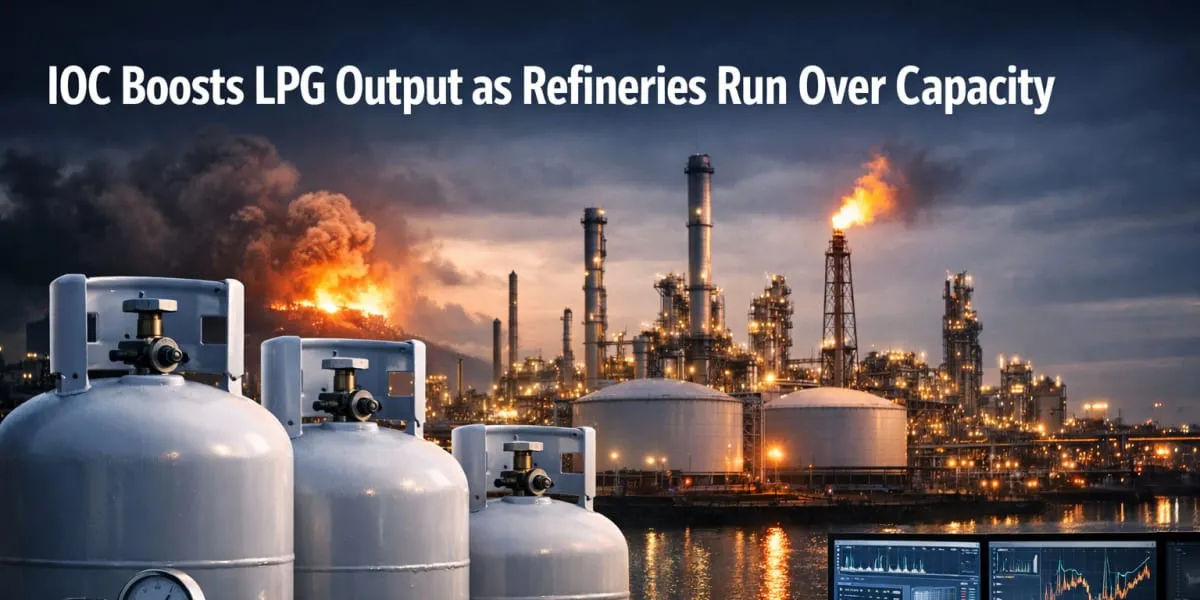
Indian Oil Corporation boosted liquefied petroleum gas output by nearly 30 per cent amid the Iran war and operated refineries above 100 per cent utilisation.

The company set up 24?hour control rooms, held daily reviews and monitored markets to address gaps and maintain availability amid a shift away from Middle Eastern crude.

For the year ended March 2026 the company posted a standalone net profit of Rs 368,020 million (mn) on turnover of Rs 8.86 trillion (tn), with aggregate sales of more than 105 mn tonnes across fuels, gas and petrochemicals.

Refineries processed 75.45 mn tonnes and liquid pipeline throughput reached 102.52 mn tonnes while domestic petroleum?product sales rose to an all?time high of 88.97 mn tonnes.

Momentum continued into the first quarter as the group processed 19.17 mn tonnes of crude at 109.4 per cent capacity utilisation and achieved quarterly pipeline throughput of 28.55 mn tonnes; domestic market share increased to 43.1 per cent even as profitability was pressured by higher crude costs linked to West Asia conflict, and the chairman said the operating performance underlined the company’s resilience.

Expansions at Panipat, Gujarat and Barauni are expected to raise group refining capacity from 80.75 mn tonnes to about 98 mn tonnes as India expands toward 300 mn tonnes, and company expects to account for more than 40 per cent of incremental capacity.

The company is also shifting focus to petrochemicals, natural gas, renewables and cleaner fuels, targeting petrochemical intensity of about 15 per cent by 2030 and increasing natural?gas sales one point five times by the same year.

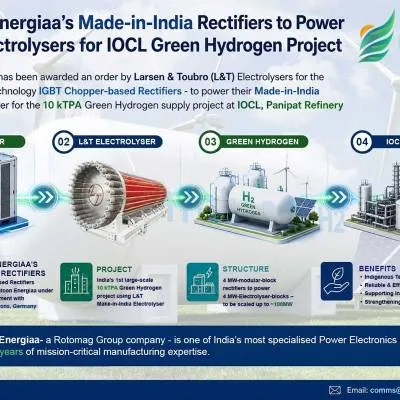
On the energy?transition front construction has begun on a green hydrogen plant at Panipat and the company has secured ISCC CORSIA certification for sustainable aviation fuel production through co?processing.

Its renewable arm Terra Clean is developing one gigawatt with another four point three gigawatts planned, with leadership saying West Asia crisis reinforced the need to build resilience and keep national energy security central.

Indian Oil Corporation boosted liquefied petroleum gas output by nearly 30 per cent amid the Iran war and operated refineries above 100 per cent utilisation. The company set up 24?hour control rooms, held daily reviews and monitored markets to address gaps and maintain availability amid a shift away from Middle Eastern crude. For the year ended March 2026 the company posted a standalone net profit of Rs 368,020 million (mn) on turnover of Rs 8.86 trillion (tn), with aggregate sales of more than 105 mn tonnes across fuels, gas and petrochemicals. Refineries processed 75.45 mn tonnes and liquid pipeline throughput reached 102.52 mn tonnes while domestic petroleum?product sales rose to an all?time high of 88.97 mn tonnes. Momentum continued into the first quarter as the group processed 19.17 mn tonnes of crude at 109.4 per cent capacity utilisation and achieved quarterly pipeline throughput of 28.55 mn tonnes; domestic market share increased to 43.1 per cent even as profitability was pressured by higher crude costs linked to West Asia conflict, and the chairman said the operating performance underlined the company’s resilience. Expansions at Panipat, Gujarat and Barauni are expected to raise group refining capacity from 80.75 mn tonnes to about 98 mn tonnes as India expands toward 300 mn tonnes, and company expects to account for more than 40 per cent of incremental capacity. The company is also shifting focus to petrochemicals, natural gas, renewables and cleaner fuels, targeting petrochemical intensity of about 15 per cent by 2030 and increasing natural?gas sales one point five times by the same year. On the energy?transition front construction has begun on a green hydrogen plant at Panipat and the company has secured ISCC CORSIA certification for sustainable aviation fuel production through co?processing. Its renewable arm Terra Clean is developing one gigawatt with another four point three gigawatts planned, with leadership saying West Asia crisis reinforced the need to build resilience and keep national energy security central.

Related Stories

Gold Stories

Next Story
Infrastructure Energy

Inside a Pumped Storage Project: How It Actually Balances the Grid

What happens when the sun sets just as electricity demand starts to rise? Solar generation falls, but homes, factories and businesses still need power. Pumped storage power plants help bridge this gap by storing surplus electricity as gravitational potential energy in elevated water and releasing it when demand increases. As India adds more solar and wind capacity, this ability to shift electricity across hours is becoming increasingly important for grid flexibility.What is a Pumped Storage Power Plant?A pumped storage power plant (PSP) is a long-duration energy storage facility with two reser..

Next Story
Technology

LTTS launches FARM to accelerate deep-tech startups

L&T Technology Services (LTTS) has launched LTTS FARM, a startup engagement platform aimed at accelerating the commercialisation of deep-tech innovations through Engineering Intelligence-led collaboration, co-innovation and market access.Built on the theme of “Collaboration First, Commercialisation Next”, the platform targets startups with Technology Readiness Level (TRL) 4+ solutions that have demonstrated technical feasibility and are ready for industry adoption. LTTS FARM will support startups aligned with LTTS’ key technology focus areas, including Software Defined Mobility, Plan..

Next Story
Infrastructure Energy

REC Wins Top Honour for Hindi Policy Implementation

EC Limited has received the First Prize for outstanding implementation of the Official Language Policy for 2025-26 at the meeting of the Hindi Salahkar Samiti of the Ministry of Power, Government of India.The award was presented to REC by Shri Manohar Lal, Union Minister of Power and Housing and Urban Affairs. Shri Shripad Yesso Naik, Minister of State for Power and New and Renewable Energy; Shri Dinesh Sharma, Rajya Sabha MP; Shri Suresh Kumar Kashyap, Lok Sabha MP; and Shri Pankaj Agrawal, Secretary, Ministry of Power, were also present. Shri Jitendra Shrivastava, IAS, CMD, REC, received the..

Advertisement

Subscribe to Our Newsletter

Get daily newsletters around different themes from Construction world.

STAY CONNECTED

Advertisement

SPECIAL OFFER
QR Code