JSS Zonal Conference in Pune Reinforces Livelihood-Led Skilling
ECONOMY & POLICY

JSS Zonal Conference in Pune Reinforces Livelihood-Led Skilling

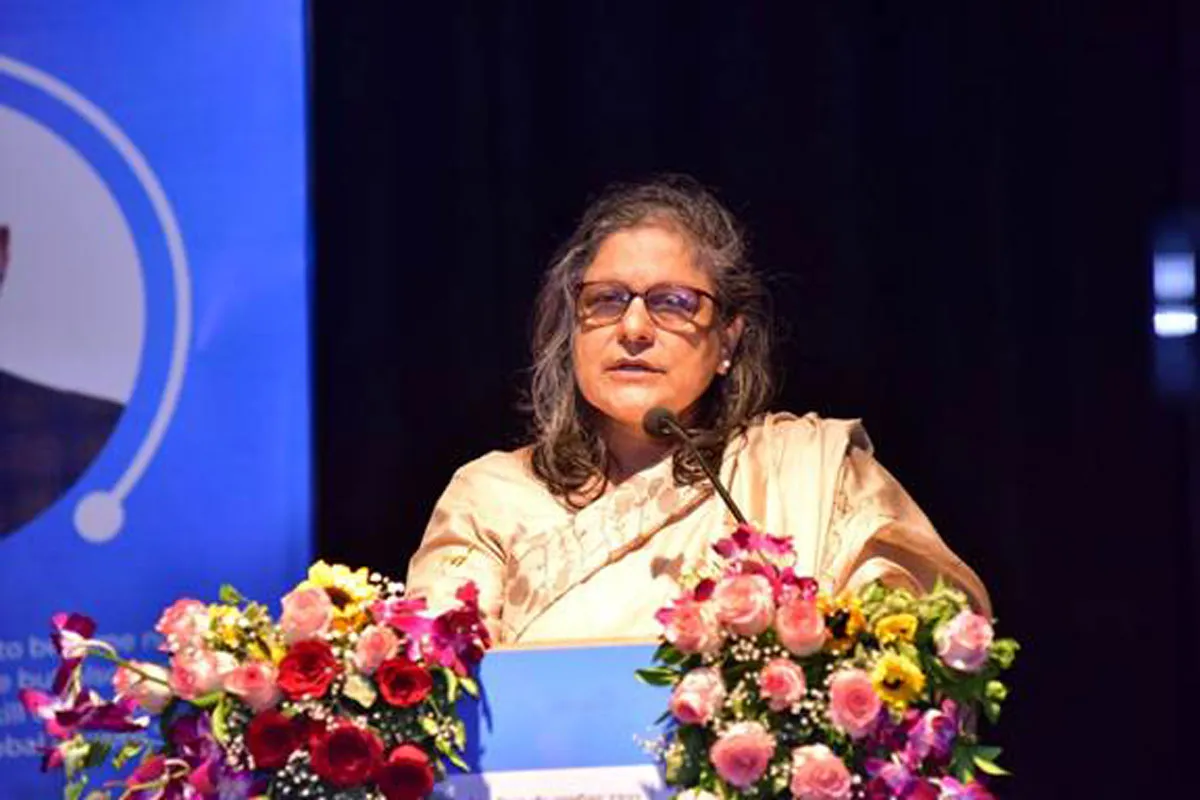
The Ministry of Skill Development and Entrepreneurship (MSDE) has concluded the two-day Jan Shikshan Sansthan (JSS) Zonal Conference-cum-Stakeholder Consultation and Progress Review Workshop in Pune, reaffirming the government’s focus on inclusive, community-driven skilling and sustainable livelihood creation for last-mile populations.

Held at Symbiosis Skill & Professional University, the conference saw participation from 152 Jan Shikshan Sansthans across 11 states and Union Territories. The event brought together JSS practitioners, senior MSDE officials, representatives from the Directorate of Jan Shikshan Sansthan, the National Institute for Entrepreneurship and Small Business Development (NIESBUD) and academic partners to assess progress, discuss systemic improvements and strengthen institutional capacity within the JSS ecosystem.

The conference was chaired by Debashree Mukherjee, Secretary, Ministry of Skill Development and Entrepreneurship, along with Nirajan Kumar Sudhanshu, Additional Secretary, MSDE, and other senior officials. Discussions focused on enhancing employability, entrepreneurship and livelihood outcomes through more outcome-oriented skilling models.

Addressing the gathering, Debashree Mukherjee said, “Jan Shikshan Sansthans are central to inclusive skilling in India. Our focus is to move from training to real outcomes by strengthening alumni connect, aligning skills with market demand and supporting entrepreneurship through finance and market linkages. By modernising traditional skills and scaling success stories, we aim to ensure that grassroots skilling leads to sustainable livelihoods, dignity and empowerment for women and marginalised communities.”

Expert-led sessions on employability and entrepreneurship were conducted by NIESBUD and faculty from Symbiosis Skill & Professional University. Dr Poonam Sinha, Director General, NIESBUD, and Dr Swati Majumdar, Pro Chancellor, Symbiosis Skill & Professional University, highlighted the need for learner-centric skilling, work readiness and enterprise-oriented thinking at the grassroots.

A dedicated session on financial and credit linkages, with experts from Central Bank of India and NIESBUD, underscored the importance of financial literacy, stronger bank partnerships and structured support systems. Additional discussions covered the use of artificial intelligence and digital tools in training delivery, governance reforms, SIDH portal compliance, strengthening Livelihood Cells and improving branding and market access for JSS products.

An exhibition showcasing products developed by JSS beneficiaries highlighted best practices and the diversity of grassroots skills nurtured under the scheme. Stakeholder consultations concluded with a renewed commitment to strengthening Jan Shikshan Sansthans as last-mile skilling institutions, ensuring that skills translate into sustainable income, dignity and inclusive growth. 

The Ministry of Skill Development and Entrepreneurship (MSDE) has concluded the two-day Jan Shikshan Sansthan (JSS) Zonal Conference-cum-Stakeholder Consultation and Progress Review Workshop in Pune, reaffirming the government’s focus on inclusive, community-driven skilling and sustainable livelihood creation for last-mile populations.Held at Symbiosis Skill & Professional University, the conference saw participation from 152 Jan Shikshan Sansthans across 11 states and Union Territories. The event brought together JSS practitioners, senior MSDE officials, representatives from the Directorate of Jan Shikshan Sansthan, the National Institute for Entrepreneurship and Small Business Development (NIESBUD) and academic partners to assess progress, discuss systemic improvements and strengthen institutional capacity within the JSS ecosystem.The conference was chaired by Debashree Mukherjee, Secretary, Ministry of Skill Development and Entrepreneurship, along with Nirajan Kumar Sudhanshu, Additional Secretary, MSDE, and other senior officials. Discussions focused on enhancing employability, entrepreneurship and livelihood outcomes through more outcome-oriented skilling models.Addressing the gathering, Debashree Mukherjee said, “Jan Shikshan Sansthans are central to inclusive skilling in India. Our focus is to move from training to real outcomes by strengthening alumni connect, aligning skills with market demand and supporting entrepreneurship through finance and market linkages. By modernising traditional skills and scaling success stories, we aim to ensure that grassroots skilling leads to sustainable livelihoods, dignity and empowerment for women and marginalised communities.”Expert-led sessions on employability and entrepreneurship were conducted by NIESBUD and faculty from Symbiosis Skill & Professional University. Dr Poonam Sinha, Director General, NIESBUD, and Dr Swati Majumdar, Pro Chancellor, Symbiosis Skill & Professional University, highlighted the need for learner-centric skilling, work readiness and enterprise-oriented thinking at the grassroots.A dedicated session on financial and credit linkages, with experts from Central Bank of India and NIESBUD, underscored the importance of financial literacy, stronger bank partnerships and structured support systems. Additional discussions covered the use of artificial intelligence and digital tools in training delivery, governance reforms, SIDH portal compliance, strengthening Livelihood Cells and improving branding and market access for JSS products.An exhibition showcasing products developed by JSS beneficiaries highlighted best practices and the diversity of grassroots skills nurtured under the scheme. Stakeholder consultations concluded with a renewed commitment to strengthening Jan Shikshan Sansthans as last-mile skilling institutions, ensuring that skills translate into sustainable income, dignity and inclusive growth. 

Related Stories

Gold Stories

Next Story
Resources

Schindler named among Forbes’ World’s Best Employers 2026

Schindler has been named among Forbes’ World’s Best Employers 2026, a global ranking recognising companies for their workplace environments.Compiled by Forbes in partnership with Statista, the ranking is based on independent employee feedback, including whether employees would recommend their organisation to friends and family.The company said the recognition reflected its focus on creating a workplace where employees can develop their expertise and build careers. ..

Next Story
Infrastructure Urban

India needs an export-execution mindset: Vishesh Jain

Interview with Vishesh Jain, Founder & CEO, EximpleWhat gaps in India’s global trade ecosystem led you to build Eximple, and what problem did you see businesses struggling with most?Eximple came out of a problem that all three founders had seen from different choke points in the trade ecosystem. India has millions of MSMEs and manufacturers, and many of them can make products that are genuinely competitive on quality. Yet only a small fraction is able to build meaningful international businesses. In our experience, the gap is usually not manufacturing capability; it is the ability to exe..

Next Story
Building Material

Nuvoco reports 13.5% revenue growth in Q2 FY27

Nuvoco Vistas Corp. Ltd. reported consolidated revenue of Rs 27.9 billion for Q2 FY27, up 13.5% year on year. Cement sales volume rose 9% to 4.7 million tonnes (MMT), while EBITDA increased 11% to Rs 4.11 billion.The company said it began its cement operations in 2014 with a 2.3 MMT per annum (MMTPA) operation at Nimbol. It now aims to reach 35 MMTPA of cement capacity by FY28, nearly 15 times its initial capacity. Its portfolio spans cement, ready-mix concrete and modern building materials.On sustainability and cost efficiency, Nuvoco partnered with CleanMax for a 46.4 MW wind-solar hybrid re..

Advertisement

Subscribe to Our Newsletter

Get daily newsletters around different themes from Construction world.

STAY CONNECTED

Advertisement

SPECIAL OFFER
QR Code