Jyoti Structures Commissions Galvanisation at Second Nashik Unit
ECONOMY & POLICY

Jyoti Structures Commissions Galvanisation at Second Nashik Unit

Jyoti Structures has commissioned galvanisation operations at its second tower manufacturing unit in Nashik, strengthening its in-house capabilities across critical stages of power transmission infrastructure production. The listed Engineering, Procurement and Construction (EPC) company operates globally and has delivered projects for customers across more than 50 countries.

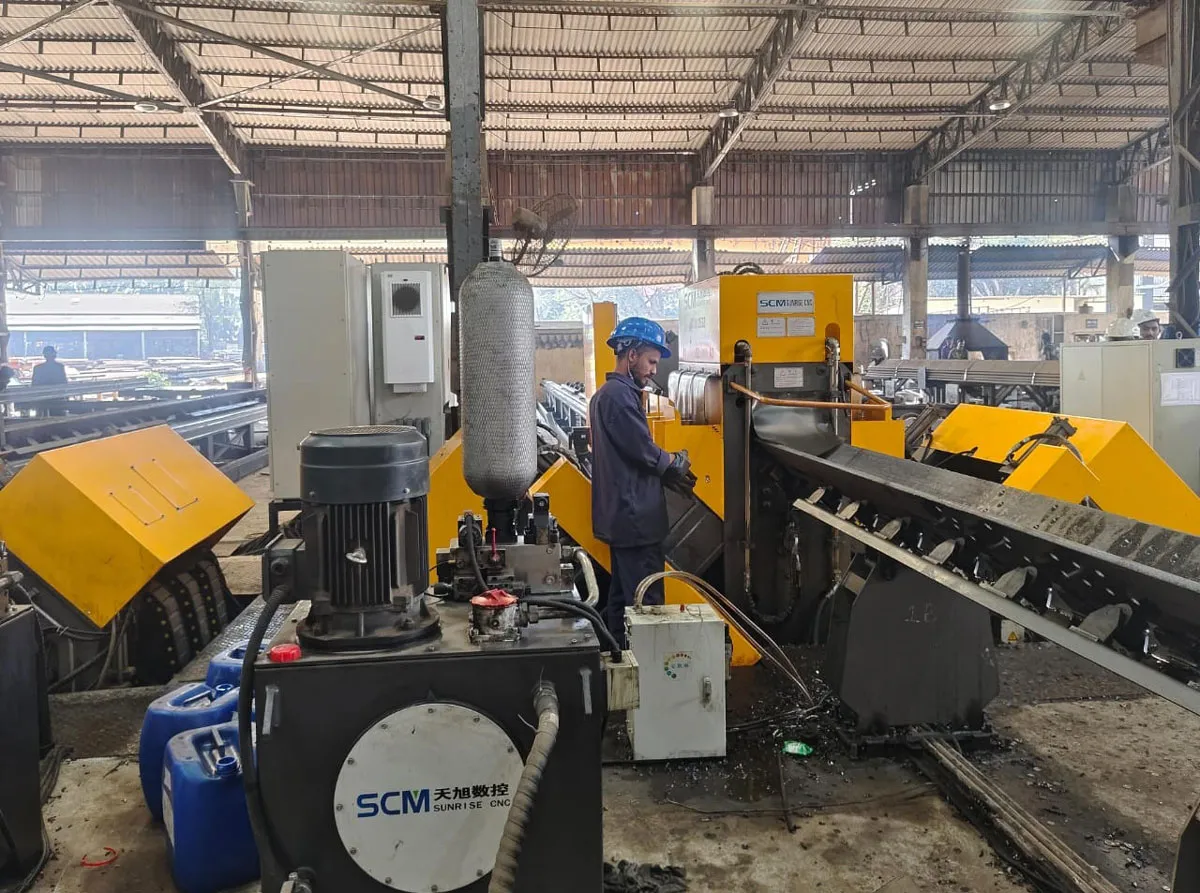
The second Nashik unit, with an annual manufacturing capacity of 36,000 metric tonnes, has become operational following the completion of installation, testing and readiness of the new galvanising facilities. With this development, the facility is now fully integrated into Jyoti Structures’ manufacturing and execution framework. The commissioning scope includes a new galvanising plant, the addition of three CNC drilling machines, and refurbishment of existing CNC equipment, enhancing fabrication accuracy, throughput discipline and finishing quality.

Jyoti Structures’ first Nashik unit, operational since August 2022 and also rated at 36,000 metric tonnes per annum, continues to operate at optimal levels, supporting ongoing project execution. With both units now functional, the company’s aggregate installed tower manufacturing capacity at Nashik stands at approximately 72,000 metric tonnes, creating a scalable base to support current and upcoming transmission projects.

Commenting on the development, Rajesh Kumar Singh, CEO, Jyoti Structures Limited, said, “The commissioning of galvanisation operations at our second Nashik unit strengthens our manufacturing depth and operational control across critical stages of tower production. As project scale and technical complexity increase across the transmission sector, execution reliability and in-house capability become decisive factors.”

The expanded capacity supports execution across the company’s existing order book, including the 800 kV HVDC project awarded by Power Grid Corporation of India Limited. As previously disclosed, Jyoti Structures’ order book stands close to Rs 20 billion, excluding GST, with the HVDC project valued at around Rs 7.41 billion, including GST.

Jyoti Structures’ manufacturing footprint includes facilities at Nashik and Raipur, supported by a dedicated testing station and R&D centre in Maharashtra, under ISO-certified management systems covering quality, environment and occupational health and safety.

Jyoti Structures has commissioned galvanisation operations at its second tower manufacturing unit in Nashik, strengthening its in-house capabilities across critical stages of power transmission infrastructure production. The listed Engineering, Procurement and Construction (EPC) company operates globally and has delivered projects for customers across more than 50 countries.The second Nashik unit, with an annual manufacturing capacity of 36,000 metric tonnes, has become operational following the completion of installation, testing and readiness of the new galvanising facilities. With this development, the facility is now fully integrated into Jyoti Structures’ manufacturing and execution framework. The commissioning scope includes a new galvanising plant, the addition of three CNC drilling machines, and refurbishment of existing CNC equipment, enhancing fabrication accuracy, throughput discipline and finishing quality.Jyoti Structures’ first Nashik unit, operational since August 2022 and also rated at 36,000 metric tonnes per annum, continues to operate at optimal levels, supporting ongoing project execution. With both units now functional, the company’s aggregate installed tower manufacturing capacity at Nashik stands at approximately 72,000 metric tonnes, creating a scalable base to support current and upcoming transmission projects.Commenting on the development, Rajesh Kumar Singh, CEO, Jyoti Structures Limited, said, “The commissioning of galvanisation operations at our second Nashik unit strengthens our manufacturing depth and operational control across critical stages of tower production. As project scale and technical complexity increase across the transmission sector, execution reliability and in-house capability become decisive factors.”The expanded capacity supports execution across the company’s existing order book, including the 800 kV HVDC project awarded by Power Grid Corporation of India Limited. As previously disclosed, Jyoti Structures’ order book stands close to Rs 20 billion, excluding GST, with the HVDC project valued at around Rs 7.41 billion, including GST.Jyoti Structures’ manufacturing footprint includes facilities at Nashik and Raipur, supported by a dedicated testing station and R&D centre in Maharashtra, under ISO-certified management systems covering quality, environment and occupational health and safety.

Next Story
Infrastructure Transport

MMRDA: Engineering Mumbai’s Underground Future

Somewhere beneath Mumbai’s restless surface, a second city is being built into existence.In the late afternoon, as the day leaned towards evening, Dr Sanjay Mukherjee, Metropolitan Commissioner (MMRDA), led us into a realm that very few ever enter—the active heart of one of Mumbai’s most ambitious underground road projects. While the city surges forward in familiar chaos above the ground, another Mumbai is taking shape below: quietly, methodically, irrevocably. The metal lift doors clo..

Next Story
Building Material

Steel: Shielded or Strengthened?

Going forward, domestic steel mills are targeting capacity expansion of nearly 40 per cent through till FY31, adding 80-85 mt, translating into an investment pipeline of $ 45-50 billion. So, Jhunjhunwala points out that continuing the safeguard duty will be vital to prevent a surge in imports and protect domestic prices from external shocks. While in FY26, the industry operating profit per tonne is expected to hold at around $ 108, similar to last year, the industry’s earnings must meaningfully improve from hereon to sustain large-scale investments. Else, domestic mills could..

Next Story
Infrastructure Transport

Metro Moves: From Expansion to System Integration

India’s metro rail programme has entered a new phase—one where the focus is no longer only on adding kilometres, but on building integrated, reliable and financially sustainable urban transit systems. With more than 1,000 km of metro lines already operational and daily ridership exceeding 10 million, the challenge now lies in execution quality, underground risk management, multimodal integration, viable funding structures, and large-scale digital adoption. These themes framed deliber..

Advertisement

Subscribe to Our Newsletter

Get daily newsletters around different themes from Construction world.

STAY CONNECTED

Advertisement

Advertisement

Advertisement

Advertisement

Open In App