+
Kanpur Workshop Urges Stronger Local Industry And MSME Integration
ECONOMY & POLICY

Kanpur Workshop Urges Stronger Local Industry And MSME Integration

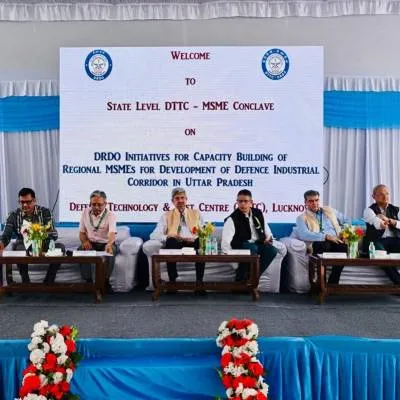
A workshop in Kanpur on the Uttar Pradesh Defence Industrial Corridor sought to strengthen local industry participation and integrate micro, small and medium enterprises (MSME) into defence supply chains. Organisers outlined the need for coordinated action between state agencies, industry associations and procurement bodies to build domestic capacity. The session highlighted the importance of cluster development and testing infrastructure for meeting defence specifications. Delegates discussed pathways for linking MSME capabilities with prime contractors and testing agencies.

Participants emphasised the need to upgrade quality assurance, certification and supplier development so MSME vendors can meet stringent norms. They advocated for shared testing facilities, common quality laboratories and accredited certification processes to reduce entry barriers. Recommendations included mapping existing vendors and creating supplier development programmes aligned with defence demand.

Speakers called for enhanced skill development and incubation support to enable technology absorption and quality manufacturing at scale. Access to finance through targeted schemes, easier certification pathways and incentives for procurement from domestic vendors were urged to strengthen industrial ecosystems. The workshop also recommended better coordination between training institutes and manufacturers to ensure curriculum alignment with defence production needs. Emphasis was placed on creating demonstration projects to validate vendor capabilities before large scale orders.

The Kanpur workshop formed part of broader efforts to build a sustainable defence industrial base in the state and to deepen local supply chains. Follow up measures were proposed to identify priority segments, fast track infrastructure support and establish clear timelines for certification and procurement integration. Organisers signalled continued engagement between government agencies, industry groups and training partners to translate recommendations into implementable action. Stakeholders said the approach aimed to boost employment, reduce import dependence and strengthen national defence preparedness.

A workshop in Kanpur on the Uttar Pradesh Defence Industrial Corridor sought to strengthen local industry participation and integrate micro, small and medium enterprises (MSME) into defence supply chains. Organisers outlined the need for coordinated action between state agencies, industry associations and procurement bodies to build domestic capacity. The session highlighted the importance of cluster development and testing infrastructure for meeting defence specifications. Delegates discussed pathways for linking MSME capabilities with prime contractors and testing agencies. Participants emphasised the need to upgrade quality assurance, certification and supplier development so MSME vendors can meet stringent norms. They advocated for shared testing facilities, common quality laboratories and accredited certification processes to reduce entry barriers. Recommendations included mapping existing vendors and creating supplier development programmes aligned with defence demand. Speakers called for enhanced skill development and incubation support to enable technology absorption and quality manufacturing at scale. Access to finance through targeted schemes, easier certification pathways and incentives for procurement from domestic vendors were urged to strengthen industrial ecosystems. The workshop also recommended better coordination between training institutes and manufacturers to ensure curriculum alignment with defence production needs. Emphasis was placed on creating demonstration projects to validate vendor capabilities before large scale orders. The Kanpur workshop formed part of broader efforts to build a sustainable defence industrial base in the state and to deepen local supply chains. Follow up measures were proposed to identify priority segments, fast track infrastructure support and establish clear timelines for certification and procurement integration. Organisers signalled continued engagement between government agencies, industry groups and training partners to translate recommendations into implementable action. Stakeholders said the approach aimed to boost employment, reduce import dependence and strengthen national defence preparedness.

Related Stories

Gold Stories

Next Story
Building Material

Cement Prices Rise Rs. 7 per Bag in September; October Hikes Expected

Cement companies may seek to raise prices by Rs. 5 to Rs. 20 per bag across most markets in October, although the ability to sustain the increases will depend on demand recovery and dealer acceptance, according to a report by Centrum Broking. The outlook follows a pickup in pricing momentum during September after largely stable prices in July and August. The all-India average trade price increased by Rs. 7 per bag month-on-month to Rs. 356 in September. Centrum Broking’s channel checks indicated gains across both trade and non-trade segments, with non-trade prices recording sharper increases..

Next Story
Products

Minister G Kishan Reddy Says No Coal Shortage Despite Higher Power Demand

Union Coal and Mines Minister G Kishan Reddy said India was not facing a coal shortage despite higher demand from thermal power plants, monsoon-related disruptions in mining operations and lower hydropower generation. He said coal was being supplied to power stations through railway rakes and road transport. Reddy made the remarks on Monday on the sidelines of the Assocham-organised Angul Aluminium Roadshow in Kolkata. His comments came amid reports of alleged supply constraints at some power plants, although he said the temporary interruptions should not be interpreted as a broader shortage. ..

Next Story
Infrastructure Energy

Bondada Engineering Secures Rs. 1.47 bn in Multiple Orders

Bondada Engineering has secured multiple domestic orders with an aggregate value of Rs. 1.47 bn, the company disclosed in a filing with BSE on September 29, 2026. The orders cover telecom infrastructure, renewable energy and energy-efficient lighting solutions, and are inclusive of taxes. Bondada Green Engineering, a subsidiary of Bondada Engineering, received an order for the supply of 200 telecom towers under the BSNL 40GBT project in Gujarat. The award forms part of the company’s telecom infrastructure business and is linked to requirements in the state. Bondada Renewable Energy, another ..

Advertisement

Subscribe to Our Newsletter

Get daily newsletters around different themes from Construction world.

STAY CONNECTED

Advertisement

SPECIAL OFFER
QR Code