


Kolkata Introduces Smart Cashless Parking Network
ECONOMY & POLICY

Kolkata Introduces Smart Cashless Parking Network

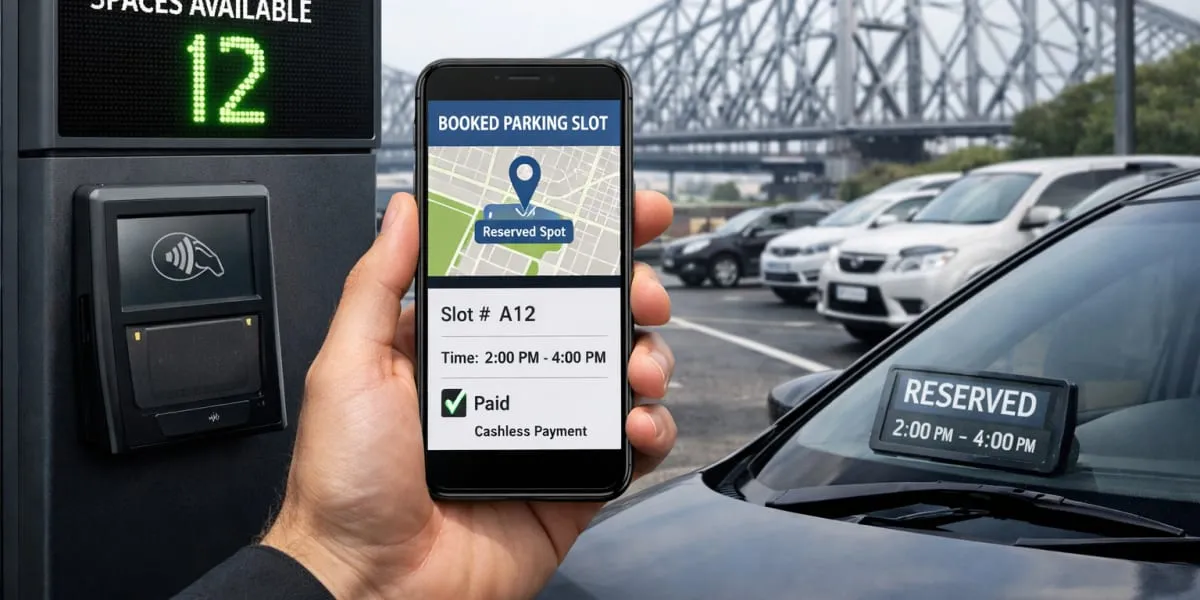
The Kolkata administration has launched a smart parking network that combines a mobile application, cashless payments and advance slot booking to streamline street parking across the city. The initiative is intended to provide drivers with live availability information and to standardise charges while reducing congestion on urban roads. It will be implemented across authorised bays managed by the municipal corporation and supported by enhanced enforcement measures.

Key features include real-time slot tracking that allows motorists to check availability before arrival, multiple cashless payment options such as UPI, QR codes, debit and credit cards and digital wallets. The platform will issue instant system-generated receipts aligned to government-fixed rates to deter fake paper slips, and plans are under way to enable advance reservation of parking slots. A digital vehicle identification mechanism is proposed to link authorised bays to registered vehicles for easier monitoring.

The Kolkata Municipal Corporation (KMC) has identified around 15,000 parking spaces within its area, of which 9,000 to 10,000 have been formally listed for the scheme. To eliminate illicit collection syndicates and ensure revenue flows to the municipal treasury, new tenders will be issued to regularise nearly 10,000 parking spots. The move aims to stop unauthorised collectors and improve transparency in fee collection.

Kolkata Police will begin an aggressive enforcement drive from September one with a revised fine structure, immediate towing in no-parking zones and strict penalties for mounting curbs or blocking pedestrian paths. Prolonged roadside parking by commercial vehicles will attract heavier fines and the long-standing practice of parking on both sides of narrow streets will be replaced by single side regulations to keep roads open for smooth transit, the urban development minister said. The combined approach of technology, cashless transactions and firmer policing is expected to curb overcharging, reduce incidents of fake receipts and shorten the time motorists spend searching for parking. Commuters should see more orderly streets and clearer revenue accountability as the measures take effect.

The Kolkata administration has launched a smart parking network that combines a mobile application, cashless payments and advance slot booking to streamline street parking across the city. The initiative is intended to provide drivers with live availability information and to standardise charges while reducing congestion on urban roads. It will be implemented across authorised bays managed by the municipal corporation and supported by enhanced enforcement measures. Key features include real-time slot tracking that allows motorists to check availability before arrival, multiple cashless payment options such as UPI, QR codes, debit and credit cards and digital wallets. The platform will issue instant system-generated receipts aligned to government-fixed rates to deter fake paper slips, and plans are under way to enable advance reservation of parking slots. A digital vehicle identification mechanism is proposed to link authorised bays to registered vehicles for easier monitoring. The Kolkata Municipal Corporation (KMC) has identified around 15,000 parking spaces within its area, of which 9,000 to 10,000 have been formally listed for the scheme. To eliminate illicit collection syndicates and ensure revenue flows to the municipal treasury, new tenders will be issued to regularise nearly 10,000 parking spots. The move aims to stop unauthorised collectors and improve transparency in fee collection. Kolkata Police will begin an aggressive enforcement drive from September one with a revised fine structure, immediate towing in no-parking zones and strict penalties for mounting curbs or blocking pedestrian paths. Prolonged roadside parking by commercial vehicles will attract heavier fines and the long-standing practice of parking on both sides of narrow streets will be replaced by single side regulations to keep roads open for smooth transit, the urban development minister said. The combined approach of technology, cashless transactions and firmer policing is expected to curb overcharging, reduce incidents of fake receipts and shorten the time motorists spend searching for parking. Commuters should see more orderly streets and clearer revenue accountability as the measures take effect.

Related Stories

Gold Stories
Next Story
Infrastructure Urban

Sabarmati Riverfront Two Plots Up for Auction at Rs2.24 bn Base Price

Two commercial plots on the western bank of the Sabarmati Riverfront will be auctioned with a base price of Rs 112 crore each, equivalent to Rs 1.12 bn apiece and Rs 2.24 billion in total. The parcels are located adjacent to the Metro Rail Bridge in Ahmedabad and form the first commercial offering after a prolonged pause. The Riverfront Development Corporation has framed the sale as part of a phased commercial release to revive development along the riverfront. The combined base valuation has been set by the corporation to reflect market rates along the riverfront. The corporation has fixed a ..

Next Story
Infrastructure Urban

Andhra Pradesh to Connect Over One Million Streetlights

Andhra Pradesh will undertake a statewide smart streetlighting programme across all 123 Urban Local Bodies (ULBs), bringing around 1.05 million (mn) streetlights under an AI enabled monitoring and management system. The programme will be implemented by Energy Efficiency Services Limited (EESL) with the Commissioner and Director of Municipal Administration under the state Municipal Administration and Urban Development Department. The project aims to convert conventional streetlighting into a digitally managed municipal service monitored and maintained remotely. The initial phase will cover abou..

Next Story
Infrastructure Urban

AMC To Procure Four Machines For Guard Rail Cleaning

Ahmedabad Municipal Corporation will introduce four specialised machines for cleaning guard railings along major roads and the central verges of BRTS and Metro corridors. The civic body plans to replace manual labour with mechanised cleaning to improve maintenance of road infrastructure and greenery. The purchase is estimated at Rs 82.8 million (mn), excluding GST. The proposal sets the base price of each machine at about Rs 20.7 million (mn) so four units total Rs 82.8 million (mn) before GST. 18 per cent GST will be applicable separately. During the warranty period each machine will operate ..

Advertisement

Subscribe to Our Newsletter

Get daily newsletters around different themes from Construction world.

STAY CONNECTED

Advertisement