

Mahalaxmi Skywalk Cut Short Ahead Of Metro Station
ECONOMY & POLICY

Mahalaxmi Skywalk Cut Short Ahead Of Metro Station

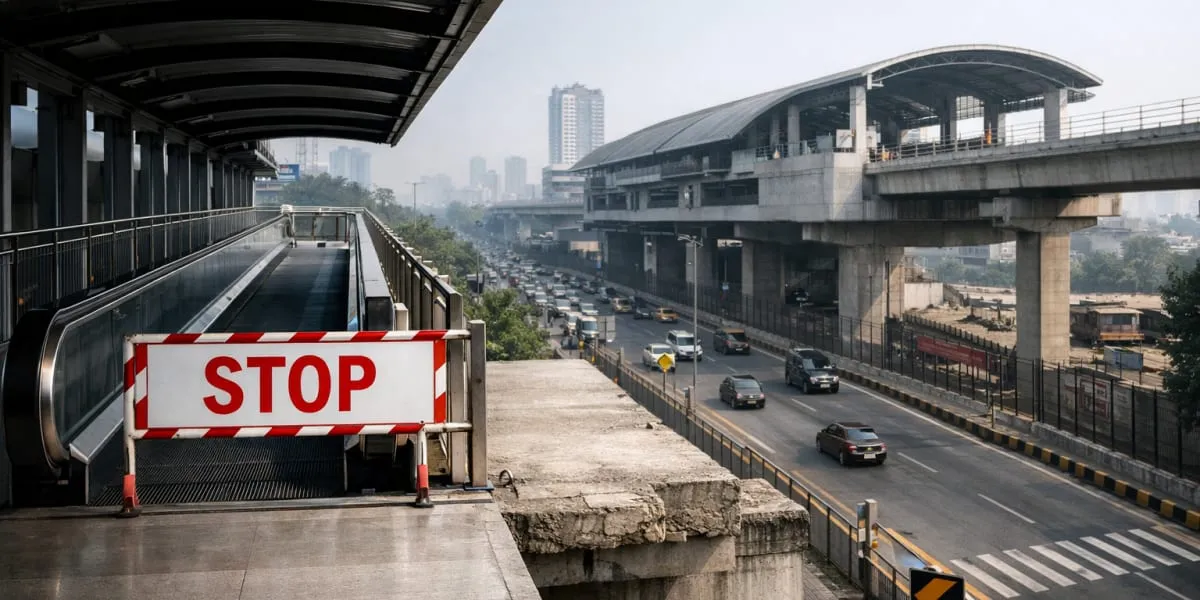
Mumbai's first travelator-equipped skywalk intended to link the monorail at Sant Gadge Maharaj Chowk with Metro Line three Mahalaxmi station has been shortened and will now stop about 200 metres before the station, forcing commuters to complete part of the interchange on foot. The footover bridge was planned to offer a seamless transfer between modes but the truncated alignment requires users to navigate footpaths and cross busy roads. Officials indicated that the revised structure will nevertheless improve commuter movement.

The original footover bridge measured 384 metres and was to provide a direct connection to the metro station, but the alignment now terminates at Jacob Circle, also known as Saat Rasta. Commuters will need to cross three lanes of the Saat Rasta roundabout and use crowded footpaths to switch systems, raising fresh questions over the multi-modal integration strategy for the city. Authorities described technical infeasibility caused by the Brihanmumbai Municipal Corporation flyover from Keshavrao Khadye Marg as a key constraint.

Other factors cited included the Metro Line three underground tunnel influence zone, a heritage police station, underground utilities and traffic restrictions linked to Elphinstone bridge reconstruction. The area also contains water reservoirs, drains and sewer lines, and Saat Rasta is a key procession route during Ganesh Chaturthi, complicating planning. Planners found the original alignment would have affected 78 trees, while the modified plan removes the need for tree cutting. Officials said the redesign balanced safety, heritage and environmental concerns.

The contract had been awarded to a joint venture led by Niraj Cement Structurals Ltd at Rs 826.6 million (Rs 826.6 mn), and following redesign the project cost stands at Rs 700.5 mn. The shortening of the skywalk by over 100 metres reduced project costs by more than Rs 100 mn. Officials indicated that a later link to Mahalaxmi railway station was not part of the original scope but could be considered, and some commuters cautioned that the shortened structure will necessitate careful road crossing despite wide footpaths.

"Join industry leaders at RAHSTA Expo, India's premier platform for roads, highways and traffic infrastructure. Register now to explore innovations, network with experts and shape the future of mobility."

Mumbai's first travelator-equipped skywalk intended to link the monorail at Sant Gadge Maharaj Chowk with Metro Line three Mahalaxmi station has been shortened and will now stop about 200 metres before the station, forcing commuters to complete part of the interchange on foot. The footover bridge was planned to offer a seamless transfer between modes but the truncated alignment requires users to navigate footpaths and cross busy roads. Officials indicated that the revised structure will nevertheless improve commuter movement. The original footover bridge measured 384 metres and was to provide a direct connection to the metro station, but the alignment now terminates at Jacob Circle, also known as Saat Rasta. Commuters will need to cross three lanes of the Saat Rasta roundabout and use crowded footpaths to switch systems, raising fresh questions over the multi-modal integration strategy for the city. Authorities described technical infeasibility caused by the Brihanmumbai Municipal Corporation flyover from Keshavrao Khadye Marg as a key constraint. Other factors cited included the Metro Line three underground tunnel influence zone, a heritage police station, underground utilities and traffic restrictions linked to Elphinstone bridge reconstruction. The area also contains water reservoirs, drains and sewer lines, and Saat Rasta is a key procession route during Ganesh Chaturthi, complicating planning. Planners found the original alignment would have affected 78 trees, while the modified plan removes the need for tree cutting. Officials said the redesign balanced safety, heritage and environmental concerns. The contract had been awarded to a joint venture led by Niraj Cement Structurals Ltd at Rs 826.6 million (Rs 826.6 mn), and following redesign the project cost stands at Rs 700.5 mn. The shortening of the skywalk by over 100 metres reduced project costs by more than Rs 100 mn. Officials indicated that a later link to Mahalaxmi railway station was not part of the original scope but could be considered, and some commuters cautioned that the shortened structure will necessitate careful road crossing despite wide footpaths.

Next Story
Real Estate

Pecan Realty Completes Rs 1.5 Billion Transactions

Pecan Realty has recently completed four institutional transactions worth over Rs 1.5 billion over the past two years, strengthening its position as an execution-led real estate platform. The deals include resolution-led acquisitions, structured finance transactions and capital partnerships across its development portfolio.The transactions covered acquisitions through the National Company Law Tribunal process and helped provide repayment or exits to both private and public sector lenders. The company said the deals demonstrate its ability to resolve complex project situations, work with instit..

Next Story
Real Estate

SNN Estates Expands North Bengaluru Housing Project

SNN Estates has announced an expansion of its SNN Estates Felicity residential project in North Bengaluru following strong buyer demand, with 75 per cent of the first-phase inventory sold within three days of launch.The developer will add 76 apartments in the new phase, taking the project's estimated revenue potential to around Rs 1,000 crore upon completion of Phase 2.Spread across 6.5 acres in Rachenahalli, near Manyata Tech Park, the project comprises 604 apartments in 1.5, 2, 2.5, 3 and 4 BHK configurations. The development includes a 50,000-sq-ft clubhouse with amenities such as sports co..

Next Story
Infrastructure Urban

SCG Drives ASEAN Industrial Transformation Strategy

SCG is strengthening its focus on ASEAN as a key growth region by advancing industrial transformation, enhancing competitiveness and building resilient regional value chains. Thammasak Sethaudom, President and Chief Executive Officer, SCG, highlighted the need for industries to continuously develop capabilities, strengthen resilience and deepen regional cooperation to achieve sustainable long-term growth.SCG views ASEAN as an important growth engine alongside China, supported by favourable demographics, trade connectivity and investment flows. With ASEAN’s GDP projected to grow by around 4.7..

Advertisement

Subscribe to Our Newsletter

Get daily newsletters around different themes from Construction world.

STAY CONNECTED

Advertisement

Advertisement

Advertisement