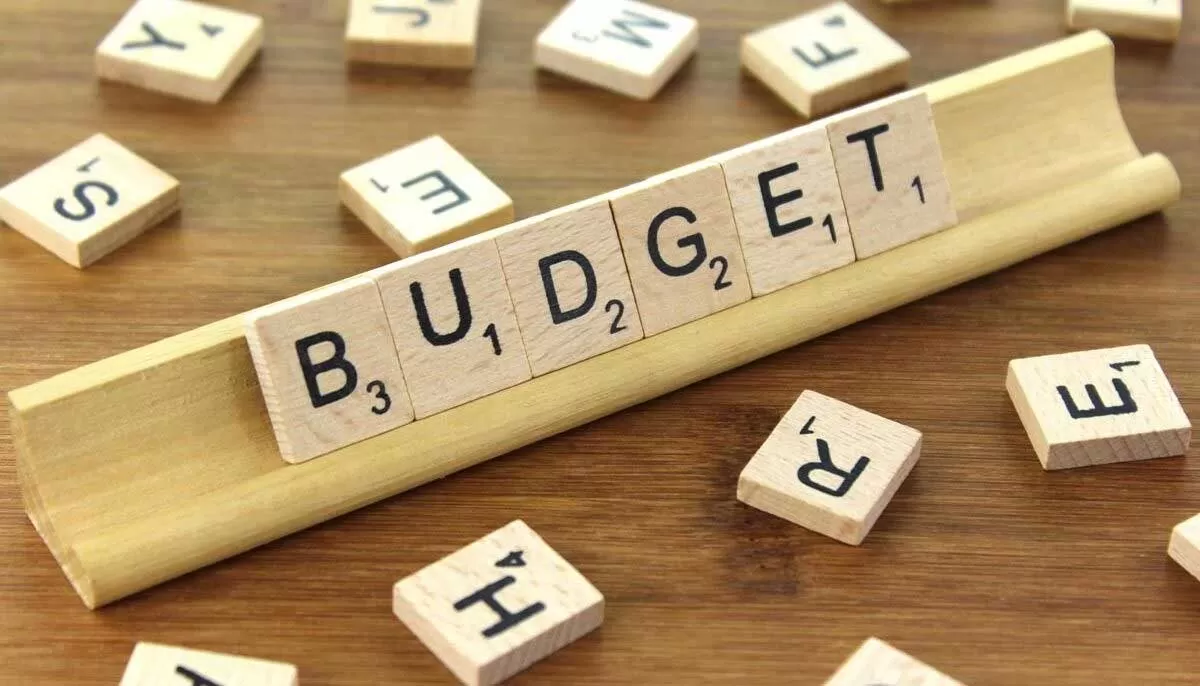
Maharashtra Budget 2025 Will Transform Employment Landscape
ECONOMY & POLICY

Maharashtra Budget 2025 Will Transform Employment Landscape

Maharashtra's Finance Minister and Deputy Chief Minister Ajit Pawar presented the Rs 7.20 trillion state budget for 2025-26, outlining ambitious plans for infrastructure, employment, and economic growth. With a revenue deficit of Rs 458.92 billion and a fiscal deficit of Rs 1362.34 billion, the budget focuses on large-scale investments in roads, ports, metro expansion, and irrigation, alongside job creation and AI-driven agricultural initiatives.

Industry and Market Outlook Maharashtra, India's second-largest economy after Uttar Pradesh, continues to lead in industrial and financial growth. The state’s focus on infrastructure and industrial policies is poised to attract major investments, especially in logistics, manufacturing, and technology sectors. The proposed Industrial Policy 2025, aimed at securing Rs 20 trillion in investments, signals a strong commitment to economic expansion. Additionally, Mumbai’s projected economic growth from $140 billion to $300 billion underscores the city's significance as a global financial hub.

The government’s emphasis on AI in agriculture, renewable energy, and commercial hubs aligns with national priorities for sustainability and digital transformation. With increased spending on metro projects and road networks, Maharashtra is strengthening its urban mobility and connectivity, which will further enhance real estate and business opportunities. The Rs 15.65 trillion investment plan promises robust employment generation, reinforcing Maharashtra’s position as a prime destination for economic development.

Ajit Pawar’s budget outlines a vision for a progressive Maharashtra, balancing economic aspirations with social welfare through initiatives like the Ladki Bahin Yojana and irrigation projects. As the state gears up for a transformative decade, its budget signals a strategic roadmap towards industrial growth, infrastructural excellence, and inclusive development.

Maharashtra's Finance Minister and Deputy Chief Minister Ajit Pawar presented the Rs 7.20 trillion state budget for 2025-26, outlining ambitious plans for infrastructure, employment, and economic growth. With a revenue deficit of Rs 458.92 billion and a fiscal deficit of Rs 1362.34 billion, the budget focuses on large-scale investments in roads, ports, metro expansion, and irrigation, alongside job creation and AI-driven agricultural initiatives. Industry and Market Outlook Maharashtra, India's second-largest economy after Uttar Pradesh, continues to lead in industrial and financial growth. The state’s focus on infrastructure and industrial policies is poised to attract major investments, especially in logistics, manufacturing, and technology sectors. The proposed Industrial Policy 2025, aimed at securing Rs 20 trillion in investments, signals a strong commitment to economic expansion. Additionally, Mumbai’s projected economic growth from $140 billion to $300 billion underscores the city's significance as a global financial hub. The government’s emphasis on AI in agriculture, renewable energy, and commercial hubs aligns with national priorities for sustainability and digital transformation. With increased spending on metro projects and road networks, Maharashtra is strengthening its urban mobility and connectivity, which will further enhance real estate and business opportunities. The Rs 15.65 trillion investment plan promises robust employment generation, reinforcing Maharashtra’s position as a prime destination for economic development. Ajit Pawar’s budget outlines a vision for a progressive Maharashtra, balancing economic aspirations with social welfare through initiatives like the Ladki Bahin Yojana and irrigation projects. As the state gears up for a transformative decade, its budget signals a strategic roadmap towards industrial growth, infrastructural excellence, and inclusive development.

Next Story
Infrastructure Urban

Implementation Status of Jal Jeevan Mission

Since August 2019 the Government has implemented Jal Jeevan Mission to provide assured potable water through household tap connections in rural India. At the start of the mission only 32.3 million (mn) rural households, representing 16.7 per cent, were reported to have tap water connections. States and union territories have reported that 125.8 mn additional rural households have since been provided with tap connections. As a result, of about 193.6 mn rural households roughly 158.2 mn, or 81.71 per cent, are reported to have tap water supply at home.\n\nThe State, district and village level st..

Next Story
Infrastructure Urban

Jal Jeevan Mission Reaches Eighty One Per Cent Rural Coverage

The Government reported substantial progress under the Jal Jeevan Mission, launched in August 2019 to provide tap water to every rural household. At launch only 32.3 million (mn) rural households had tap connections and states and Union territories reported provision of 125.8 mn additional households by March 2026. Consequently, out of about 193.6 mn rural households around 158.2 mn, or 81.71 per cent, are reported to have tap water at home. The Finance Minister announced extension of the mission until 2028 in the 2025-26 budget speech. The Swachh Bharat Mission Grameen, launched in October 20..

Next Story
Infrastructure Urban

Empowering Local Governance for Sustainable Rural Water Supply

The Ministry of Jal Shakti has aligned the Jal Jeevan Mission (JJM) with the 73rd Amendment to strengthen village level planning and community ownership of water supply. Gram Panchayats, village water and sanitation committees and Pani Samitis are to plan, implement, manage and maintain piped water systems, with gram sabha processes formalising handover and oversight. Implementation support agencies including non government organisations, community based organisations and self help groups have been empanelled to train local committees and promote women participation. Under JJM, the department ..

Advertisement

Subscribe to Our Newsletter

Get daily newsletters around different themes from Construction world.

STAY CONNECTED

Advertisement

Advertisement

Advertisement