Maharashtra Sets Up Task Force to Unify MMR Bus Transport System
ECONOMY & POLICY

Maharashtra Sets Up Task Force to Unify MMR Bus Transport System

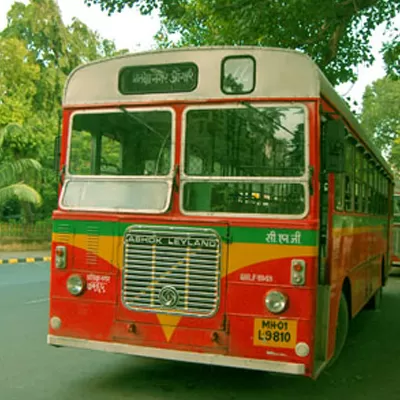
The Maharashtra government has formed a 12-member task force to develop an integrated bus transport plan for the Mumbai Metropolitan Region (MMR), aiming to facilitate seamless travel through a unified single ticketing system.

The task force will be led by the General Manager of Brihanmumbai Electric Supply and Transport (BEST), with the Chief of the Transport and Traffic Department of the Mumbai Metropolitan Region Development Authority (MMRDA) acting as secretary. Other members include senior officials from key municipal corporations such as Thane, Brihanmumbai, Navi Mumbai, and Vasai-Virar, along with the Additional Metropolitan Commissioner of MMRDA.

This move follows a meeting of the Growth Hub Regulatory Board held a month earlier and was formalised through a government resolution (GR) issued by the Urban Development Department on June 10, 2025. The task force has been assigned to create a comprehensive strategy for integrating bus services across the region, addressing the current lack of a centralised transport authority, and improving coordination among civic-operated systems.

The task force operates under the Growth Hub Governing Board, which is also responsible for approving the Mumbai Metropolitan Region Economic Master Plan. The introduction of a single ticketing system forms part of broader economic initiatives under this plan.

The GR outlines that this effort is in line with NITI Aayog’s Growth Hubs (G-HUB) policy, which focuses on enhancing regional economic growth by attracting foreign investment, fostering startups, and generating employment. The policy is being implemented as a pilot project in four urban regions, with MMR representing Maharashtra in the initiative.

News source: The Hindu

The Maharashtra government has formed a 12-member task force to develop an integrated bus transport plan for the Mumbai Metropolitan Region (MMR), aiming to facilitate seamless travel through a unified single ticketing system.The task force will be led by the General Manager of Brihanmumbai Electric Supply and Transport (BEST), with the Chief of the Transport and Traffic Department of the Mumbai Metropolitan Region Development Authority (MMRDA) acting as secretary. Other members include senior officials from key municipal corporations such as Thane, Brihanmumbai, Navi Mumbai, and Vasai-Virar, along with the Additional Metropolitan Commissioner of MMRDA.This move follows a meeting of the Growth Hub Regulatory Board held a month earlier and was formalised through a government resolution (GR) issued by the Urban Development Department on June 10, 2025. The task force has been assigned to create a comprehensive strategy for integrating bus services across the region, addressing the current lack of a centralised transport authority, and improving coordination among civic-operated systems.The task force operates under the Growth Hub Governing Board, which is also responsible for approving the Mumbai Metropolitan Region Economic Master Plan. The introduction of a single ticketing system forms part of broader economic initiatives under this plan.The GR outlines that this effort is in line with NITI Aayog’s Growth Hubs (G-HUB) policy, which focuses on enhancing regional economic growth by attracting foreign investment, fostering startups, and generating employment. The policy is being implemented as a pilot project in four urban regions, with MMR representing Maharashtra in the initiative.News source: The Hindu

Next Story
Real Estate

AI: The New Recruit

From getting ideas to evaluating designs, presenting concepts to clients and tracking projects, artificial intelligence (AI) is helping architects work better and faster.“AI allows architects to spend more time doing what only they can do: think critically, synthesise complexity and design with intent,” says Dikshu C Kukreja, Managing Principal, CP Kukreja Architects. “Every minute reclaimed from repetitive processes can be invested in creativity, contextual understanding, interdisciplinary collaboration and innovation – the qualities that define meaningful architecture.”To read the ..

Next Story
Real Estate

Redevelopment 2.0

In 2017, Mumbai identified 160,000 ageing buildings due for structural audit. Close to half of these were in the Western Suburbs. Redeveloping the oldest and structurally weakest of these would help unlock new housing, much needed given the city’s growing population density and constant developed area of 437.7 sq km. At 30,600 people per sq km in 2024, Mumbai’s density was almost thrice that of Gurugram, and 60 per cent higher than Bengaluru’s.Essentially, Mumbai’s realty market has demand. It has capital. It has realty development potential.Fast forward to 2026. Mumbai has 1,094 regis..

Next Story
Technology

Cost intelligence will become a strategic contributor to project success

As India's construction industry accelerates its digital transformation, integrated platforms, AI and connected data are becoming essential to improving cost certainty, project efficiency and sustainability. Ravi Kumar, Sales Director – India, RIB Software India, shares how digital workflows are reshaping project planning, commercial management and decision-making across the construction value chain.India's construction sector is embracing digital technologies at an unprecedented pace. From your perspective, what are the biggest shifts driving this transformation and how is RIB Software enab..

Advertisement

Subscribe to Our Newsletter

Get daily newsletters around different themes from Construction world.

STAY CONNECTED

Advertisement

Advertisement

Advertisement