Manohar Lal Launches Operational Guidelines For Urban Challenge Fund
ECONOMY & POLICY

Manohar Lal Launches Operational Guidelines For Urban Challenge Fund

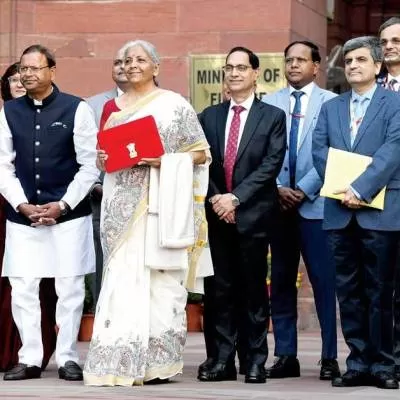
Union Minister for Housing and Urban Affairs Manohar Lal launched operational guidelines for the Urban Challenge Fund (UCF) and the Credit Repayment Guarantee Sub-Scheme (CRGSS) in New Delhi, signalling a shift in urban infrastructure financing. The launch drew representatives from several states and chief ministers of Madhya Pradesh and Odisha joined by video message. The ministry framed the measures as a means to leverage public funds to mobilise private and market financing and to make cities financially robust and investment ready.

The UCF carries a central assistance of Rs 1 tn and is expected to catalyse roughly Rs 4 tn of urban investments through market-based financing. Central assistance will be limited to 25 per cent of project cost while at least 50 per cent of funding is to be mobilised through municipal bonds, bank loans and public-private partnerships to ensure financial discipline. Officials set the outlay allocations at Rs 900 bn for projects, Rs 50 bn for project preparation and capacity building and Rs 50 bn for the CRGSS. The CRGSS is designed to enable smaller and Tier-two and Tier-three cities, including those in hilly and north-eastern regions, to access market-based financing through credit guarantees.

The Fund will support transformative projects in areas such as redevelopment of old city areas and markets, urban mobility and last-mile connectivity, non-motorised transport, water and sanitation infrastructure and climate-resilient urban development. The emphasis is on scalable, impactful and bankable projects that deliver long-term economic and social benefits. Urban Local Bodies (ULBs) are to be encouraged to strengthen their financial capacity, adopt reforms and actively participate in market-based financing mechanisms. States and ULBs are urged to view the UCF as an opportunity to build resilient and globally competitive, investment-ready cities.

Senior officials said the UCF aligns infrastructure creation with financial sustainability and institutional strengthening. An e-directory linking cities with banks and rating agencies was launched. MoUs and letters of intent were digitally signed and the fund will run from FY 2025–26 to FY 2030–31 to transform cities into growth hubs.

Union Minister for Housing and Urban Affairs Manohar Lal launched operational guidelines for the Urban Challenge Fund (UCF) and the Credit Repayment Guarantee Sub-Scheme (CRGSS) in New Delhi, signalling a shift in urban infrastructure financing. The launch drew representatives from several states and chief ministers of Madhya Pradesh and Odisha joined by video message. The ministry framed the measures as a means to leverage public funds to mobilise private and market financing and to make cities financially robust and investment ready. The UCF carries a central assistance of Rs 1 tn and is expected to catalyse roughly Rs 4 tn of urban investments through market-based financing. Central assistance will be limited to 25 per cent of project cost while at least 50 per cent of funding is to be mobilised through municipal bonds, bank loans and public-private partnerships to ensure financial discipline. Officials set the outlay allocations at Rs 900 bn for projects, Rs 50 bn for project preparation and capacity building and Rs 50 bn for the CRGSS. The CRGSS is designed to enable smaller and Tier-two and Tier-three cities, including those in hilly and north-eastern regions, to access market-based financing through credit guarantees. The Fund will support transformative projects in areas such as redevelopment of old city areas and markets, urban mobility and last-mile connectivity, non-motorised transport, water and sanitation infrastructure and climate-resilient urban development. The emphasis is on scalable, impactful and bankable projects that deliver long-term economic and social benefits. Urban Local Bodies (ULBs) are to be encouraged to strengthen their financial capacity, adopt reforms and actively participate in market-based financing mechanisms. States and ULBs are urged to view the UCF as an opportunity to build resilient and globally competitive, investment-ready cities. Senior officials said the UCF aligns infrastructure creation with financial sustainability and institutional strengthening. An e-directory linking cities with banks and rating agencies was launched. MoUs and letters of intent were digitally signed and the fund will run from FY 2025–26 to FY 2030–31 to transform cities into growth hubs.

Next Story
Equipment

India CE Industry Ends FY26 on a Steady Recovery Path

India’s construction equipment industry closed FY26 on a stable note, reflecting measured resilience and gradually improving momentum. Total sales in Q4 FY26 rose 4 per cent year on year to 42,906 units, extending the recovery seen over the past two years.Domestic demand for the full year remained under pressure, declining 7 per cent, but exports provided strong support. Overall exports grew 31 per cent, while non-OEM exports increased 13 per cent, highlighting sustained demand from overseas markets.March 2026 further underlined the recovery, with sales rising 6 per cent year on year and 13 ..

Next Story
Infrastructure Urban

Leaders Question FIR Against Anil Agarwal

Several industry and public figures have questioned the FIR filed against Anil Agarwal following the boiler accident in Chhattisgarh, while also expressing condolences over the loss of lives and calling for a thorough investigation.Naveen Jindal said the tragedy was deeply painful and stressed that compensation, livelihood support for affected families and a fair probe were essential. He also questioned naming Agarwal in the FIR before completion of the investigation.Kiran Bedi urged restraint, saying investigations should focus on learning lessons and strengthening systems rather than prematu..

Next Story
Infrastructure Urban

Tier 2, 3 Cities Drive 66% of New D2C Orders

Tier 2 and Tier 3 cities accounted for 66 per cent of new direct-to-consumer (D2C) orders in FY 2026, according to a new analysis by Unicommerce.The report said buyers from smaller cities also contributed 60 per cent of incremental gross merchandise value (GMV) in FY 2026 compared with FY 2025, highlighting rising demand beyond metro markets.Overall, India’s D2C segment recorded strong growth, with order volumes rising 33 per cent and GMV increasing 32 per cent year-on-year. The findings are based on more than 400 million order items processed through brand websites on Unicommerce’s Uniwar..

Advertisement

Subscribe to Our Newsletter

Get daily newsletters around different themes from Construction world.

STAY CONNECTED

Advertisement

Advertisement

Advertisement