Maruti Suzuki Opens Kharkhoda Plant With Rs 350 bn Investment
ECONOMY & POLICY

Maruti Suzuki Opens Kharkhoda Plant With Rs 350 bn Investment

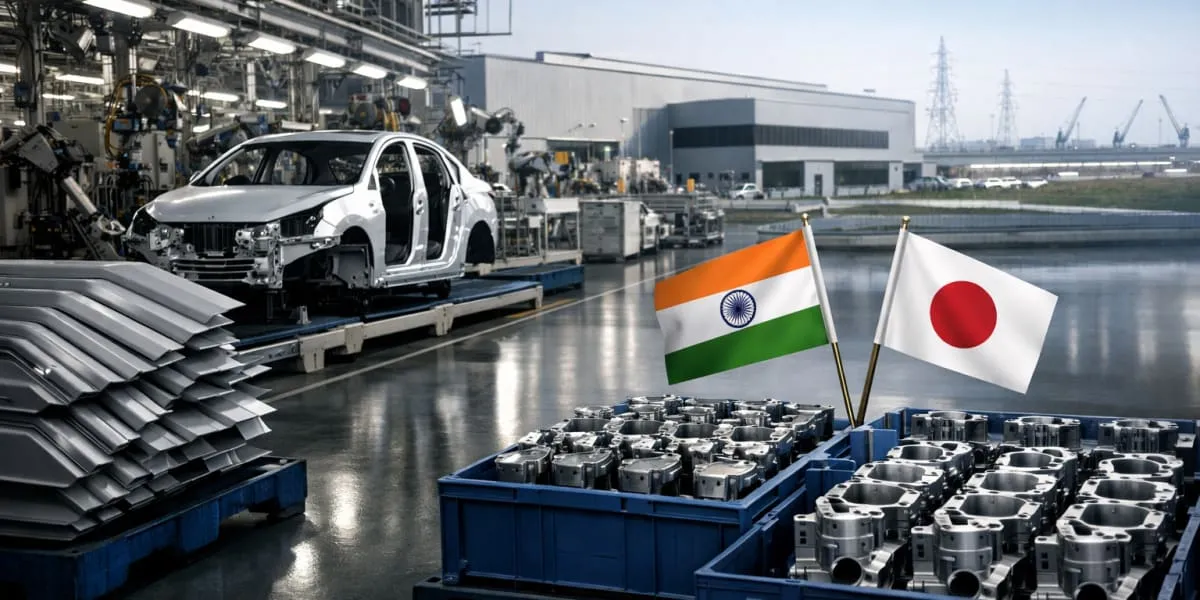
Maruti Suzuki has inaugurated its fourth manufacturing complex at Kharkhoda in Haryana with a Rs 350 billion (bn) investment, the company said. The fully developed complex spreads across nearly 800 acres and includes an integrated supplier park aimed at strengthening the manufacturing ecosystem and improving operational efficiency. The project was opened during the visit by the prime ministers of India and Japan, an event the company described as reinforcing bilateral strategic and economic cooperation.

At present two manufacturing units at Kharkhoda are operational with a combined installed production capacity of 0.5 million (mn) vehicles annually and the company plans to expand capacity to one mn vehicles a year in phases. The facility has been designed around the Suzuki Smart Factory concept and incorporates Industry 5.0-enabled manufacturing technologies to raise precision and productivity. The plant will deploy artificial-intelligence-powered, human-aware collaborative robots to improve workplace safety and output.

Sustainability is embedded in the project, with the facility set to operate on 100 per cent renewable electricity, feature 100 per cent water recycling and function as a Zero Liquid Discharge manufacturing unit. Maruti Suzuki plans to commission a biogas plant in fiscal year 2026-27, develop an in-house solar power plant of up to 70 MW as production expands, and build an in-plant railway siding to support greener logistics. The company said these measures form part of its Make in India, Make for the World strategy.

The Kharkhoda complex is expected to create more than 21,000 direct jobs and to generate substantial employment across ancillary industries, logistics providers and component manufacturers. Maruti Suzuki continues to be the country's largest passenger vehicle manufacturer, accounting for nearly half of all passenger vehicle sales. The expansion illustrates India's growing role as a global automobile manufacturing hub and the continuing flow of Japanese investment across multiple sectors.

Maruti Suzuki has inaugurated its fourth manufacturing complex at Kharkhoda in Haryana with a Rs 350 billion (bn) investment, the company said. The fully developed complex spreads across nearly 800 acres and includes an integrated supplier park aimed at strengthening the manufacturing ecosystem and improving operational efficiency. The project was opened during the visit by the prime ministers of India and Japan, an event the company described as reinforcing bilateral strategic and economic cooperation. At present two manufacturing units at Kharkhoda are operational with a combined installed production capacity of 0.5 million (mn) vehicles annually and the company plans to expand capacity to one mn vehicles a year in phases. The facility has been designed around the Suzuki Smart Factory concept and incorporates Industry 5.0-enabled manufacturing technologies to raise precision and productivity. The plant will deploy artificial-intelligence-powered, human-aware collaborative robots to improve workplace safety and output. Sustainability is embedded in the project, with the facility set to operate on 100 per cent renewable electricity, feature 100 per cent water recycling and function as a Zero Liquid Discharge manufacturing unit. Maruti Suzuki plans to commission a biogas plant in fiscal year 2026-27, develop an in-house solar power plant of up to 70 MW as production expands, and build an in-plant railway siding to support greener logistics. The company said these measures form part of its Make in India, Make for the World strategy. The Kharkhoda complex is expected to create more than 21,000 direct jobs and to generate substantial employment across ancillary industries, logistics providers and component manufacturers. Maruti Suzuki continues to be the country's largest passenger vehicle manufacturer, accounting for nearly half of all passenger vehicle sales. The expansion illustrates India's growing role as a global automobile manufacturing hub and the continuing flow of Japanese investment across multiple sectors.

Next Story
Infrastructure Urban

Meghalaya Launches Rs 1.75 Billion Mission for Lakadong Turmeric

Meghalaya has launched Mission Golden Spice: Integrated Lakadong Turmeric Value Chain Enhancement Project, marking a major step towards establishing the state as a global centre for premium, organic and GI-tagged Lakadong turmeric.Launched at Sanchar Bhavan in New Delhi, the initiative aims to transform Meghalaya’s agricultural sector by moving farmers from traditional commodity production towards a value-driven, entrepreneurship-led ecosystem. Through a Community-Public-Private Partnership (CPPP) model, the project focuses on strengthening processing capabilities, improving market access an..

Next Story
Infrastructure Urban

Staunch Electronics Expands EMS Capabilities Amid India’s Manufacturing Growth

Staunch Electronics India, an Electronics Manufacturing Services (EMS), Original Equipment Manufacturer (OEM), and Original Design Manufacturer (ODM), is strengthening its presence in India’s growing electronics manufacturing ecosystem through its focus on manufacturing excellence, innovation, and customer-centric partnerships.Founded in 2014, Staunch Electronics India has built over a decade of manufacturing expertise, providing electronic manufacturing solutions across multiple industries. The company offers integrated EMS, OEM, and ODM services covering product engineering, design support..

Next Story
Infrastructure Energy

Dreamfly plans 200 MWh drone battery facility

Dreamfly Innovations has announced plans to establish a 40,000 sq ft aviation battery manufacturing facility in North Bengaluru with an initial annual capacity of 100 MWh, scalable to 200 MWh.The facility will produce advanced batteries for defence, surveillance, inspection, agricultural spraying, logistics and emerging air mobility platforms such as air taxis. The company said the project would strengthen India’s domestic drone supply chain by expanding local production of a critical unmanned aerial system component.Dreamfly currently reports indigenous content of 77% in its products. The c..

Advertisement

Subscribe to Our Newsletter

Get daily newsletters around different themes from Construction world.

STAY CONNECTED

Advertisement

Advertisement

Advertisement