Maruti Suzuki Commissions One Megawatt Hour Battery Energy Storage
POWER & RENEWABLE ENERGY

Maruti Suzuki Commissions One Megawatt Hour Battery Energy Storage

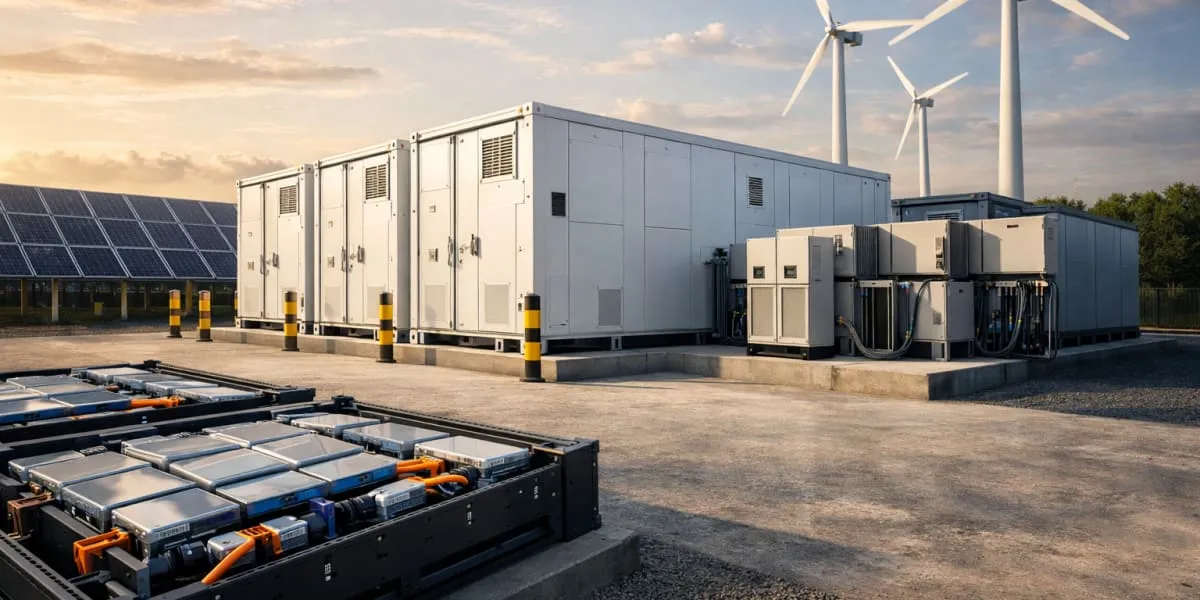
Maruti Suzuki has commissioned a one megawatt hour (MWh) battery energy storage system (BESS) at its Kharkhoda manufacturing plant in Haryana. The company said the system will enhance energy resilience and enable better integration of on-site renewable generation. The installation marks a step in the firm's efforts to improve energy efficiency and reduce dependence on the grid. The project will also support uninterrupted production by providing a buffer during short duration supply disruptions.

The BESS will provide one MWh of dispatchable capacity to support plant operations during peak demand and to stabilise supply. It will complement existing power management measures and allow shifting of excess renewable output to periods of higher demand. The system's commissioning supports reliability and operational flexibility for the production lines. Engineers at the plant have integrated the storage with the site's energy management systems to coordinate charging and discharge cycles.

The Kharkhoda plant will now use battery storage to moderate peak draw from the grid and to store surplus renewable generation for later use. The project aligns with the company's broader energy transition and sustainability initiatives and forms part of efforts to optimise energy consumption at industrial facilities. Company representatives characterised the installation as a strategic step towards meeting operational and environmental objectives. The deployment reduces the firm's exposure to volatile grid tariffs and supports planned renewable additions on site.

Industry observers say deployment of battery energy storage at manufacturing sites can lower operational costs and improve power quality while also enabling higher uptake of renewable capacity on site. The move follows a wider trend among vehicle manufacturers investing in energy storage to support electrification of operations and supply chains. Maruti Suzuki will continue to pursue measures to strengthen energy management across its production network. The company indicated that further energy projects are being evaluated to enhance sustainability and operational resilience.

"Join industry leaders at RAHSTA Expo, India's premier platform for roads, highways and traffic infrastructure. Register now to explore innovations, network with experts and shape the future of mobility."

Maruti Suzuki has commissioned a one megawatt hour (MWh) battery energy storage system (BESS) at its Kharkhoda manufacturing plant in Haryana. The company said the system will enhance energy resilience and enable better integration of on-site renewable generation. The installation marks a step in the firm's efforts to improve energy efficiency and reduce dependence on the grid. The project will also support uninterrupted production by providing a buffer during short duration supply disruptions. The BESS will provide one MWh of dispatchable capacity to support plant operations during peak demand and to stabilise supply. It will complement existing power management measures and allow shifting of excess renewable output to periods of higher demand. The system's commissioning supports reliability and operational flexibility for the production lines. Engineers at the plant have integrated the storage with the site's energy management systems to coordinate charging and discharge cycles. The Kharkhoda plant will now use battery storage to moderate peak draw from the grid and to store surplus renewable generation for later use. The project aligns with the company's broader energy transition and sustainability initiatives and forms part of efforts to optimise energy consumption at industrial facilities. Company representatives characterised the installation as a strategic step towards meeting operational and environmental objectives. The deployment reduces the firm's exposure to volatile grid tariffs and supports planned renewable additions on site. Industry observers say deployment of battery energy storage at manufacturing sites can lower operational costs and improve power quality while also enabling higher uptake of renewable capacity on site. The move follows a wider trend among vehicle manufacturers investing in energy storage to support electrification of operations and supply chains. Maruti Suzuki will continue to pursue measures to strengthen energy management across its production network. The company indicated that further energy projects are being evaluated to enhance sustainability and operational resilience.

Next Story
Infrastructure Transport

Railways To Operate Over 300 Special Trains For Rath Yatra

Union Railway Minister Ashwini Vaishnaw announced that Indian Railways (IR) will operate more than 300 special trains for the annual Jagannath Rath Yatra in Odisha and over 100 special trains during the Onam festival in Keralam. He flagged off the Nanded–Mumbai and Tanakpur–Nanded Express trains and inaugurated the extension of the Tanakpur–Pilibhit service up to Shahjahanpur via video conference from Rail Sadan in Bhubaneswar. He noted that the summer season, which concluded on 30 June, had seen a record 15,000 special trains. Vaishnaw stated that the newly launched services are intende..

Next Story
Infrastructure Transport

Vande Bharat Express To Start From Tripura Soon

Tripura Chief Minister Manik Saha said the Vande Bharat Express will commence operations from Tripura in the coming days after he flagged off the Agartala–Karimganj MEMU service at Agartala Railway Station. He recalled the rail history of the state, noting that a metre-gauge service first arrived in 1964 and that broad gauge reached Agartala in 2008 following national projects and later upgrades under the Act East policy. The event was described as a milestone for regional connectivity and the MEMU was presented as the first electric passenger train to originate from Tripura.\n\nSaha said he..

Next Story
Infrastructure Urban

MEMU Suspension Disrupts Commuters Between Vadodara And Dahod

The Vadodara–Dahod Mainline Electric Multiple Unit (MEMU) service has been temporarily suspended for 26 days after its rake was diverted to Odisha to manage the surge in passenger traffic during the annual Rath Yatra in Puri. Indian Railways redeployed several MEMU rakes from different zones to meet the additional travel demand for the festival scheduled from the seventh of July to the second of August. As a result, train numbers 69233 and 69234 operating between Vadodara and Dahod will remain cancelled for the duration. Railway authorities advised passengers to use alternative train service..

Advertisement

Subscribe to Our Newsletter

Get daily newsletters around different themes from Construction world.

STAY CONNECTED

Advertisement

Advertisement

Advertisement