Maruti Suzuki to Invest Rs 350 Billion in Gujarat Plant
ECONOMY & POLICY

Maruti Suzuki to Invest Rs 350 Billion in Gujarat Plant

Maruti Suzuki India Ltd will invest Rs 350 billion to set up its second automobile manufacturing facility in Gujarat at the Khoraj industrial estate in Sanand. Once commissioned, the unit will be the company’s fifth manufacturing facility in India, after three plants in Haryana and one at Hansalpur village in Gujarat.

According to a government statement, the new facility will have an annual production capacity of 1 million cars. The handing-over ceremony of the investment letter was held in Gandhinagar in the presence of Gujarat Chief Minister Bhupendra Patel and Maruti Suzuki India Managing Director and CEO Hisashi Takeuchi.

The plant will come up on 1,750 acres acquired by the Gujarat Industrial Development Corporation and is located close to the Mandal Becharaji Special Investment Region, which houses Maruti Suzuki’s first Gujarat plant at Hansalpur. A memorandum of understanding for the project was signed at the Vibrant Gujarat Summit in 2024.

Under the project, four plants will be developed, each with an annual production capacity of 0.25 million cars. The first unit is expected to begin production by 2029.

The release said the new Maruti Suzuki facility would generate employment opportunities for more than 12,000 people, along with around 0.75 million indirect jobs through ancillary units and MSMEs.

Chief Minister Patel said the project was not merely a new automobile manufacturing facility, but an important step towards further strengthening the country’s largest and most competitive automobile manufacturing corridor.

Mr Takeuchi said Gujarat is emerging as a leader in mobility transformation, from which Maruti Suzuki has also benefited. He added that through a strong partnership with the Gujarat government, the company is keen to contribute actively to the Make in India initiative through its manufacturing units in the state.

Deputy Chief Minister Harsh Sanghavi and Maruti Suzuki Whole-Time Director and executive committee member Sunil Kakkar were also present at the event.

In 2012, when he was Chief Minister of Gujarat, Narendra Modi had invited Maruti Suzuki to invest in the state, following which the company’s first Gujarat plant became operational at Hansalpur.

That facility currently produces 0.75 million cars per year, with plans in place to add another 0.25 million units, taking total capacity to 1 million cars annually by the 2026–27 financial year.

Maruti Suzuki India Ltd will invest Rs 350 billion to set up its second automobile manufacturing facility in Gujarat at the Khoraj industrial estate in Sanand. Once commissioned, the unit will be the company’s fifth manufacturing facility in India, after three plants in Haryana and one at Hansalpur village in Gujarat. According to a government statement, the new facility will have an annual production capacity of 1 million cars. The handing-over ceremony of the investment letter was held in Gandhinagar in the presence of Gujarat Chief Minister Bhupendra Patel and Maruti Suzuki India Managing Director and CEO Hisashi Takeuchi. The plant will come up on 1,750 acres acquired by the Gujarat Industrial Development Corporation and is located close to the Mandal Becharaji Special Investment Region, which houses Maruti Suzuki’s first Gujarat plant at Hansalpur. A memorandum of understanding for the project was signed at the Vibrant Gujarat Summit in 2024. Under the project, four plants will be developed, each with an annual production capacity of 0.25 million cars. The first unit is expected to begin production by 2029. The release said the new Maruti Suzuki facility would generate employment opportunities for more than 12,000 people, along with around 0.75 million indirect jobs through ancillary units and MSMEs. Chief Minister Patel said the project was not merely a new automobile manufacturing facility, but an important step towards further strengthening the country’s largest and most competitive automobile manufacturing corridor. Mr Takeuchi said Gujarat is emerging as a leader in mobility transformation, from which Maruti Suzuki has also benefited. He added that through a strong partnership with the Gujarat government, the company is keen to contribute actively to the Make in India initiative through its manufacturing units in the state. Deputy Chief Minister Harsh Sanghavi and Maruti Suzuki Whole-Time Director and executive committee member Sunil Kakkar were also present at the event. In 2012, when he was Chief Minister of Gujarat, Narendra Modi had invited Maruti Suzuki to invest in the state, following which the company’s first Gujarat plant became operational at Hansalpur. That facility currently produces 0.75 million cars per year, with plans in place to add another 0.25 million units, taking total capacity to 1 million cars annually by the 2026–27 financial year.

Related Stories

Gold Stories

Next Story
Infrastructure Urban

KONE Opens India's First Digital Experience Centre in Pune

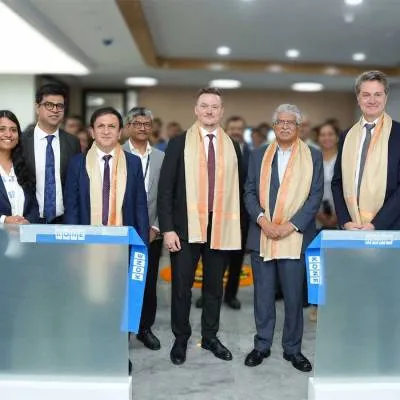
KONE, a global elevator and escalator manufacturer, has inaugurated its first Digital Experience Centre (DEC) in India, located in Pune. The facility aims to showcase how artificial intelligence (AI), connectivity and data-driven technologies can enhance customer experiences and improve building operations.The centre was inaugurated by Jussi Herlin, Executive Vice Chair, KONE Corporation; Philippe Delorme, President and CEO, KONE; and Nandan Nilekani, Co-founder and Chairman of the Board, Infosys.Designed as an interactive customer environment, the facility demonstrates digital solutions cover..

Next Story
Infrastructure Urban

CII GreenCo Launches Circularity Guidelines for Indian Industry

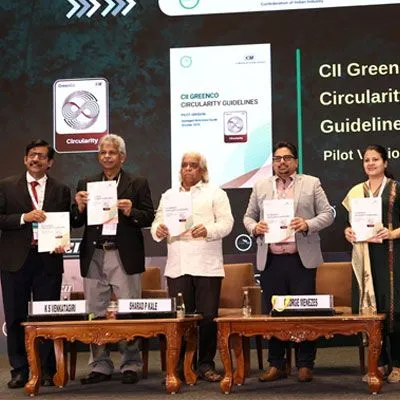
The Confederation of Indian Industry (CII) GreenCo Council has launched the CII GreenCo Circularity Guidelines – Pilot Version at the 17th CII GreenCo Waste & Resource Management Summit 2026 in Chennai. The initiative aims to strengthen resource efficiency, waste reduction and circular economy practices across Indian manufacturing and process industries.The guidelines introduce a structured framework with circularity indices covering raw materials, consumables, packaging and other resource inputs. These indicators will help industries assess existing practices, identify opportunities to ..

Next Story
Infrastructure Energy

Global Electronics Association Launches IPC-1783-CO2E Standard

The Global Electronics Association has introduced IPC-1783-CO2E, a new international standard aimed at improving consistency, transparency and comparability in product carbon footprint reporting across the electronics manufacturing industry.The standard, titled International Standard for Data Collection and Reporting of CO2 Equivalent (CO2e) Emissions for the Electronics Manufacturing Supply Chain, provides industry-specific guidance for collecting, estimating and reporting carbon emissions data.With increasing regulatory requirements and customer expectations, electronics manufacturers face c..

Advertisement

Subscribe to Our Newsletter

Get daily newsletters around different themes from Construction world.

STAY CONNECTED

Advertisement

SPECIAL OFFER
QR Code