MeitY, IndiaAI Conclude Day 2 of Human Capital Meeting
ECONOMY & POLICY

MeitY, IndiaAI Conclude Day 2 of Human Capital Meeting

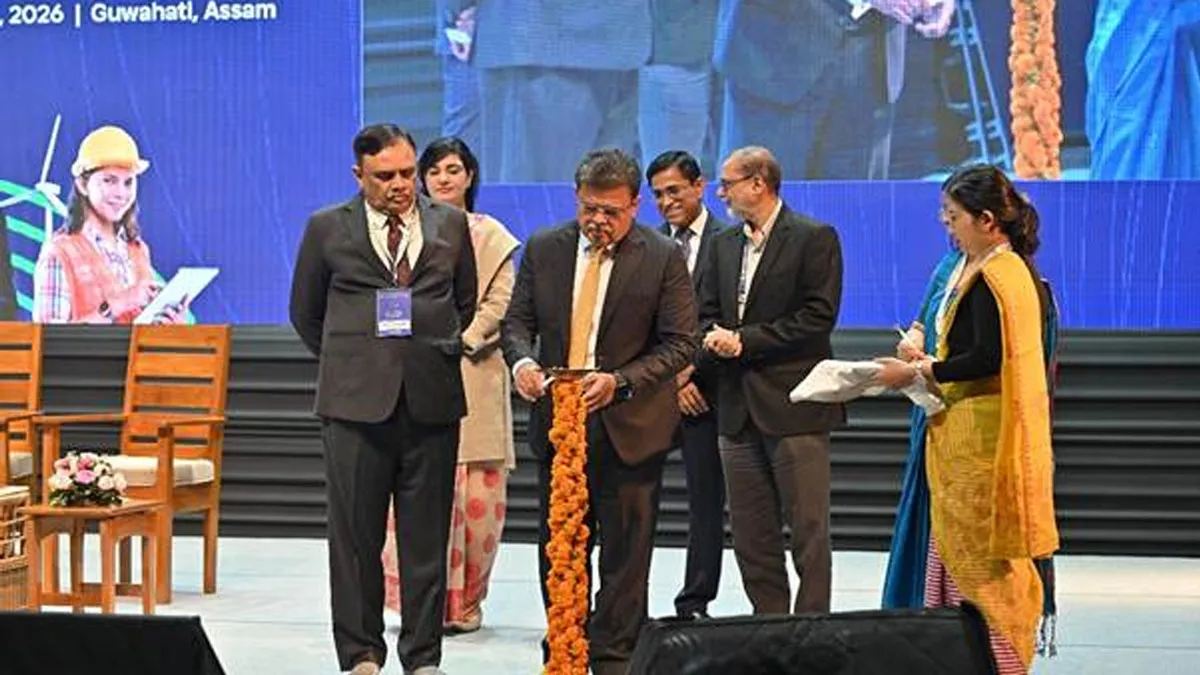
The second day of the Human Capital Working Group Meeting, organised by the Ministry of Electronics and Information Technology (MeitY) and the IndiaAI Mission in collaboration with the Government of Assam and IIT Guwahati, concluded with in-depth discussions on implementation pathways for language access, the National Language Translation Mission (NLTM), AI-enabled education, and the BHASHINI platform.

The day began with a session on the architecture of NLTM, led by Mitesh Khapre, Head, AI4Bharat, IIT Madras. He traced the evolution of the mission over the past four years and outlined its objective of developing foundational AI and language technologies for India’s linguistic diversity. He noted that NLTM prioritises 22 constitutionally recognised languages, covering nearly 99% of the population, while addressing the challenges posed by the dominance of English-centric AI systems globally.

Rohit Sinha, Professor, Department of Electrical Engineering and Centre for Linguistic Science and Technology, IIT Guwahati, spoke on language technology development in the Northeast. He highlighted the region’s linguistic richness, with nearly 200 languages, and detailed efforts to support low-resource and non-scheduled languages such as Assamese and Mizo through data collection, native-speaker annotation, and the development of machine translation, OCR, speech recognition, and text-to-speech systems.

Jyotismita Devi, Engagement Manager – Northeast India, Digital India BHASHINI Division, Ministry of Electronics and Information Technology, presented an overview of the BHASHINI initiative. She outlined its vision of voice-first, inclusive language technologies that enable citizens to access digital services in their native languages through open APIs, datasets, and quality standards.

The final session on AI education was led by Amit Awekar, Professor, Department of Computer Science and Engineering, IIT Guwahati, who discussed a reverse engineering approach to developing deeper system-level understanding and ethical AI capabilities among students.

The meeting concluded with remarks by Sanasam Ranbir Singh, Professor and Head, Centre for Linguistic Science and Technology, IIT Guwahati. The Guwahati deliberations are seen as a key precursor to the India AI Impact Summit 2026, scheduled in New Delhi from February 15–20, 2026.

The second day of the Human Capital Working Group Meeting, organised by the Ministry of Electronics and Information Technology (MeitY) and the IndiaAI Mission in collaboration with the Government of Assam and IIT Guwahati, concluded with in-depth discussions on implementation pathways for language access, the National Language Translation Mission (NLTM), AI-enabled education, and the BHASHINI platform.The day began with a session on the architecture of NLTM, led by Mitesh Khapre, Head, AI4Bharat, IIT Madras. He traced the evolution of the mission over the past four years and outlined its objective of developing foundational AI and language technologies for India’s linguistic diversity. He noted that NLTM prioritises 22 constitutionally recognised languages, covering nearly 99% of the population, while addressing the challenges posed by the dominance of English-centric AI systems globally.Rohit Sinha, Professor, Department of Electrical Engineering and Centre for Linguistic Science and Technology, IIT Guwahati, spoke on language technology development in the Northeast. He highlighted the region’s linguistic richness, with nearly 200 languages, and detailed efforts to support low-resource and non-scheduled languages such as Assamese and Mizo through data collection, native-speaker annotation, and the development of machine translation, OCR, speech recognition, and text-to-speech systems.Jyotismita Devi, Engagement Manager – Northeast India, Digital India BHASHINI Division, Ministry of Electronics and Information Technology, presented an overview of the BHASHINI initiative. She outlined its vision of voice-first, inclusive language technologies that enable citizens to access digital services in their native languages through open APIs, datasets, and quality standards.The final session on AI education was led by Amit Awekar, Professor, Department of Computer Science and Engineering, IIT Guwahati, who discussed a reverse engineering approach to developing deeper system-level understanding and ethical AI capabilities among students.The meeting concluded with remarks by Sanasam Ranbir Singh, Professor and Head, Centre for Linguistic Science and Technology, IIT Guwahati. The Guwahati deliberations are seen as a key precursor to the India AI Impact Summit 2026, scheduled in New Delhi from February 15–20, 2026.

Next Story
Infrastructure Transport

CMRL to Open 15.8 km Chennai Metro Phase II in February

Chennai Metro Rail (CMRL) has revised its rollout strategy for Phase II of the Chennai Metro, deciding to commission the entire 15.8-km stretch between Poonamallee Bypass and Vadapalani directly in February. The move marks a shift from the earlier plan of launching services on a shorter section first and extending them in stages.Initially, CMRL had proposed to start operations on the Poonamallee Bypass–Porur Junction stretch by the end of January, with services extended to Vadapalani in February. However, officials said the revised approach would allow commuters to benefit from better connec..

Next Story
Infrastructure Transport

Power Mech Emerges L1 for Mumbai Monorail O&M Contract

Power Mech Projects has emerged as the lowest bidder (L1) for the operations and maintenance (O&M) contract of the Mumbai Monorail project, officials said. The contract was floated by the Mumbai Metropolitan Region Development Authority (MMRDA) with a tenure of 1,825 days, or five years.MMRDA had invited bids for the O&M work of the Mumbai Monorail corridor from Sant Gadge Maharaj Chowk to Chembur. Technical bids were opened on November 12, 2025, with four firms submitting bids for the contract. Following the technical evaluation conducted on January 1, 2026, two bidders were disqualif..

Next Story
Infrastructure Transport

E to E Transportation Clarifies SECR Contract Value at Rs 270.35 Mn

NSE Emerge-listed E to E Transportation Infrastructure has issued a clarification on the value of a railway signalling and telecommunication contract awarded by the South East Central Railway (SECR), Raipur Division, after identifying a typographical error in its earlier regulatory disclosure.In a filing dated January 4, 2026, the company said the correct value of the Letter of Acceptance (LoA) is Rs 270.34 million, and not Rs 2.73 billion as previously stated in an announcement uploaded on the NSE Emerge portal earlier the same day. The company noted that the incorrect figure was the result o..

Advertisement

Subscribe to Our Newsletter

Get daily newsletters around different themes from Construction world.

STAY CONNECTED

Advertisement

Advertisement

Advertisement

Advertisement

Open In App