Microsoft India, Samhita-CGF Convene MSME AI Adoption Dialogue
ECONOMY & POLICY

Microsoft India, Samhita-CGF Convene MSME AI Adoption Dialogue

Microsoft India, Samhita-CGF and Atal Innovation Mission, NITI Aayog, have convened a leadership dialogue on artificial intelligence (AI) adoption among India’s micro, small and medium enterprises (MSMEs). The event was held at the NITI Aayog headquarters in New Delhi and focused on the support required to help businesses use AI for productivity and growth.

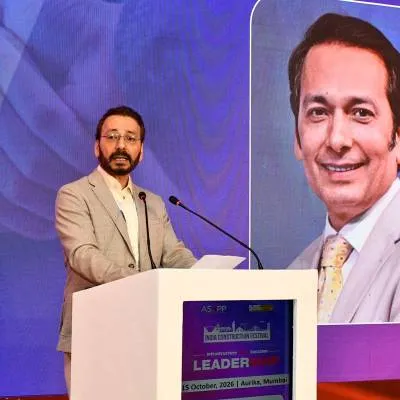
The discussion brought together Deepak Bagla, Mission Director of Atal Innovation Mission, NITI Aayog; Sanjay Chadha, General Manager for Corporate, External and Legal Affairs at Microsoft India and South Asia; MSME founders; and ecosystem partners. Participants examined the current state of AI adoption, its potential contribution to economic growth and employment, and the need for an ecosystem-wide support system.

The dialogue formed part of Microsoft’s AI Enablement for MSMEs initiative, which is supporting 3,000 MSMEs in Andhra Pradesh, Delhi-NCR, Karnataka and Maharashtra. The participating businesses are undertaking a 60-day learning journey focused on applying AI workflows across business functions to improve efficiency, productivity and scalability.

Microsoft India and Samhita-CGF, the programme delivery partner, also unveiled a multilingual AI chatbot. Available in the regional languages used by participating MSMEs, the tool is designed to help businesses continue learning about and applying AI in their daily operations after the training programme ends. The partners plan to expand the chatbot’s reach to MSMEs across India.

The organisations are also developing a National MSME AI Adoption Playbook based on learning from 6,000 individuals participating in the programme. It will document practical approaches, success stories and implementation insights for industry associations, incubators and government institutions supporting AI adoption at scale. The initiative is intended to help MSMEs move from awareness to adoption while promoting responsible use of AI and higher-value work.

Microsoft India, Samhita-CGF and Atal Innovation Mission, NITI Aayog, have convened a leadership dialogue on artificial intelligence (AI) adoption among India’s micro, small and medium enterprises (MSMEs). The event was held at the NITI Aayog headquarters in New Delhi and focused on the support required to help businesses use AI for productivity and growth. The discussion brought together Deepak Bagla, Mission Director of Atal Innovation Mission, NITI Aayog; Sanjay Chadha, General Manager for Corporate, External and Legal Affairs at Microsoft India and South Asia; MSME founders; and ecosystem partners. Participants examined the current state of AI adoption, its potential contribution to economic growth and employment, and the need for an ecosystem-wide support system. The dialogue formed part of Microsoft’s AI Enablement for MSMEs initiative, which is supporting 3,000 MSMEs in Andhra Pradesh, Delhi-NCR, Karnataka and Maharashtra. The participating businesses are undertaking a 60-day learning journey focused on applying AI workflows across business functions to improve efficiency, productivity and scalability. Microsoft India and Samhita-CGF, the programme delivery partner, also unveiled a multilingual AI chatbot. Available in the regional languages used by participating MSMEs, the tool is designed to help businesses continue learning about and applying AI in their daily operations after the training programme ends. The partners plan to expand the chatbot’s reach to MSMEs across India. The organisations are also developing a National MSME AI Adoption Playbook based on learning from 6,000 individuals participating in the programme. It will document practical approaches, success stories and implementation insights for industry associations, incubators and government institutions supporting AI adoption at scale. The initiative is intended to help MSMEs move from awareness to adoption while promoting responsible use of AI and higher-value work.

Related Stories

Gold Stories

Next Story
Infrastructure Energy

DMRC Invites Bids for Solar-Linked BESS Power Procurement

Delhi Metro Rail Corporation (DMRC) has invited bids for renewable energy from an Inter-State Transmission System (ISTS)-connected generating plant combining a solar photovoltaic (PV) system with a co-located Battery Energy Storage System (BESS). The procurement will be conducted through competitive bidding followed by an e-reverse auction. The last date for submitting online bids is December 10, 2026, at 3 PM. DMRC will open the technical bids on December 11, 2026, at 3 PM. The opening of financial bids and the e-reverse auction will be scheduled after completion of the technical evaluation. ..

Next Story
Infrastructure Energy

Solar Growth May Slow Beyond FY28 on Awards, Grid Constraints

India’s solar capacity growth could face headwinds beyond FY28 as slower renewable energy project awards, delays in signing power agreements and transmission constraints threaten expansion, according to a report by Yes Securities. Near-term additions remain supported by a construction pipeline exceeding 150 GW and rising rooftop installations, but weaker award activity could affect capacity additions and industry volumes in FY29 and FY30. Solar capacity additions nearly doubled to 44.61 GW in FY26 from 23.83 GW in FY25. Installations remained strong in the first half of FY27, when 21 GW of s..

Next Story
Infrastructure Transport

India’s First High-Speed Rail Service to Begin in 2027

India’s first high-speed rail service will commence in 2027, with the Surat-Vapi section of the Mumbai-Ahmedabad High-Speed Rail corridor scheduled to open first, Railway Minister Ashwini Vaishnaw said. The remaining sections to Mumbai will be opened in phases. Vaishnaw said 456 km of pier work and 371 km of viaduct construction had been completed by September. About 600,000 noise barriers had been installed along a 299 km stretch, while 9,300 overhead equipment masts had been erected across a 206 km viaduct. Four mountain tunnels have been excavated, and 5 km of the 21 km Maharashtra tunnel..

Advertisement

Subscribe to Our Newsletter

Get daily newsletters around different themes from Construction world.

STAY CONNECTED

Advertisement

SPECIAL OFFER
QR Code