India Accelerates Geothermal Power Push
POWER & RENEWABLE ENERGY

India Accelerates Geothermal Power Push

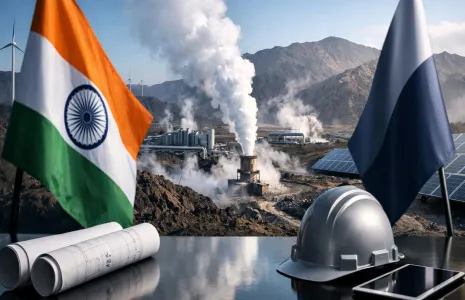
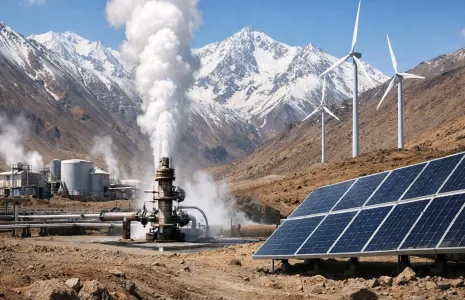
India is stepping up efforts to develop geothermal energy as a dependable addition to its renewable power portfolio and reduce reliance on conventional fuels. The resource, generated by heat beneath the Earth’s surface, can provide electricity continuously without depending on daylight or weather conditions.

The National Policy on Geothermal Energy, notified in September 2025, provides a framework for exploration, development and utilisation. The Ministry of New and Renewable Energy (MNRE) is responsible for implementing the policy, which also supports research, drilling, reservoir management, direct-use applications and the creation of a national geothermal data repository.

The Geological Survey of India (GSI) has mapped 381 hot springs and identified 10 geothermal provinces, including the Himalayan, Naga-Lusai, Andaman and Nicobar Islands, Son Narmada Tapi, West Coast, Cambay Graben, Aravalli, Mahanadi, Godavari and South Indian Cratonic regions. India’s theoretical geothermal resource potential is estimated at nearly 10.6 GW, with 42 sites considered suitable for electricity generation and direct heat applications.

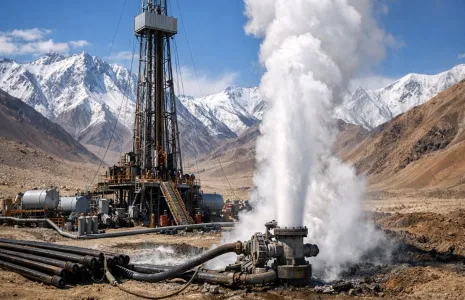
Development received a boost in July 2026 when the ONGC Energy Centre commissioned India’s first two geothermal wells at Puga Valley in Ladakh. The wells, each 1,000 metres deep and located at an altitude of more than 14,000 feet, are intended to support reservoir evaluation and the development of a 1 MW demonstration power project.

India is also pursuing cooperation with Australia, Iceland and Saudi Arabia, while pilot projects are examining applications in heating, agriculture and geo-tourism. The policy encourages Ground Source Heat Pumps (GSHPs), reuse of abandoned oil and gas wells and the establishment of Centres of Excellence. Commercial-scale generation has not yet been established, but resource assessments, research and international partnerships are building the basis for wider deployment as India works towards its Net Zero target by 2070.

India is stepping up efforts to develop geothermal energy as a dependable addition to its renewable power portfolio and reduce reliance on conventional fuels. The resource, generated by heat beneath the Earth’s surface, can provide electricity continuously without depending on daylight or weather conditions. The National Policy on Geothermal Energy, notified in September 2025, provides a framework for exploration, development and utilisation. The Ministry of New and Renewable Energy (MNRE) is responsible for implementing the policy, which also supports research, drilling, reservoir management, direct-use applications and the creation of a national geothermal data repository. The Geological Survey of India (GSI) has mapped 381 hot springs and identified 10 geothermal provinces, including the Himalayan, Naga-Lusai, Andaman and Nicobar Islands, Son Narmada Tapi, West Coast, Cambay Graben, Aravalli, Mahanadi, Godavari and South Indian Cratonic regions. India’s theoretical geothermal resource potential is estimated at nearly 10.6 GW, with 42 sites considered suitable for electricity generation and direct heat applications. Development received a boost in July 2026 when the ONGC Energy Centre commissioned India’s first two geothermal wells at Puga Valley in Ladakh. The wells, each 1,000 metres deep and located at an altitude of more than 14,000 feet, are intended to support reservoir evaluation and the development of a 1 MW demonstration power project. India is also pursuing cooperation with Australia, Iceland and Saudi Arabia, while pilot projects are examining applications in heating, agriculture and geo-tourism. The policy encourages Ground Source Heat Pumps (GSHPs), reuse of abandoned oil and gas wells and the establishment of Centres of Excellence. Commercial-scale generation has not yet been established, but resource assessments, research and international partnerships are building the basis for wider deployment as India works towards its Net Zero target by 2070.

Related Stories

Gold Stories

Next Story
Infrastructure Energy

DMRC Invites Bids for Solar-Linked BESS Power Procurement

Delhi Metro Rail Corporation (DMRC) has invited bids for renewable energy from an Inter-State Transmission System (ISTS)-connected generating plant combining a solar photovoltaic (PV) system with a co-located Battery Energy Storage System (BESS). The procurement will be conducted through competitive bidding followed by an e-reverse auction. The last date for submitting online bids is December 10, 2026, at 3 PM. DMRC will open the technical bids on December 11, 2026, at 3 PM. The opening of financial bids and the e-reverse auction will be scheduled after completion of the technical evaluation. ..

Next Story
Infrastructure Energy

Solar Growth May Slow Beyond FY28 on Awards, Grid Constraints

India’s solar capacity growth could face headwinds beyond FY28 as slower renewable energy project awards, delays in signing power agreements and transmission constraints threaten expansion, according to a report by Yes Securities. Near-term additions remain supported by a construction pipeline exceeding 150 GW and rising rooftop installations, but weaker award activity could affect capacity additions and industry volumes in FY29 and FY30. Solar capacity additions nearly doubled to 44.61 GW in FY26 from 23.83 GW in FY25. Installations remained strong in the first half of FY27, when 21 GW of s..

Next Story
Infrastructure Transport

India’s First High-Speed Rail Service to Begin in 2027

India’s first high-speed rail service will commence in 2027, with the Surat-Vapi section of the Mumbai-Ahmedabad High-Speed Rail corridor scheduled to open first, Railway Minister Ashwini Vaishnaw said. The remaining sections to Mumbai will be opened in phases. Vaishnaw said 456 km of pier work and 371 km of viaduct construction had been completed by September. About 600,000 noise barriers had been installed along a 299 km stretch, while 9,300 overhead equipment masts had been erected across a 206 km viaduct. Four mountain tunnels have been excavated, and 5 km of the 21 km Maharashtra tunnel..

Advertisement

Subscribe to Our Newsletter

Get daily newsletters around different themes from Construction world.

STAY CONNECTED

Advertisement

SPECIAL OFFER
QR Code