Ministry Launches Integrated Website for Department of Commerce
ECONOMY & POLICY

Ministry Launches Integrated Website for Department of Commerce

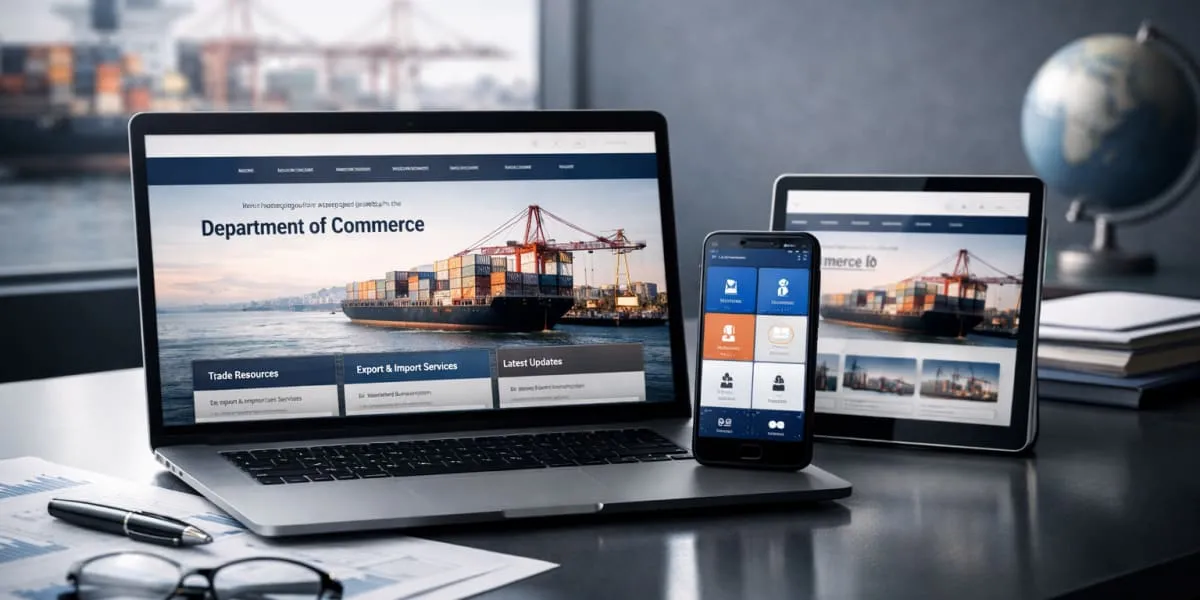
The Ministry of Commerce and Industry (the ministry) launched on 15 April 2026 a modern, accessible and integrated website for the Department of Commerce (DoC), fully compliant with the Digital Brand Identity Manual 3.0 and the Guidelines for Indian Government Websites. The platform is designed to enhance service delivery for exporters, importers and other stakeholders by providing seamless access to trade related information and resources. The ministry also introduced a bilingual mobile application for Android and iOS with offline access and GPS features.

Provision has been made for ongoing maintenance to ensure security, scalability and continuous improvement. The initiative aligns with India's e-Governance vision and aims to promote transparency, efficiency and ease of doing business in foreign trade. The site supports custom display settings including font size adjustments and colour theme preferences to improve usability.

The website has been developed to meet accessibility standards and respond to devices of varying screen sizes, including features for persons with disabilities under Government of India guidelines. Content will be available in 22 Indian languages through the Bhashini application programming interface (API) to widen outreach. Navigation has been structured as a three level menu with clearly defined sections and sub sections and a content management system will allow authorised officials to post real time updates. Integration with existing government digital services has been implemented to enable seamless connectivity with portals and databases.

Key integrations include links to the Department of Commerce social media channels to enhance visibility and engagement and connection to the Trade Intelligence and Analytics (TIA) portal for real time trade data on territorial and commodity pages. The platform is configured to pull Parliamentary questions and answers automatically to the Parliament Portal, reducing manual intervention. The Centralised Public Grievance Redress and Monitoring System (CPGRAMS) has been linked to streamline grievance redressal. Officials described the launch as a step towards strengthened digital governance and improved access to trade services.

The Ministry of Commerce and Industry (the ministry) launched on 15 April 2026 a modern, accessible and integrated website for the Department of Commerce (DoC), fully compliant with the Digital Brand Identity Manual 3.0 and the Guidelines for Indian Government Websites. The platform is designed to enhance service delivery for exporters, importers and other stakeholders by providing seamless access to trade related information and resources. The ministry also introduced a bilingual mobile application for Android and iOS with offline access and GPS features. Provision has been made for ongoing maintenance to ensure security, scalability and continuous improvement. The initiative aligns with India's e-Governance vision and aims to promote transparency, efficiency and ease of doing business in foreign trade. The site supports custom display settings including font size adjustments and colour theme preferences to improve usability. The website has been developed to meet accessibility standards and respond to devices of varying screen sizes, including features for persons with disabilities under Government of India guidelines. Content will be available in 22 Indian languages through the Bhashini application programming interface (API) to widen outreach. Navigation has been structured as a three level menu with clearly defined sections and sub sections and a content management system will allow authorised officials to post real time updates. Integration with existing government digital services has been implemented to enable seamless connectivity with portals and databases. Key integrations include links to the Department of Commerce social media channels to enhance visibility and engagement and connection to the Trade Intelligence and Analytics (TIA) portal for real time trade data on territorial and commodity pages. The platform is configured to pull Parliamentary questions and answers automatically to the Parliament Portal, reducing manual intervention. The Centralised Public Grievance Redress and Monitoring System (CPGRAMS) has been linked to streamline grievance redressal. Officials described the launch as a step towards strengthened digital governance and improved access to trade services.

Next Story
Equipment

India CE Industry Ends FY26 on a Steady Recovery Path

India’s construction equipment industry closed FY26 on a stable note, reflecting measured resilience and gradually improving momentum. Total sales in Q4 FY26 rose 4 per cent year on year to 42,906 units, extending the recovery seen over the past two years.Domestic demand for the full year remained under pressure, declining 7 per cent, but exports provided strong support. Overall exports grew 31 per cent, while non-OEM exports increased 13 per cent, highlighting sustained demand from overseas markets.March 2026 further underlined the recovery, with sales rising 6 per cent year on year and 13 ..

Next Story
Infrastructure Urban

Leaders Question FIR Against Anil Agarwal

Several industry and public figures have questioned the FIR filed against Anil Agarwal following the boiler accident in Chhattisgarh, while also expressing condolences over the loss of lives and calling for a thorough investigation.Naveen Jindal said the tragedy was deeply painful and stressed that compensation, livelihood support for affected families and a fair probe were essential. He also questioned naming Agarwal in the FIR before completion of the investigation.Kiran Bedi urged restraint, saying investigations should focus on learning lessons and strengthening systems rather than prematu..

Next Story
Infrastructure Urban

Tier 2, 3 Cities Drive 66% of New D2C Orders

Tier 2 and Tier 3 cities accounted for 66 per cent of new direct-to-consumer (D2C) orders in FY 2026, according to a new analysis by Unicommerce.The report said buyers from smaller cities also contributed 60 per cent of incremental gross merchandise value (GMV) in FY 2026 compared with FY 2025, highlighting rising demand beyond metro markets.Overall, India’s D2C segment recorded strong growth, with order volumes rising 33 per cent and GMV increasing 32 per cent year-on-year. The findings are based on more than 400 million order items processed through brand websites on Unicommerce’s Uniwar..

Advertisement

Subscribe to Our Newsletter

Get daily newsletters around different themes from Construction world.

STAY CONNECTED

Advertisement

Advertisement

Advertisement