MPPMCL and UPPCL Sign MoU for 2,000 MW Peak Power Banking
ECONOMY & POLICY

MPPMCL and UPPCL Sign MoU for 2,000 MW Peak Power Banking

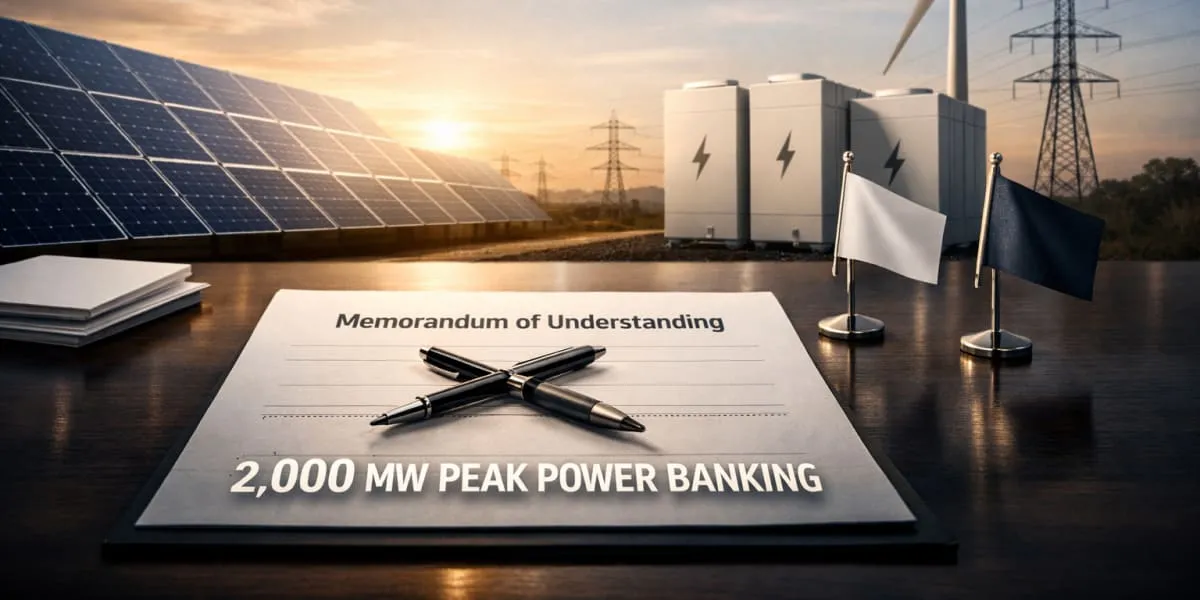
Madhya Pradesh Power Management Company Ltd (MPPMCL) and Uttar Pradesh Power Corporation Ltd (UPPCL) have signed a memorandum of understanding to establish a framework for 2,000 megawatt (MW) of peak power procurement and medium-term power banking that aims to optimise seasonal generation. The agreement covers procurement of peak capacity through competitive bidding and prioritises integrated solar and battery energy storage systems (BESS) to firm renewable supplies during critical hours. The two state utilities intend to use the arrangement to manage variability and ensure supply adequacy without relying on short-term market purchases.

The framework draws on contrasting seasonal demand patterns in the two states, with Madhya Pradesh exhibiting peak demand in the rabi season from October to March largely driven by agricultural loads, while Uttar Pradesh records peak consumption in the kharif and summer months from April to September. These staggered cycles are expected to allow the sharing of generation capacity and storage assets so as to smooth load profiles across seasons. Officials described the approach as a means to strengthen resource adequacy planning and enhance overall energy security.

The procurement exercise will begin immediately and will be executed through a transparent competitive bidding process, focusing on integrated solar and BESS projects capable of delivering firm power in peak windows. The initiative has been supported by consultants Mercados and is projected to attract investment of about Rs 100 billion (bn) into power and renewable energy sectors. Emphasis will be on dispatchable renewable solutions that pair generation with storage to address intermittency and deliver peak capacity.

Market observers noted that medium-term power banking between the two utilities could reduce exposure to volatile short-term markets and lower procurement costs over time, while providing clearer signals for capacity additions. The agreement also aims to inform longer term planning for generation and storage infrastructure as the states operationalise bids and allocate contracted capacity.

Madhya Pradesh Power Management Company Ltd (MPPMCL) and Uttar Pradesh Power Corporation Ltd (UPPCL) have signed a memorandum of understanding to establish a framework for 2,000 megawatt (MW) of peak power procurement and medium-term power banking that aims to optimise seasonal generation. The agreement covers procurement of peak capacity through competitive bidding and prioritises integrated solar and battery energy storage systems (BESS) to firm renewable supplies during critical hours. The two state utilities intend to use the arrangement to manage variability and ensure supply adequacy without relying on short-term market purchases. The framework draws on contrasting seasonal demand patterns in the two states, with Madhya Pradesh exhibiting peak demand in the rabi season from October to March largely driven by agricultural loads, while Uttar Pradesh records peak consumption in the kharif and summer months from April to September. These staggered cycles are expected to allow the sharing of generation capacity and storage assets so as to smooth load profiles across seasons. Officials described the approach as a means to strengthen resource adequacy planning and enhance overall energy security. The procurement exercise will begin immediately and will be executed through a transparent competitive bidding process, focusing on integrated solar and BESS projects capable of delivering firm power in peak windows. The initiative has been supported by consultants Mercados and is projected to attract investment of about Rs 100 billion (bn) into power and renewable energy sectors. Emphasis will be on dispatchable renewable solutions that pair generation with storage to address intermittency and deliver peak capacity. Market observers noted that medium-term power banking between the two utilities could reduce exposure to volatile short-term markets and lower procurement costs over time, while providing clearer signals for capacity additions. The agreement also aims to inform longer term planning for generation and storage infrastructure as the states operationalise bids and allocate contracted capacity.

Related Stories

Gold Stories

Next Story
Real Estate

Gradiant expands Coimbatore engineering centre

Gradiant has expanded its Global Engineering Center (GEC) in Coimbatore, more than doubling its engineering workforce from approximately 100 to over 200 professionals as it strengthens its global project execution capabilities.The expanded centre will bring together multidisciplinary expertise across process engineering, detailed design and project engineering, enabling the India team to take on greater responsibility for the engineering and design of Gradiant’s international projects.According to Govind Alagappan, COO, Gradiant, Coimbatore’s engineering talent and industrial heritage make..

Next Story
Infrastructure Urban

Domestic Firms Choose Locally Designed Reactors to Cut Delays

Domestic companies in the nuclear sector are choosing locally designed reactors to avoid time consuming approvals and supply chain bottlenecks that can delay project execution. The shift reflects an emphasis on reducing dependence on foreign designs and accelerating construction schedules by aligning design, manufacturing and regulatory processes within national frameworks. Industry participants expect that locally designed systems will allow closer coordination with regulators and vendors, shortening lead times for certification and component delivery. Localisation is projected to stimulate t..

Next Story
Infrastructure Urban

Kadiyam Kavya Seeks Separate Railway Division For Kazipet

Warangal Member of Parliament Kadiyam Kavya has urged the establishment of a separate railway division based at Kazipet and submitted a representation to the South Central Railway (SCR) general manager at the headquarters in Secunderabad. She highlighted Kazipet's role as a major railway hub and argued that the junction has not seen development commensurate with its strategic importance. The representative action aimed to press for administrative reorganisation to address local operational and developmental needs. She noted that creation of an independent Kazipet division has been a long stand..

Advertisement

Subscribe to Our Newsletter

Get daily newsletters around different themes from Construction world.

STAY CONNECTED

Advertisement