MSRTC NCMC Sees Over Six Point Two Eight Six Million Registrations
ECONOMY & POLICY

MSRTC NCMC Sees Over Six Point Two Eight Six Million Registrations

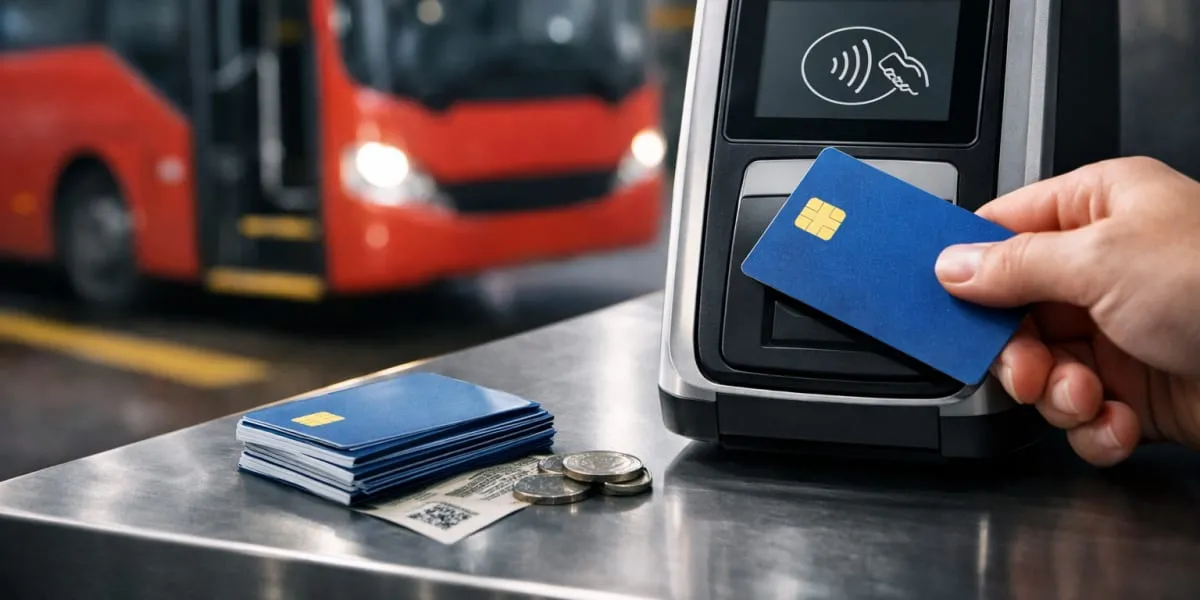
The Maharashtra State Road Transport Corporation has reported that its National Common Mobility Card programme has registered over six point two eight six million (mn) passengers ahead of the August one deadline, with three point five five two mn cards activated as the corporation steps up preparations. The drive forms part of MSRTC's transition to digital ticketing and the One Nation, One Card ecosystem across its bus network. Officials said the rollout aims to streamline fare collection and expand concession access for women, senior and Amrit senior citizens. The corporation urged eligible passengers who have not enrolled to complete registration promptly.

Chhatrapati Sambhajinagar emerged as the best performing region with one point five nine three two five six mn registrations and 886,473 activations, Pune followed with one point four seven one four three six mn and Nashik with one point four three eight zero six nine mn. At divisional level Jalgaon led with 463,230 registrations, followed by Ahilyanagar with 395,515, Satara with 348,418, Solapur with 342,242, Buldhana with 331,011 and Beed with 327,709. Officials attributed strong uptake in these areas to enrolment drives and outreach. A special activation drive will continue over the coming weeks to convert registrations into active cards.

State transport minister Pratap Sarnaik said the response reflected growing acceptance of digital public transport and that instructions had been issued to accelerate activation of remaining registered cards to ensure eligible passengers received benefits. Officials reported that women, senior and Amrit senior citizens would require the NCMC smart card to claim concessions from August one. A Pune resident in their seventies welcomed the measure and indicated they had completed registration, suggesting others should follow. Authorities emphasised the convenience of a single digital card for travel and efficiency gains in boarding and fare processing.

The corporation also highlighted its broader aim to integrate with national mobility systems and to reduce cash handling on buses. Officials said technical support would be provided at enrolment centres. Further updates will be issued before the deadline.

The Maharashtra State Road Transport Corporation has reported that its National Common Mobility Card programme has registered over six point two eight six million (mn) passengers ahead of the August one deadline, with three point five five two mn cards activated as the corporation steps up preparations. The drive forms part of MSRTC's transition to digital ticketing and the One Nation, One Card ecosystem across its bus network. Officials said the rollout aims to streamline fare collection and expand concession access for women, senior and Amrit senior citizens. The corporation urged eligible passengers who have not enrolled to complete registration promptly. Chhatrapati Sambhajinagar emerged as the best performing region with one point five nine three two five six mn registrations and 886,473 activations, Pune followed with one point four seven one four three six mn and Nashik with one point four three eight zero six nine mn. At divisional level Jalgaon led with 463,230 registrations, followed by Ahilyanagar with 395,515, Satara with 348,418, Solapur with 342,242, Buldhana with 331,011 and Beed with 327,709. Officials attributed strong uptake in these areas to enrolment drives and outreach. A special activation drive will continue over the coming weeks to convert registrations into active cards. State transport minister Pratap Sarnaik said the response reflected growing acceptance of digital public transport and that instructions had been issued to accelerate activation of remaining registered cards to ensure eligible passengers received benefits. Officials reported that women, senior and Amrit senior citizens would require the NCMC smart card to claim concessions from August one. A Pune resident in their seventies welcomed the measure and indicated they had completed registration, suggesting others should follow. Authorities emphasised the convenience of a single digital card for travel and efficiency gains in boarding and fare processing. The corporation also highlighted its broader aim to integrate with national mobility systems and to reduce cash handling on buses. Officials said technical support would be provided at enrolment centres. Further updates will be issued before the deadline.

Next Story
Real Estate

AI: The New Recruit

From getting ideas to evaluating designs, presenting concepts to clients and tracking projects, artificial intelligence (AI) is helping architects work better and faster.“AI allows architects to spend more time doing what only they can do: think critically, synthesise complexity and design with intent,” says Dikshu C Kukreja, Managing Principal, CP Kukreja Architects. “Every minute reclaimed from repetitive processes can be invested in creativity, contextual understanding, interdisciplinary collaboration and innovation – the qualities that define meaningful architecture.”To read the ..

Next Story
Real Estate

Redevelopment 2.0

In 2017, Mumbai identified 160,000 ageing buildings due for structural audit. Close to half of these were in the Western Suburbs. Redeveloping the oldest and structurally weakest of these would help unlock new housing, much needed given the city’s growing population density and constant developed area of 437.7 sq km. At 30,600 people per sq km in 2024, Mumbai’s density was almost thrice that of Gurugram, and 60 per cent higher than Bengaluru’s.Essentially, Mumbai’s realty market has demand. It has capital. It has realty development potential.Fast forward to 2026. Mumbai has 1,094 regis..

Next Story
Technology

Cost intelligence will become a strategic contributor to project success

As India's construction industry accelerates its digital transformation, integrated platforms, AI and connected data are becoming essential to improving cost certainty, project efficiency and sustainability. Ravi Kumar, Sales Director – India, RIB Software India, shares how digital workflows are reshaping project planning, commercial management and decision-making across the construction value chain.India's construction sector is embracing digital technologies at an unprecedented pace. From your perspective, what are the biggest shifts driving this transformation and how is RIB Software enab..

Advertisement

Subscribe to Our Newsletter

Get daily newsletters around different themes from Construction world.

STAY CONNECTED

Advertisement

Advertisement

Advertisement