Native Tree Avenue Plantations Planned on Highways in Tiruchi Circle
ECONOMY & POLICY

Native Tree Avenue Plantations Planned on Highways in Tiruchi Circle

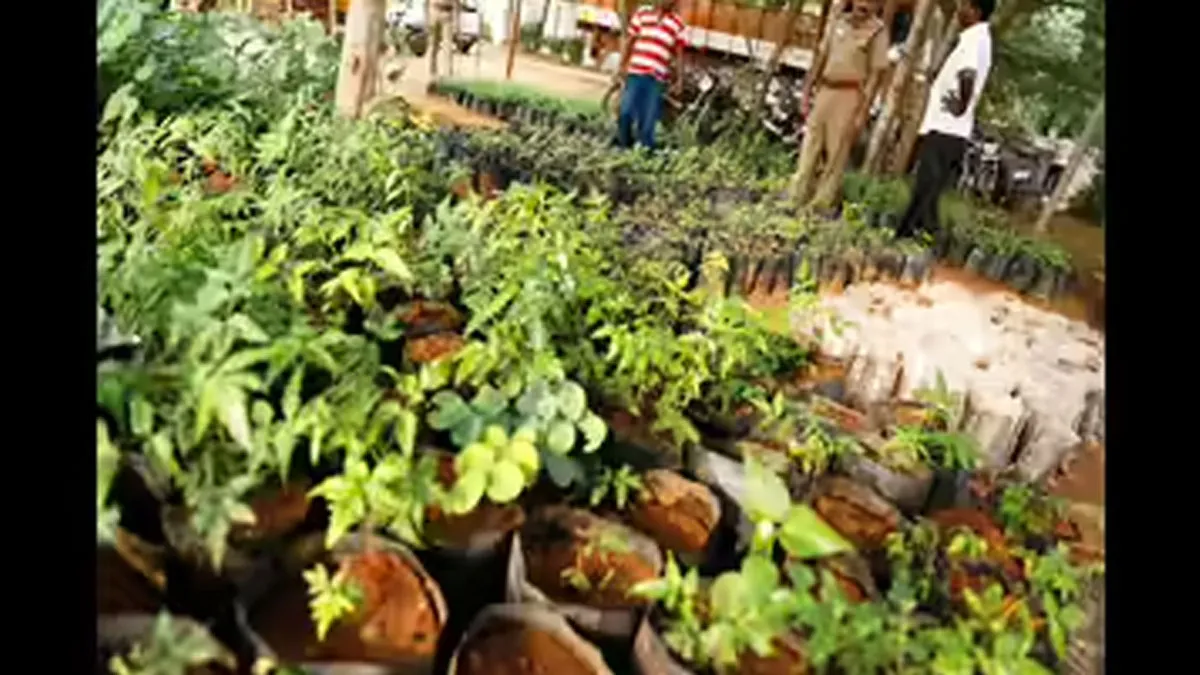
Select state highway stretches passing through the Tiruchi Forest Circle are set to be transformed with avenue plantations of native tree species under a joint initiative of the highways and forest departments. The project, funded by the State Highways Department, will be implemented through the Green Tamil Nadu Mission with the twin objectives of increasing green cover and reducing air pollution along major road corridors.

The Tamil Nadu Forest Department has been tasked with raising and planting tall native tree seedlings along the identified highway stretches. Once the list of selected roads is received from the highways department, joint field inspections will be conducted by officials from both departments before execution begins.

The plantation programme is scheduled to be implemented during the 2026–27 financial year across forest divisions in Pudukottai, Ariyalur, Perambalur, Tiruchi, Mayiladuthurai, Tiruvarur, Nagapattinam and Thanjavur, all of which fall under the jurisdiction of the Tiruchi Forest Circle. Targets for raising seedlings have been fixed individually for each division by the Green Tamil Nadu Mission.

Under the plan, a total of 110,000 native tree seedlings will be raised across the Tiruchi Forest Circle. Pudukottai and Thanjavur divisions have been assigned targets of 22,000 seedlings each, while the remaining divisions will raise 11,000 seedlings each. Forest Department officials said nursery activities would begin shortly, with plantation work to be carried out during 2026–27.

In Perambalur district, seedlings will be raised at the high-tech nursery established under the Green Tamil Nadu Mission. In Pudukottai district, Forest Department nurseries at Pudukottai, Tirumayam, Keeranur and Aranthangi will be used for raising saplings. Species selected for the project include native varieties such as naaval, pungan, vembu, tamarind and neermarudhu.

After planting, the Forest Department will maintain the seedlings for a period of three years to ensure survival along the roadsides. Officials said the initiative is aimed at significantly reducing pollution from vehicular emissions while improving overall air quality along state highways.

Separately, a similar plantation programme is already under way along select national highway stretches within the Tiruchi Forest Circle, with funding support from the National Highways Authority of India.

Select state highway stretches passing through the Tiruchi Forest Circle are set to be transformed with avenue plantations of native tree species under a joint initiative of the highways and forest departments. The project, funded by the State Highways Department, will be implemented through the Green Tamil Nadu Mission with the twin objectives of increasing green cover and reducing air pollution along major road corridors. The Tamil Nadu Forest Department has been tasked with raising and planting tall native tree seedlings along the identified highway stretches. Once the list of selected roads is received from the highways department, joint field inspections will be conducted by officials from both departments before execution begins. The plantation programme is scheduled to be implemented during the 2026–27 financial year across forest divisions in Pudukottai, Ariyalur, Perambalur, Tiruchi, Mayiladuthurai, Tiruvarur, Nagapattinam and Thanjavur, all of which fall under the jurisdiction of the Tiruchi Forest Circle. Targets for raising seedlings have been fixed individually for each division by the Green Tamil Nadu Mission. Under the plan, a total of 110,000 native tree seedlings will be raised across the Tiruchi Forest Circle. Pudukottai and Thanjavur divisions have been assigned targets of 22,000 seedlings each, while the remaining divisions will raise 11,000 seedlings each. Forest Department officials said nursery activities would begin shortly, with plantation work to be carried out during 2026–27. In Perambalur district, seedlings will be raised at the high-tech nursery established under the Green Tamil Nadu Mission. In Pudukottai district, Forest Department nurseries at Pudukottai, Tirumayam, Keeranur and Aranthangi will be used for raising saplings. Species selected for the project include native varieties such as naaval, pungan, vembu, tamarind and neermarudhu. After planting, the Forest Department will maintain the seedlings for a period of three years to ensure survival along the roadsides. Officials said the initiative is aimed at significantly reducing pollution from vehicular emissions while improving overall air quality along state highways. Separately, a similar plantation programme is already under way along select national highway stretches within the Tiruchi Forest Circle, with funding support from the National Highways Authority of India.

Next Story
Infrastructure Urban

Implementation Status of Jal Jeevan Mission

Since August 2019 the Government has implemented Jal Jeevan Mission to provide assured potable water through household tap connections in rural India. At the start of the mission only 32.3 million (mn) rural households, representing 16.7 per cent, were reported to have tap water connections. States and union territories have reported that 125.8 mn additional rural households have since been provided with tap connections. As a result, of about 193.6 mn rural households roughly 158.2 mn, or 81.71 per cent, are reported to have tap water supply at home.\n\nThe State, district and village level st..

Next Story
Infrastructure Urban

Jal Jeevan Mission Reaches Eighty One Per Cent Rural Coverage

The Government reported substantial progress under the Jal Jeevan Mission, launched in August 2019 to provide tap water to every rural household. At launch only 32.3 million (mn) rural households had tap connections and states and Union territories reported provision of 125.8 mn additional households by March 2026. Consequently, out of about 193.6 mn rural households around 158.2 mn, or 81.71 per cent, are reported to have tap water at home. The Finance Minister announced extension of the mission until 2028 in the 2025-26 budget speech. The Swachh Bharat Mission Grameen, launched in October 20..

Next Story
Infrastructure Urban

Empowering Local Governance for Sustainable Rural Water Supply

The Ministry of Jal Shakti has aligned the Jal Jeevan Mission (JJM) with the 73rd Amendment to strengthen village level planning and community ownership of water supply. Gram Panchayats, village water and sanitation committees and Pani Samitis are to plan, implement, manage and maintain piped water systems, with gram sabha processes formalising handover and oversight. Implementation support agencies including non government organisations, community based organisations and self help groups have been empanelled to train local committees and promote women participation. Under JJM, the department ..

Advertisement

Subscribe to Our Newsletter

Get daily newsletters around different themes from Construction world.

STAY CONNECTED

Advertisement

Advertisement

Advertisement