



NESIDS Sanctions 82 Projects Worth Rs 47,038.1 mn
ECONOMY & POLICY

NESIDS Sanctions 82 Projects Worth Rs 47,038.1 mn

The North East Special Infrastructure Development Scheme, henceforth NESIDS, was approved as a Central Sector scheme in 2017-18 and was restructured into two components in 2022-23, NESIDS (Roads) and NESIDS (Other Than Roads Infrastructure). A total of 82 projects costing Rs 47,038.1 mn have been sanctioned under NESIDS during the last two financial years and the current fiscal year 2025-26, as on 31 January 2026. State-wise details of sanctioned projects have been provided by the ministry.

The Ministry of Development of North Eastern Region, hereafter MDoNER, has implemented several measures to promote timely completion and quality assurance of sanctioned works across the North Eastern Region. Projects are subject to periodic monitoring and inspection by officials from MDoNER, the North Eastern Council and Field Technical Support Units. Regular review meetings are held with state governments and Project Quality Monitors and third party technical inspection agencies have been introduced to strengthen oversight.

Under NESIDS (Roads) the State Level Empowered Committee, abbreviated SLEC, recommends projects focused on roads, bridges and associated auxiliary infrastructure in accordance with state priorities and identified gaps. Under NESIDS (Other Than Roads Infrastructure) the SLEC recommends projects for primary and secondary health care, primary and secondary education, water supply, industrial development, sports and telecommunications. These recommendations guide central sanctioning and implementation support tailored to each state.

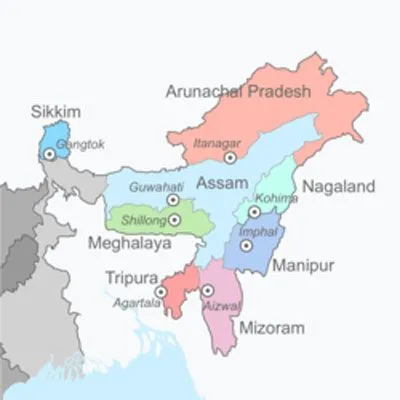
The state-wise sanctions amount to Rs 6,395.6 mn for Arunachal Pradesh, Rs 17,643.9 mn for Assam, Rs 4,403.0 mn for Manipur, Rs 2,666.6 mn for Meghalaya, Rs 4,590.8 mn for Mizoram, Rs 3,815.0 mn for Nagaland, Rs 2,320.1 mn for Sikkim and Rs 5,203.1 mn for Tripura, together comprising Rs 47,038.1 mn across 82 projects. The ministry indicated that these sanctioned works are being tracked through the established monitoring framework and that regular interactions with state authorities seek to expedite execution. The information was provided by the Minister of State for MDoNER, Dr Sukanta Majumdar, in a written reply to a question in the Rajya Sabha.

The North East Special Infrastructure Development Scheme, henceforth NESIDS, was approved as a Central Sector scheme in 2017-18 and was restructured into two components in 2022-23, NESIDS (Roads) and NESIDS (Other Than Roads Infrastructure). A total of 82 projects costing Rs 47,038.1 mn have been sanctioned under NESIDS during the last two financial years and the current fiscal year 2025-26, as on 31 January 2026. State-wise details of sanctioned projects have been provided by the ministry. The Ministry of Development of North Eastern Region, hereafter MDoNER, has implemented several measures to promote timely completion and quality assurance of sanctioned works across the North Eastern Region. Projects are subject to periodic monitoring and inspection by officials from MDoNER, the North Eastern Council and Field Technical Support Units. Regular review meetings are held with state governments and Project Quality Monitors and third party technical inspection agencies have been introduced to strengthen oversight. Under NESIDS (Roads) the State Level Empowered Committee, abbreviated SLEC, recommends projects focused on roads, bridges and associated auxiliary infrastructure in accordance with state priorities and identified gaps. Under NESIDS (Other Than Roads Infrastructure) the SLEC recommends projects for primary and secondary health care, primary and secondary education, water supply, industrial development, sports and telecommunications. These recommendations guide central sanctioning and implementation support tailored to each state. The state-wise sanctions amount to Rs 6,395.6 mn for Arunachal Pradesh, Rs 17,643.9 mn for Assam, Rs 4,403.0 mn for Manipur, Rs 2,666.6 mn for Meghalaya, Rs 4,590.8 mn for Mizoram, Rs 3,815.0 mn for Nagaland, Rs 2,320.1 mn for Sikkim and Rs 5,203.1 mn for Tripura, together comprising Rs 47,038.1 mn across 82 projects. The ministry indicated that these sanctioned works are being tracked through the established monitoring framework and that regular interactions with state authorities seek to expedite execution. The information was provided by the Minister of State for MDoNER, Dr Sukanta Majumdar, in a written reply to a question in the Rajya Sabha.

Next Story
Infrastructure Urban

Güntner Showcases Cooling Tech at China Expo

Güntner showcased its latest refrigeration and air conditioning innovations at China Refrigeration 2026, highlighting digital intelligence and carbon-neutral solutions.The company presented its aicore™ Controls and IoT platform, designed to optimise energy consumption, enable remote monitoring and enhance lifecycle management of cooling systems. The solution integrates advanced controllers and cloud-based capabilities to improve operational efficiency and reduce energy use.Güntner also demonstrated advancements in heat pump technologies, including its role in projects such as the Ordos Zer..

Next Story
Real Estate

Superb Realty Ties Up with Praan for AI Air Tech

Superb Realty has partnered with Praan to deploy AI-powered autonomous air infrastructure across over one million sq ft of real estate in Mumbai, marking a significant move towards intelligent indoor environments.The rollout will begin at Superb Altura and expand across upcoming residential and mixed-use developments. The initiative aims to integrate real-time sensing, adaptive purification and AI-led optimisation to improve indoor air quality and occupant experience.Praan’s technology is designed to remove ultrafine particles significantly smaller than conventional systems and eliminate har..

Next Story
Technology

DAAKit Raises $138,000 in Pre-Seed Round

DAAKit has raised $138,000 in a pre-seed funding round led by Inflection Point Ventures to expand its hyperlocal fulfilment network and strengthen technology capabilities.The company plans to use the funds to launch 25 new dark stores across Tier I and Tier II cities, enhance its technology infrastructure, and expand its leadership and operations teams. Currently operational in Delhi, Gurugram, Mumbai, Bengaluru and Kolkata, DAAKit is also piloting expansion into Tier II markets through Lucknow.Built on an asset-light, technology-driven model, the platform enables brands to position inventory ..

Advertisement

Subscribe to Our Newsletter

Get daily newsletters around different themes from Construction world.

STAY CONNECTED

Advertisement

Advertisement

Advertisement