NGT Requires NHAI to Assess Environmental Impact on Chevella Banyans
ECONOMY & POLICY

NGT Requires NHAI to Assess Environmental Impact on Chevella Banyans

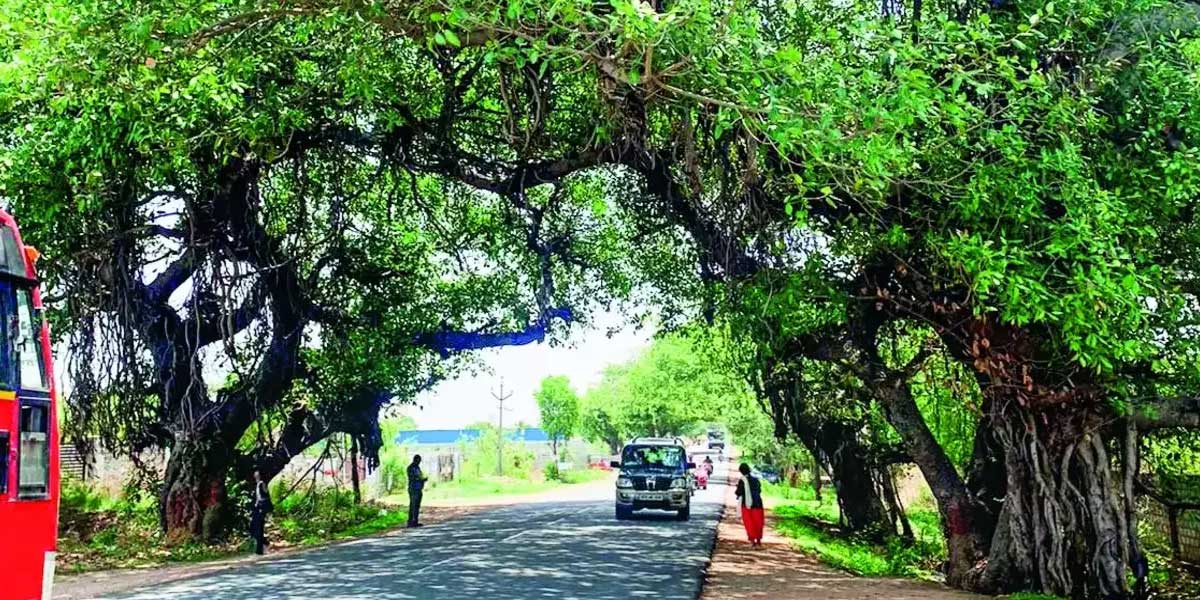
The National Green Tribunal (NGT) has issued an order directing the National Highways Authority of India (NHAI) to conduct an Environmental Impact Assessment (EIA) to minimize the loss of Chevella Banyans. Chevella Banyans, known for their ecological importance and cultural significance, have been reportedly facing a severe threat due to the ongoing infrastructure development project in Telangana.

The NGT's order comes in response to a petition filed by the Chevella Banyans Conservation Society (CBSC), seeking immediate action to protect and preserve the endangered species. The CBSC had raised concerns regarding the lack of proper environmental impact assessment by NHAI before commencing the construction work.

Chevella Banyans, classified as a heritage tree species, play a crucial role in maintaining biodiversity and act as a habitat for several endemic species. They also hold immense religious and cultural significance, with local communities using them for spiritual practices. The ongoing road expansion project, which is part of the Central government's development plans, poses a potential threat to the survival of these banyan trees.

The NGT, after hearing the arguments presented by CBSC and examining the environmental concerns associated with the project, ordered NHAI to conduct an EIA within a specified timeframe. The purpose of the assessment is to evaluate the potential environmental impacts of the road construction project on the Chevella Banyans and identify necessary measures to minimize any adverse effects.

Furthermore, the NGT emphasized the need for NHAI to engage with environmental experts and the local community during the assessment process. The involvement of experts and stakeholders would aid in identifying alternative routes or mitigating measures that could ensure the protection and conservation of the banyan trees.

The NHAI has been directed to submit the EIA report within a stipulated period, following which further hearings would be scheduled to monitor compliance with the NGT's order. The tribunal's decision reflects its commitment to preserving the rich biodiversity and cultural heritage of the region while recognizing the importance of sustainable development.

Efforts to safeguard valuable ecosystems and species are of paramount importance in the face of increasing urbanization and development. The NGT's intervention and requirement of an EIA underscore the significance of environmental considerations in infrastructure projects. It is hoped that this order will serve as a precedent for future endeavors, encouraging a more holistic approach toward development that prioritizes conservation and sustainable practices.

The National Green Tribunal (NGT) has issued an order directing the National Highways Authority of India (NHAI) to conduct an Environmental Impact Assessment (EIA) to minimize the loss of Chevella Banyans. Chevella Banyans, known for their ecological importance and cultural significance, have been reportedly facing a severe threat due to the ongoing infrastructure development project in Telangana. The NGT's order comes in response to a petition filed by the Chevella Banyans Conservation Society (CBSC), seeking immediate action to protect and preserve the endangered species. The CBSC had raised concerns regarding the lack of proper environmental impact assessment by NHAI before commencing the construction work. Chevella Banyans, classified as a heritage tree species, play a crucial role in maintaining biodiversity and act as a habitat for several endemic species. They also hold immense religious and cultural significance, with local communities using them for spiritual practices. The ongoing road expansion project, which is part of the Central government's development plans, poses a potential threat to the survival of these banyan trees. The NGT, after hearing the arguments presented by CBSC and examining the environmental concerns associated with the project, ordered NHAI to conduct an EIA within a specified timeframe. The purpose of the assessment is to evaluate the potential environmental impacts of the road construction project on the Chevella Banyans and identify necessary measures to minimize any adverse effects. Furthermore, the NGT emphasized the need for NHAI to engage with environmental experts and the local community during the assessment process. The involvement of experts and stakeholders would aid in identifying alternative routes or mitigating measures that could ensure the protection and conservation of the banyan trees. The NHAI has been directed to submit the EIA report within a stipulated period, following which further hearings would be scheduled to monitor compliance with the NGT's order. The tribunal's decision reflects its commitment to preserving the rich biodiversity and cultural heritage of the region while recognizing the importance of sustainable development. Efforts to safeguard valuable ecosystems and species are of paramount importance in the face of increasing urbanization and development. The NGT's intervention and requirement of an EIA underscore the significance of environmental considerations in infrastructure projects. It is hoped that this order will serve as a precedent for future endeavors, encouraging a more holistic approach toward development that prioritizes conservation and sustainable practices.

Next Story
Real Estate

AI: The New Recruit

From getting ideas to evaluating designs, presenting concepts to clients and tracking projects, artificial intelligence (AI) is helping architects work better and faster.“AI allows architects to spend more time doing what only they can do: think critically, synthesise complexity and design with intent,” says Dikshu C Kukreja, Managing Principal, CP Kukreja Architects. “Every minute reclaimed from repetitive processes can be invested in creativity, contextual understanding, interdisciplinary collaboration and innovation – the qualities that define meaningful architecture.”To read the ..

Next Story
Real Estate

Redevelopment 2.0

In 2017, Mumbai identified 160,000 ageing buildings due for structural audit. Close to half of these were in the Western Suburbs. Redeveloping the oldest and structurally weakest of these would help unlock new housing, much needed given the city’s growing population density and constant developed area of 437.7 sq km. At 30,600 people per sq km in 2024, Mumbai’s density was almost thrice that of Gurugram, and 60 per cent higher than Bengaluru’s.Essentially, Mumbai’s realty market has demand. It has capital. It has realty development potential.Fast forward to 2026. Mumbai has 1,094 regis..

Next Story
Technology

Cost intelligence will become a strategic contributor to project success

As India's construction industry accelerates its digital transformation, integrated platforms, AI and connected data are becoming essential to improving cost certainty, project efficiency and sustainability. Ravi Kumar, Sales Director – India, RIB Software India, shares how digital workflows are reshaping project planning, commercial management and decision-making across the construction value chain.India's construction sector is embracing digital technologies at an unprecedented pace. From your perspective, what are the biggest shifts driving this transformation and how is RIB Software enab..

Advertisement

Subscribe to Our Newsletter

Get daily newsletters around different themes from Construction world.

STAY CONNECTED

Advertisement

Advertisement

Advertisement