NPG approves 100 projects valued at Rs 5.89 Trillion
ECONOMY & POLICY

NPG approves 100 projects valued at Rs 5.89 Trillion

The Network Planning Group (NPG), operating under the framework of the PM Gati Shakti Master Plan, has given its official endorsement to a substantial portfolio of infrastructure projects. A total of 100 projects, with an estimated value of approximately Rs 5.89 trillion, have received approval from the NPG.

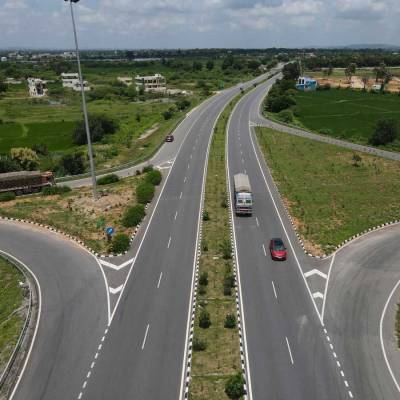
These approved projects span diverse sectors, including 40 road projects with a combined investment of Rs 3.65 trillion, 40 railway projects valued at Rs 957.04 billion, and eight urban development initiatives accounting for an investment of Rs 790.16 billion.

Notably, these projects have received NPG approval even prior to clearance from the Public Investment Board (PIB) or the Department of Expenditure. This swift approval process underscores the government's commitment to advancing critical infrastructure development. The NPG, as an inter-ministerial body, plays a pivotal role in evaluating infrastructure projects, ensuring a focus on multimodality and fostering comprehensive development in and around project sites.

The Ministry of Road Transport and Highways (MoRTH) has already formulated plans for over 1,400 kilometres of road construction, while the Ministry of Railways has envisioned more than 13,000 kilometres of railway track expansion using the National Master Plan (NMP).

Launched in 2021, the Gati Shakti Master Plan represents a significant step towards coordinated planning and execution of infrastructure projects. It enhances the synergy and impact of various development initiatives in different sectors, including industrial corridors, ports, telecommunications, and urban development, ultimately propelling India's infrastructure growth.

The Network Planning Group (NPG), operating under the framework of the PM Gati Shakti Master Plan, has given its official endorsement to a substantial portfolio of infrastructure projects. A total of 100 projects, with an estimated value of approximately Rs 5.89 trillion, have received approval from the NPG.These approved projects span diverse sectors, including 40 road projects with a combined investment of Rs 3.65 trillion, 40 railway projects valued at Rs 957.04 billion, and eight urban development initiatives accounting for an investment of Rs 790.16 billion.Notably, these projects have received NPG approval even prior to clearance from the Public Investment Board (PIB) or the Department of Expenditure. This swift approval process underscores the government's commitment to advancing critical infrastructure development. The NPG, as an inter-ministerial body, plays a pivotal role in evaluating infrastructure projects, ensuring a focus on multimodality and fostering comprehensive development in and around project sites.The Ministry of Road Transport and Highways (MoRTH) has already formulated plans for over 1,400 kilometres of road construction, while the Ministry of Railways has envisioned more than 13,000 kilometres of railway track expansion using the National Master Plan (NMP).Launched in 2021, the Gati Shakti Master Plan represents a significant step towards coordinated planning and execution of infrastructure projects. It enhances the synergy and impact of various development initiatives in different sectors, including industrial corridors, ports, telecommunications, and urban development, ultimately propelling India's infrastructure growth.

Next Story
Infrastructure Urban

Implementation Status of Jal Jeevan Mission

Since August 2019 the Government has implemented Jal Jeevan Mission to provide assured potable water through household tap connections in rural India. At the start of the mission only 32.3 million (mn) rural households, representing 16.7 per cent, were reported to have tap water connections. States and union territories have reported that 125.8 mn additional rural households have since been provided with tap connections. As a result, of about 193.6 mn rural households roughly 158.2 mn, or 81.71 per cent, are reported to have tap water supply at home.\n\nThe State, district and village level st..

Next Story
Infrastructure Urban

Jal Jeevan Mission Reaches Eighty One Per Cent Rural Coverage

The Government reported substantial progress under the Jal Jeevan Mission, launched in August 2019 to provide tap water to every rural household. At launch only 32.3 million (mn) rural households had tap connections and states and Union territories reported provision of 125.8 mn additional households by March 2026. Consequently, out of about 193.6 mn rural households around 158.2 mn, or 81.71 per cent, are reported to have tap water at home. The Finance Minister announced extension of the mission until 2028 in the 2025-26 budget speech. The Swachh Bharat Mission Grameen, launched in October 20..

Next Story
Infrastructure Urban

Empowering Local Governance for Sustainable Rural Water Supply

The Ministry of Jal Shakti has aligned the Jal Jeevan Mission (JJM) with the 73rd Amendment to strengthen village level planning and community ownership of water supply. Gram Panchayats, village water and sanitation committees and Pani Samitis are to plan, implement, manage and maintain piped water systems, with gram sabha processes formalising handover and oversight. Implementation support agencies including non government organisations, community based organisations and self help groups have been empanelled to train local committees and promote women participation. Under JJM, the department ..

Advertisement

Subscribe to Our Newsletter

Get daily newsletters around different themes from Construction world.

STAY CONNECTED

Advertisement

Advertisement

Advertisement