Operation Sindoor Highlights Strength of Indigenous Defence Systems
ECONOMY & POLICY

Operation Sindoor Highlights Strength of Indigenous Defence Systems

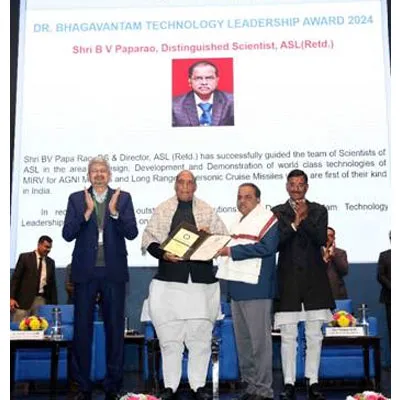
Raksha Mantri Rajnath Singh recently said that Operation Sindoor demonstrated how indigenous defence systems are strengthening India’s operational readiness, underscoring the growing impact of self-reliance in the defence sector. Addressing DRDO’s best-performing scientists and technical personnel, he noted that indigenisation has become a national mindset and that Defence Research and Development Organisation is playing a central role in the rapid transformation of India’s defence capabilities.

Emphasising the pace of technological change, the Raksha Mantri said the country must move beyond the idea of ‘survival of the fittest’ to ‘survival of the fastest’, particularly in battlefield technologies. He called upon DRDO scientists to innovate quickly, take calculated risks and focus on speed in decision-making, development and deployment to stay ahead in a technology-driven security environment.

He stressed the need to significantly reduce the time taken from research to prototype, prototype to testing, and testing to deployment, asserting that timely induction into the Armed Forces should be the key measure of success. Highlighting global best practices, he suggested greater co-development with industry from the early design stage to bridge the gap between R&D and production.

Calling for a shift from a monopolistic R&D approach to a collaborative ecosystem, Rajnath Singh urged DRDO to work closely with public sector undertakings, private industry, MSMEs, start-ups and academia to realise the vision of Aatmanirbhar Bharat. Citing the Light Combat Aircraft Tejas as a successful example of collaboration, he said many more such achievements are possible through deeper partnerships.

The Raksha Mantri also highlighted the sharp rise in defence exports, which have grown from less than Rs 1,000 crore in 2014 to about Rs 24,000 crore, with a target of Rs 50,000 crore by 2029–30. He encouraged DRDO to factor in export potential at the design stage, particularly in areas such as drones, radars, electronic warfare systems and ammunition, to enhance global competitiveness and strategic partnerships.

Raksha Mantri Rajnath Singh recently said that Operation Sindoor demonstrated how indigenous defence systems are strengthening India’s operational readiness, underscoring the growing impact of self-reliance in the defence sector. Addressing DRDO’s best-performing scientists and technical personnel, he noted that indigenisation has become a national mindset and that Defence Research and Development Organisation is playing a central role in the rapid transformation of India’s defence capabilities. Emphasising the pace of technological change, the Raksha Mantri said the country must move beyond the idea of ‘survival of the fittest’ to ‘survival of the fastest’, particularly in battlefield technologies. He called upon DRDO scientists to innovate quickly, take calculated risks and focus on speed in decision-making, development and deployment to stay ahead in a technology-driven security environment. He stressed the need to significantly reduce the time taken from research to prototype, prototype to testing, and testing to deployment, asserting that timely induction into the Armed Forces should be the key measure of success. Highlighting global best practices, he suggested greater co-development with industry from the early design stage to bridge the gap between R&D and production. Calling for a shift from a monopolistic R&D approach to a collaborative ecosystem, Rajnath Singh urged DRDO to work closely with public sector undertakings, private industry, MSMEs, start-ups and academia to realise the vision of Aatmanirbhar Bharat. Citing the Light Combat Aircraft Tejas as a successful example of collaboration, he said many more such achievements are possible through deeper partnerships. The Raksha Mantri also highlighted the sharp rise in defence exports, which have grown from less than Rs 1,000 crore in 2014 to about Rs 24,000 crore, with a target of Rs 50,000 crore by 2029–30. He encouraged DRDO to factor in export potential at the design stage, particularly in areas such as drones, radars, electronic warfare systems and ammunition, to enhance global competitiveness and strategic partnerships.

Next Story
Infrastructure Urban

PM Modi Addresses India-EU Business Forum in New Delhi

Prime Minister Shri Narendra Modi recently addressed the India–European Union Business Forum at Bharat Mandapam, New Delhi, describing the current phase as a new era of alignment in India-EU relations. He noted that the presence of EU leaders as Chief Guests at India’s Republic Day and the conclusion of the largest Free Trade Agreement in India’s history reflect unprecedented strategic convergence between the two democratic partners. Highlighting economic ties, the Prime Minister said bilateral trade has doubled over the past decade to 180 billion euros, with EU investments in India exc..

Next Story
Infrastructure Energy

PM Modi Highlights Energy Opportunities at India Energy Week 2026

Prime Minister Narendra Modi recently addressed the inaugural ceremony of India Energy Week 2026 via video conferencing, describing India as a land of immense opportunity for the global energy sector. He noted that representatives from nearly 125 countries had gathered to deliberate on building an energy-secure and sustainable future, underlining the event’s growing stature as a global platform for dialogue and action. The Prime Minister highlighted that India’s position as the world’s fastest-growing major economy is driving sustained growth in energy demand, while also creating opport..

Next Story
Infrastructure Energy

India–EU Free Trade Agreement Marks Strategic Trade Breakthrough

India and the European Union have recently concluded the India–EU Free Trade Agreement (FTA), marking a major milestone in bilateral economic engagement. The agreement was jointly announced at the 16th India–EU Summit by Narendra Modi and Ursula von der Leyen, positioning the two blocs as trusted partners committed to open, rules-based and inclusive growth. The FTA follows sustained negotiations since talks were relaunched in 2022 and reflects a shared strategic vision between the world’s fourth- and second-largest economies, together accounting for about 25 per cent of global GDP and n..

Advertisement

Subscribe to Our Newsletter

Get daily newsletters around different themes from Construction world.

STAY CONNECTED

Advertisement

Advertisement

Advertisement

Advertisement

Open In App