




Panel Urges Unified Push on Critical Minerals
ECONOMY & POLICY

Panel Urges Unified Push on Critical Minerals

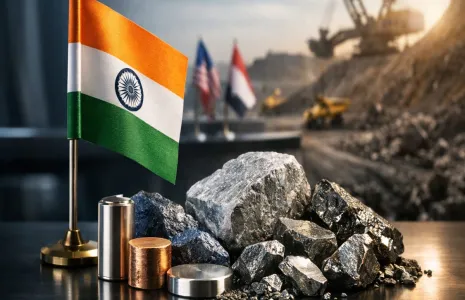
A parliamentary panel has underlined the need for seamless coordination among ministries to strengthen India’s self-reliance in critical minerals such as lithium, graphite, cobalt and rare earth elements, which are essential for a technology-driven global economy.

In its report, the Standing Committee on Coal, Mines and Steel said the Atmanirbhar Bharat initiative, with its strong focus on self-reliance, offers significant potential to secure sustainable supply chains for critical minerals and enhance India’s industrial competitiveness. However, the committee cautioned that these efforts could fall short without effective coordination among stakeholders.

The panel recommended that, alongside the Ministry of Mines, which is leading the drive, all relevant ministries, state governments and agencies should work in close alignment to ensure the country remains competitive in the critical minerals sector. It stressed that a coordinated approach is essential given the strategic importance of these resources.

The committee noted that critical minerals are vital for national development and security, but their supply remains vulnerable due to limited availability and concentration in a few regions globally. These minerals are widely used across sectors including electronics, telecommunications, transport, defence and energy, making self-reliance in the mineral sector crucial for economic growth and technological advancement.

The report said the future global economy will be driven by technologies that depend heavily on minerals such as lithium, graphite, cobalt and rare earth elements. In this context, the committee acknowledged the steps taken by the government to boost domestic mineral production and strengthen self-reliance.

It appreciated the government’s decision to identify 30 critical minerals, with 24 included in Part D of Schedule I of the Mines and Minerals (Development and Regulation) Act, 1957. This classification grants the Central Government exclusive authority to auction mining leases and composite licences for these minerals. The committee also noted that the Ministry of Mines has introduced several policy measures to improve ease of doing business in the sector.

A parliamentary panel has underlined the need for seamless coordination among ministries to strengthen India’s self-reliance in critical minerals such as lithium, graphite, cobalt and rare earth elements, which are essential for a technology-driven global economy. In its report, the Standing Committee on Coal, Mines and Steel said the Atmanirbhar Bharat initiative, with its strong focus on self-reliance, offers significant potential to secure sustainable supply chains for critical minerals and enhance India’s industrial competitiveness. However, the committee cautioned that these efforts could fall short without effective coordination among stakeholders. The panel recommended that, alongside the Ministry of Mines, which is leading the drive, all relevant ministries, state governments and agencies should work in close alignment to ensure the country remains competitive in the critical minerals sector. It stressed that a coordinated approach is essential given the strategic importance of these resources. The committee noted that critical minerals are vital for national development and security, but their supply remains vulnerable due to limited availability and concentration in a few regions globally. These minerals are widely used across sectors including electronics, telecommunications, transport, defence and energy, making self-reliance in the mineral sector crucial for economic growth and technological advancement. The report said the future global economy will be driven by technologies that depend heavily on minerals such as lithium, graphite, cobalt and rare earth elements. In this context, the committee acknowledged the steps taken by the government to boost domestic mineral production and strengthen self-reliance. It appreciated the government’s decision to identify 30 critical minerals, with 24 included in Part D of Schedule I of the Mines and Minerals (Development and Regulation) Act, 1957. This classification grants the Central Government exclusive authority to auction mining leases and composite licences for these minerals. The committee also noted that the Ministry of Mines has introduced several policy measures to improve ease of doing business in the sector.

Next Story
Infrastructure Transport

KPIL Secures Rs 7.19 Billion Metro Rail Order in Thane

Kalpataru Projects International (KPIL), along with its joint venture, has recently secured new orders and notifications of award worth approximately Rs 7.19 billion. The key contract includes an elevated metro rail project in Thane, Maharashtra, marking a significant addition to the company’s urban infrastructure portfolio.Commenting on the development, Manish Mohnot, MD & CEO, said the order strengthens KPIL’s presence in the expanding urban transportation EPC segment. He added that the company’s diversified order book, consistent order inflows and strong execution capabilities..

Next Story
Infrastructure Urban

IRFC Sanctions Rs 50 Billion Loan to MAHAGENCO

Indian Railway Finance Corporation (IRFC) has recently executed a Rupee Term Loan Agreement with Maharashtra State Power Generation Company Limited (MAHAGENCO) for a sanctioned amount of Rs 50 billion, of which Rs 30 billion has already been disbursed. A Navratna CPSE under the Ministry of Railways, IRFC has expanded its role beyond rail financing to support infrastructure projects linked to the railway ecosystem, including power generation, transmission, mining, logistics, ports and metro rail. The corporation continues to maintain a strong asset quality profile with a zero-NPA portfolio. M..

Next Story
Infrastructure Transport

AFCOM Inducts Third Aircraft, Boosting Cargo Capacity

AFCOM Holdings has recently inducted its third aircraft, marking a key milestone in the company’s fleet expansion and operational growth. The aircraft was welcomed with a water cannon salute on arrival at Chennai International Airport, underscoring its strategic importance to AFCOM’s expanding network. With Chennai as a key operational hub, the additional aircraft enhances AFCOM’s ability to cater to rising demand for air cargo services across domestic and international routes, including time-sensitive and specialised cargo segments. The induction strengthens operational capacity while ..

Advertisement

Subscribe to Our Newsletter

Get daily newsletters around different themes from Construction world.

STAY CONNECTED

Advertisement

Advertisement

Advertisement

Advertisement

Open In App














