+
PDUNASS Hosts Workshop On Corporate Insolvency Resolution
ECONOMY & POLICY

PDUNASS Hosts Workshop On Corporate Insolvency Resolution

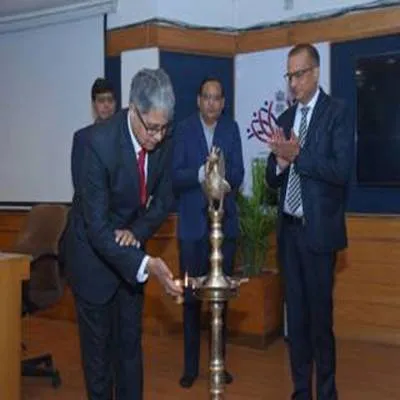
The Pandit Deendayal Upadhyaya National Academy of Social Security (PDUNASS), New Delhi, conducted a half-day workshop on the Corporate Insolvency Resolution Process under the Insolvency and Bankruptcy Code (IBC), 2016 for members of the Central Board of Trustees (CBT), members of the Investment Committee of the CBT and other officers of the Employees' Provident Fund Organisation (EPFO).

The programme was organised to enhance institutional understanding of insolvency resolution processes and related legal and administrative issues pertinent to EPFO decision making. The workshop aimed to equip trustees and senior officers with practical frameworks for timely and compliant resolution action.

The event was attended virtually by the Central Provident Fund Commissioner (CPFC), who underlined the significance of a clear and informed understanding of the insolvency framework for statutory bodies and the need for timely, well informed decisions to safeguard subscriber interests. The Financial Adviser and Chief Accounts Officer (FA & CAO) also participated virtually and senior leadership from PDUNASS and EPFO Head Office joined in person. Senior officials noted that improved institutional capacity would support adherence to the evolving legal and regulatory landscape.

Sessions covered the insolvency resolution framework, legal finality under the IBC, post resolution recovery, exceptions and administrative closure, and were structured to facilitate detailed deliberation on complex and sensitive matters. The Director of PDUNASS outlined how such capacity building clarifies procedural roles and strengthens confidence among decision makers in handling insolvency related contingencies. Participants engaged in knowledge exchange aimed at aligning administrative practice with statutory requirements.

The initiative reflects PDUNASS's continued commitment to capacity building and to strengthening EPFO's institutional preparedness to address legal and financial challenges arising under the IBC. PDUNASS, established in 1990, is the apex training institute of the Employees' Provident Fund Organisation under the Ministry of Labour and Employment and undertakes training, research and consultancy in the field of social security. The academy will continue to design targeted programmes to support trustees and officials in managing statutory responsibilities effectively.

The Pandit Deendayal Upadhyaya National Academy of Social Security (PDUNASS), New Delhi, conducted a half-day workshop on the Corporate Insolvency Resolution Process under the Insolvency and Bankruptcy Code (IBC), 2016 for members of the Central Board of Trustees (CBT), members of the Investment Committee of the CBT and other officers of the Employees' Provident Fund Organisation (EPFO). The programme was organised to enhance institutional understanding of insolvency resolution processes and related legal and administrative issues pertinent to EPFO decision making. The workshop aimed to equip trustees and senior officers with practical frameworks for timely and compliant resolution action. The event was attended virtually by the Central Provident Fund Commissioner (CPFC), who underlined the significance of a clear and informed understanding of the insolvency framework for statutory bodies and the need for timely, well informed decisions to safeguard subscriber interests. The Financial Adviser and Chief Accounts Officer (FA & CAO) also participated virtually and senior leadership from PDUNASS and EPFO Head Office joined in person. Senior officials noted that improved institutional capacity would support adherence to the evolving legal and regulatory landscape. Sessions covered the insolvency resolution framework, legal finality under the IBC, post resolution recovery, exceptions and administrative closure, and were structured to facilitate detailed deliberation on complex and sensitive matters. The Director of PDUNASS outlined how such capacity building clarifies procedural roles and strengthens confidence among decision makers in handling insolvency related contingencies. Participants engaged in knowledge exchange aimed at aligning administrative practice with statutory requirements. The initiative reflects PDUNASS's continued commitment to capacity building and to strengthening EPFO's institutional preparedness to address legal and financial challenges arising under the IBC. PDUNASS, established in 1990, is the apex training institute of the Employees' Provident Fund Organisation under the Ministry of Labour and Employment and undertakes training, research and consultancy in the field of social security. The academy will continue to design targeted programmes to support trustees and officials in managing statutory responsibilities effectively.

Related Stories

Gold Stories

Next Story
Infrastructure Urban

Infrastructure Opportunity Outlook by IMPACCT.Info

India’s infrastructure pipeline is witnessing dynamic activity across stages — from immediate bidding to future planning. IMPACCT segments these into three categories: Immediate, 3–6 Month, and Future Opportunities, enabling businesses to identify, prepare, and participate in high-value tenders and projects across sectors.To read full article Click Here ..

Next Story
Real Estate

Glass, Reframed!

Glass façades, quintessential aesthetic building envelopes globally, have been widely adopted in India as well. But when the focus is high-performance building systems that deliver energy efficiency, comfort and architectural identity, glass isn’t the only preference. Combination solutions, involving glass and some other material, improve façade outcomes. Some combinations come at comparable prices, some at a higher price. Here is a selection of performance-oriented solutions...To read the full story Click Here ..

Next Story
Infrastructure Urban

Beyond Building Faster

India’s cities are expanding at an unprecedented pace, bringing new infrastructure and development opportunities while also intensifying challenges around mobility, public spaces, liveability and supporting infrastructure. The question, therefore, is not simply whether India can build faster, but whether it can build cities that work better.At a CW webinar, Are We Designing Better Cities – or Just Building Faster?, moderator Ar. Samir Shaikh, Founding Principal, AR&UD Studio, brought together perspectives from design, development, master planning and technology...To read the full artic..

Advertisement

Subscribe to Our Newsletter

Get daily newsletters around different themes from Construction world.

STAY CONNECTED

Advertisement

SPECIAL OFFER
QR Code